
Julie Wassmer’s Whitstable Pearl mysteries, and the town that lies behind them
by
I heard a definition of the difference between “men’s” and “women’s” literature once, which I found to be both amusing and true.
According to this: in men’s literature, the sex takes place within the first two paragraphs, and continues throughout, while in women’s literature, the sex only happens after a protracted series of delays and misunderstandings, and not till the very end of the book, as its culmination.
Across the ten books that comprise the Whitstable Pearl Mysteries the main protagonists do manage to have sex, but their relationship remains unresolved. The ‘will they-won’t they’ aspect of the drama is an ongoing mystery. “In short,” says author, Julie Wassmer, “I find it more intriguing to write about the obstacles in the path of two characters in their 40s, who have been bruised by earlier relationships, than to write about a couple living in domestic harmony.”
This is not surprising as Julie, previously a writer on the popular British soap opera, EastEnders, brings all of her skills to bear on the perennial cliffhanger in this series of detective novels, focussing on the on-off relationship between amateur sleuth, Pearl Nolan (who also runs a seafood restaurant in a town famous for its oysters) and professional cop, Detective Chief Inspector Mike McGuire.
The books are now a major TV series. Made by Buccaneer Media for AMC‘s Acorn TV, and also available through Amazon Prime, it stars Kerry Godliman as Pearl and Howard Charles as DCI McGuire. Alongside lead writer Øystein Karlsen, who developed and adapted the books, the rest of the writing team includes Mike Walden, Rachel Flowerday and Alastair Galbraith. There have been two series so far, with a third currently in production.
The first series has recently been shown on terrestrial TV in the UK, on UKTV Play, which is where I caught up with it for the first time. This may come as a surprise to some. I live only a short bus ride from Whitstable and Julie Wassmer is a very good friend of mine. We’ve done a lot of campaigning together, starting in 2012 when she and I ran the campaign to keep the Whitstable postal delivery office open. We also run this blog together. Here is one of Julie’s articles, about the TV series, which she wrote specifically for Whitstable Views.

I read, and enjoyed, the first novel. I was particularly struck by the research. It seemed to me that it was a clever way for Julie to get to know the town she had adopted as her own more than two decades ago. She had obviously talked to fisherman, to policemen and to restaurateurs to get material for the book. What a wonderful way to embrace your town, I thought, talking to all the people who make it what it is; but I didn’t feel inclined to read any of the books after that. The genre is known as “cozy crime” and is not really to my taste. (Probably because the sex is too slow in coming.) Julie tells me that her books fall under a darker form of “cozy” that features drug crime, religious sects and paedophiles.
I finally had to admit to her that I’d only ever read the first novel after returning from a visit to Aylesham, one of the nearby miner’s villages that are dotted around the Kent countryside. They are peculiar places, of unique social and cultural interest, full of ex-miners and communists. I suggested that Aylesham would make a great setting for one of her crime mysteries, at which point she told me it had already featured in one. We both laughed. I don’t think she was offended. Julie doesn’t need my approval to validate her existence. Anyway I’ve been too busy on research projects of my own.
But the TV series was a different matter. I like to watch TV, which takes much less concentration than reading a book. Once it was on free-to-view it seemed like the ideal opportunity to catch up on my friend’s professional output. I have to say, it’s been a peculiar experience. Watching a TV series set in your home town means being constantly distracted by the setting. You’re always catching sight of places you recognise, which tends to dominate the viewing experience.
I remember seeing Peter Greenaway’s Drowning by Numbers in the 1980s. There the plot becomes subservient to the count that is taking place, as all the numbers, from one to a hundred, appear in succession on-screen. It becomes so fascinating that you lose track of any storyline there might be. You are too busy counting. Watching a film featuring your own home town takes on some of that effect. You’re always being stopped short by a familiar scene, a place you recognise, or a house whose occupants are friends of yours. I guess that this is what living in New York or Los Angeles must be like, except that those two much-filmed cities are large, while Whitstable is comparatively small.

You’re always being distracted by the strange topography of the fictional version of your town, in which people keep driving, or walking, in the wrong direction. Pearl lives in what everyone in Whitstable would recognise as The Beacon House. It is one of the most loved, and most recognisable, houses in the town. I’ve often dreamed of living there, and used to deliver to it when I was a postal worker. Unfortunately it is situated on the beach, with no road access. You have to walk along the sea front to get to it. The only way to get a car there is through a locked gate, which doesn’t appear in the series. Pearl’s restaurant, meanwhile, is in Rigden’s Shed by the Yacht club near the harbour. People are often seen driving away. In order to do that they go straight ahead, down the ramp, which, as every Whitstablian knows, will take you directly into the sea. It’s how they launch the yachts. You find yourself crying out to the occupants: “not that way, damn you. You’ll drown!”
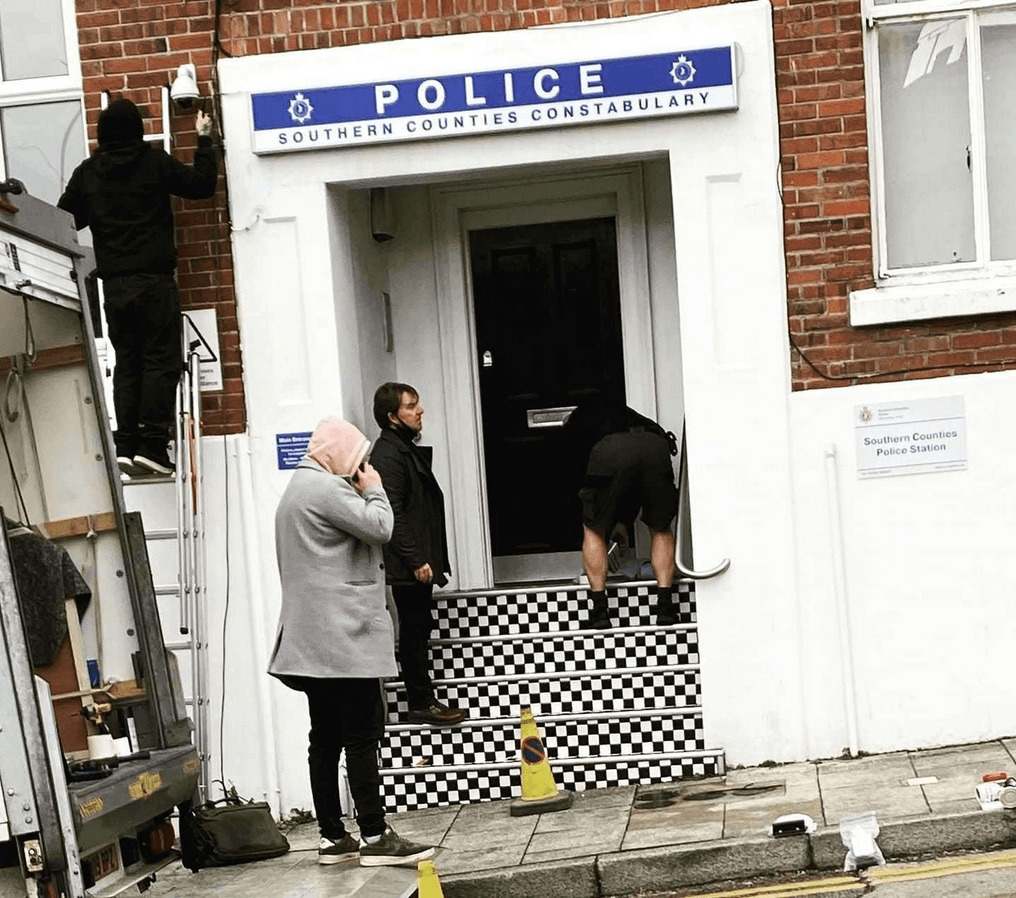
This fictional imposition on reality is revealed in other ways too. For example, the exterior of the Police Station, where DCI McGuire works, is in what Whitstable people know as Oxford Mansions. It’s an apartment block in the centre of town. I’ve known people who’ve lived there, and have spent a few nights stoned on illegal drugs at parties under its roof. You have to laugh when you see it in the series, decked out in its police livery. If only DCI McGuire knew. He’d have to arrest himself.
There is no police station in Whitstable. There used to be one, on Bexley Street, before it was closed down, 20 years ago or more. After that there was a literal “cop shop” on the High Street, distinguishable from other retailers only by the blue lantern hanging outside and the fact that its opening times were 10am to 3pm, on weekdays only. It closed permanently several years ago. These days, if you ring the police, they take at least 20 minutes to arrive from the station in Canterbury.
The other disconcerting element is the number of murders that take place. At least one a week. This is far more than the real Whitstable, which has only seen one murder, that I know of, in all the years I’ve lived here. Whitstable is such a small town that I knew both the murderers and the victim. The circumstances were much grubbier, and far less dramatic, than anything that appears in the series.
One true-to-life aspect of Julie Wassmer’s fictional Whitstable, is the presence of DFLs. This stands for Down From London, and is an increasing plague upon our town. London is only 60 miles away: about an hour and a half on the train. There’s always been a London connection, but in the past it was mainly working class EastEnders, who would come down for a day to sample the oysters. These days it’s the luvvies of the London art set: wealthy media workers who buy up the most picturesque, artisan properties, pricing out the locals, and altering the character of the town. This has made it difficult to live in Whitstable. Whole streets are almost empty, aside from second homes and AirBnBs, a trend that is likely to continue as people are drawn here by the success of the series. You often see people perched in cafes immersed in one of the books, trying to catch a glimpse of the real life of the town from behind the fictional veil.
Not that I can argue. I’m not a DFL myself, but a DFB, Down From Birmingham, and I too was drawn to the atmosphere of this unique little town on the North Kent Coast where I’ve made my home for the last 40 years. When I first came here, in 1984, it was scruffy, working class and undiscovered, a town with a fully functioning High Street and a fishing industry, full of bohemian students who’d stuck around since finishing their degrees, and old ravers who had come for a party and never left. The only famous person was Peter Cushing, of Hammer Horror fame. Property prices were low and rents were cheap. There were a number of houses of multiple occupation. I almost bought a beach hut once, for £150.
Since then property prices have soared, the High Street has virtually emptied of all but cafes, charity shops and Turkish barbers, and the town is surrounded by retail parks. On every spare patch of land there are new buildings going up. The qualities that made the town so uniquely liveable are fast disappearing under an avalanche of oversized seaside vernacular monstrosities and rampant gentrification.
The final joke in the first series refers to the price of beach huts. Pearl is talking to her mother, Dolly, on the balcony of their restaurant. “Was that beach hut really worth thirty grand?” asks Pearl.
“Forty if you sell it to a DFL,” says Dolly, and they both laugh.
I recommend watching all three series. The writing is good, the acting superb. The characters take on a real life of their own. Each one is delicately drawn, so that you really believe in them and their motivations, their internal drives. The plots are compelling and the scenery is lovely. The Whitstable sunsets, which grace the credits, are almost as spectacular on screen as they are in real life.
So this is what I suggest. Enjoy the programs. Buy the books. Come for a holiday. Just don’t try to move here, that’s all.
You can see series 1 & 2 of Whitstable Pearl here and buy the books and DVDs here.
Article first appeared here.
About CJ Stone
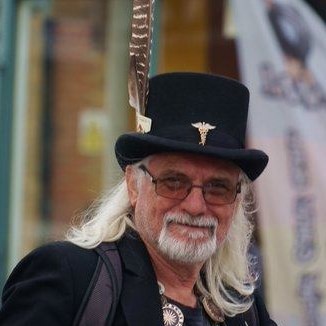
CJ Stone is an author, columnist and feature writer. He has written seven books, and columns and articles for many newspapers and magazines.
Read more of CJ Stone’s work here, here and here.
Whitstable Views
How to use it!
- Make sure you share and like our articles on Facebook and Twitter/X, and whatever other social-media platforms you use. Join us on Facebook here: @whitstableviews
- You can read and contribute articles for free but in order not to miss any, please subscribe to get regular free updates.
- To do so, press the “Subscribe” icon on the bottom right hand corner of the screen. This will take you to the option to sign up. (It disappears as you move the text down then reappears at you move it back again!)
- Please engage by leaving comments on the website, rather than on social media. Let’s get a debate going. All our contributors welcome the chance to engage with YOU.
- To all writers out there, we want to hear YOUR views too, so do submit your own articles. Read our submissions page on how to do this: https://whitstableviews/submissions/
- Finally, to keep Whitstable Views alive and independent please donate if you feel able to do so. As little as £1 would help. Details are on the donations page here: https://whitstableviews.com/donate
 Whitstable Views