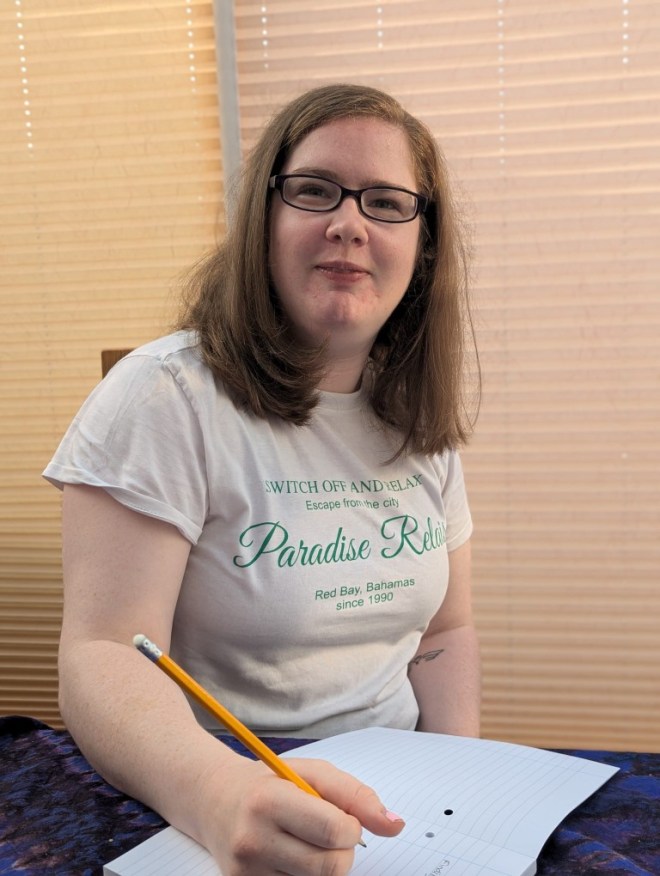
Poet Maggie Johnson
Julie Wassmer talks to Herne Bay poet Maggie Johnson about how writing has offered her a chance to be seen as more than a person with a disability
27 year-old Maggie is unable to work full-time due to cerebral palsy, but for the past 7 years she’s been working as a volunteer at her local Demelza book shop in Herne Bay and is fast becoming a prolific poet with the publication of her second book of poetry, Finding Myself. Having interviewed Maggie 3 years ago, I was keen to find out more about this new collection.
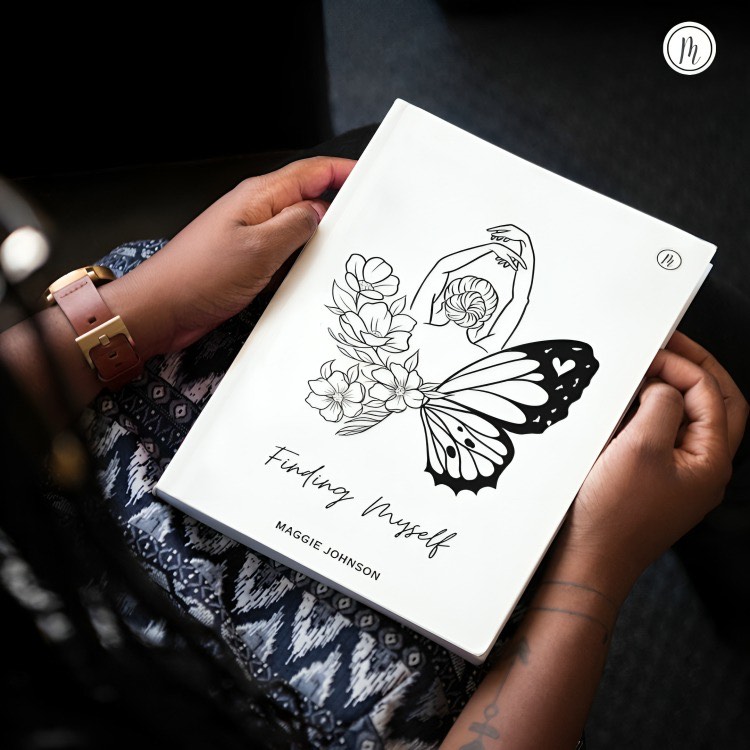
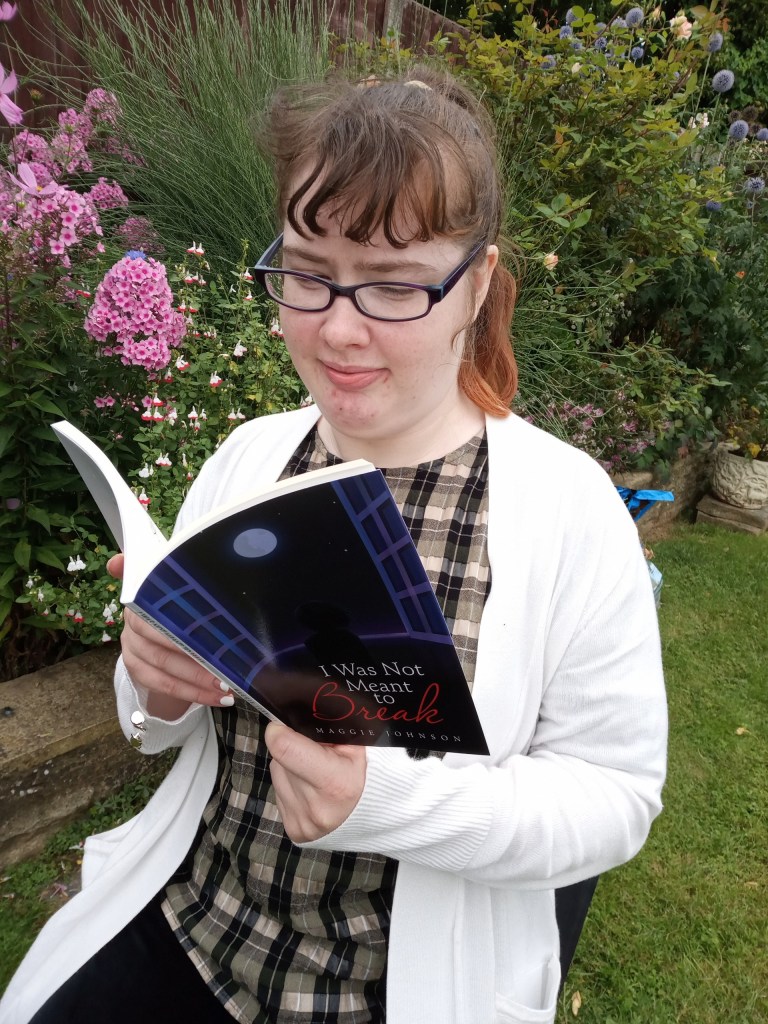
Congratulations, Maggie, on this new collection of 67 poems. It’s a wonderful follow up to your first collection, I Was Not Meant to Break. I remember you telling me that you were inspired to publish your first book after you had begun reading poems posted by writers on Instagram profiles. Can you tell me what prompted you to write this new collection?
I had always wanted to write a second book but I had no firm idea what the general subject should be. When I began suffering from a bad case of the ‘winter blues’ I started to write down what I was feeling, mainly to explain to my family why I felt so anxious. It was my mum who suggested I should try to write more about what was inside my head. So, something very personal that was intended just for me, turned into a second book and one I would have loved to read when I was younger.
Why do you say that, Maggie?
I would have loved to have recognised that my feelings were valid just by seeing that someone else was feeling the same way as me. If I had found a book like mine when I was younger I could have taken a poem from it, showed it to my family and said “this is how I’m feeling.” I’ve done the same with music so many times; showed a lyric to my parents or siblings and then a conversation has followed. I think if I had read a book like Finding Myself when I was younger, I would have opened up more than I did.
Sadly, Maggie, you aren’t alone in suffering from anxiety but can you explain how it affects you?
There are days where I can keep control of it and calm myself down and days where I cannot and the tears start flowing. I also get frustrated by the fact that I find it hard to say what I want when I want. My cerebral palsy affects my muscles so when I try to explain something the words don’t always come out right. When I began suffering panic attacks I started to write letters to my mum detailing what was going on and how I felt. It was quite therapeutic.
I’m aware that cerebral palsy can affect people in different ways, and in various degrees of severity, but can you explain what challenges it’s presented to you?
My muscles are weaker and tighter than normal. Walking for a long period of time is difficult, especially when I’m tired or it’s cold. I struggle with fine motor skills, which leads to everyday activities being more difficult or taking longer than they should, and this can be very frustrating. I’ve had to find ways of adapting which also means needing help from family members and friends.
Does this cause you frustration in other ways? Perhaps in the way other people react or perceive you?
Yes, I get frustrated when people don’t direct their conversation to me and instead go first to the person I’m with. Talking might be difficult and I’m not always very clear but I do know how to speak and what I want to say. It feels very belittling when that happens. Also, I’m not always allowed the time I need to do things, like getting money out of my purse and putting it away again when I’m shopping. I know it takes longer, but rushing means I’m more likely to drop things. It can make going out very stressful. My friends and family always help me, but it can also be a frustration to need their help. I only wish people were just more patient with me and spoke to me like the adult I am.
With all these challenges, Maggie, I can understand how writing has been a cathartic process for you, offering you a different way of communicating difficult emotions?
Yes, I began writing this new book when anxiety and depression had really begun to impact my daily life but the process of getting the poems down on paper also helped me to understand how I was feeling. It was a tough process as the poems were very much about me and what I was going through.
Finding Myself is divided into distinct sections. Can you explain why you did this and what they comprise?
I wanted the book to address different phases of the self-discovery process. I also wanted to have the reader go through the emotions with me; the days when you feel everything is on top of you and the days where you can breathe.
I know that writing is a very solitary occupation and so belonging to a local writing group can offer support. Are you still part of one?
Yes, and without my group I have no idea if I would be able to do this. Writing offers me a chance for self-expression but it can also be very difficult as there are days where you feel like you’re the best writer in the world and everything you write is fantastic, then days where you doubt yourself and your writing ability. I would seek opinions from my writing group, about which poems were working and which weren’t. That helped me a lot with this book.
Do you have a favourite poem in this collection?
I have a couple of poems I really love but my favourite has to be Simple Days. It’s about wanting to return to being a child again, back to a time when I had no worries, anxiety or depression. When I wrote it, I just wanted to retreat to a safe time when I could cuddle up to my mum and know everything was alright.
What’s the most important thing that the writing process has given you?
Writing gives me a voice when I’m voiceless. A chance to be seen as more than a person with a disability.
Finally, Maggie, how would you like people to feel after reading these new poems?
I would love my readers to feel they are not alone and that they can find some resonance and comfort in my work. I also hope that readers can pick a poem and share it with their families and friends and say “this is me”. I hope that will start a conversation about mental health.
Maggie’s latest book, Finding Myself, is available as an e-book from: https://books.google.co.uk/books/about/Finding_Myself.html?id=gyIJEQAAQBAJ&redir_esc=y
Maggie’s first book, I Was Not Meant to Break, is available at bookshops and online at:
If you’re seeking help with mental health, there are a number of resources to contact on this Kent County Council link:
https://www.kent.gov.uk/social-care-and-health/health/mental-health/get-mental-health-help-now
In Whitstable, Revival (part of East Kent Mind) is a social enterprise Cafe and Wellness hub serving breakfast, brunch & lunch in a unique setting in the heart of Whitstable.
See: https://eastkentmind.org.uk/revival/
Julie Wassmer is a Whitstable-based author, TV writer and environmental campaigner.
She has successfully fought a number of environmental issues, including fracking in Kent and tree clearances by Network Rail.
Her Whitstable Pearl crime novels are now a major TV series, starring Kerry Godliman.
Julie’s also a patron of Whitstable’s own literary festival, WhitLit.
Whitstable Views
How to use it!
- Make sure you share and like our articles on Facebook and Twitter/X, and whatever other social-media platforms you use. Join us on Facebook here:@whitstableviews
- You can read and contribute articles for free but in order not to miss any, please subscribe to get regular free updates.
- To do so, press the “Subscribe” icon on the bottom right hand corner of the screen. This will take you to the option to sign up. (It disappears as you move the text down then reappears at you move it back again!)
- Please engage by leaving comments on the website, rather than on social media. Let’s get a debate going. All our contributors welcome the chance to engage with YOU.
- To all writers out there, we want to hear YOUR views too, so do submit your own articles. Read our submissions page on how to do this: https://whitstableviews/submissions/
- Finally, to keep Whitstable Views alive and independent please donate if you feel able to do so. As little as £1 would help. Details are on the donations page here: https://whitstableviews.com/donate
 Whitstable Views