
Peter Mandelson and the carbon capture scam
by
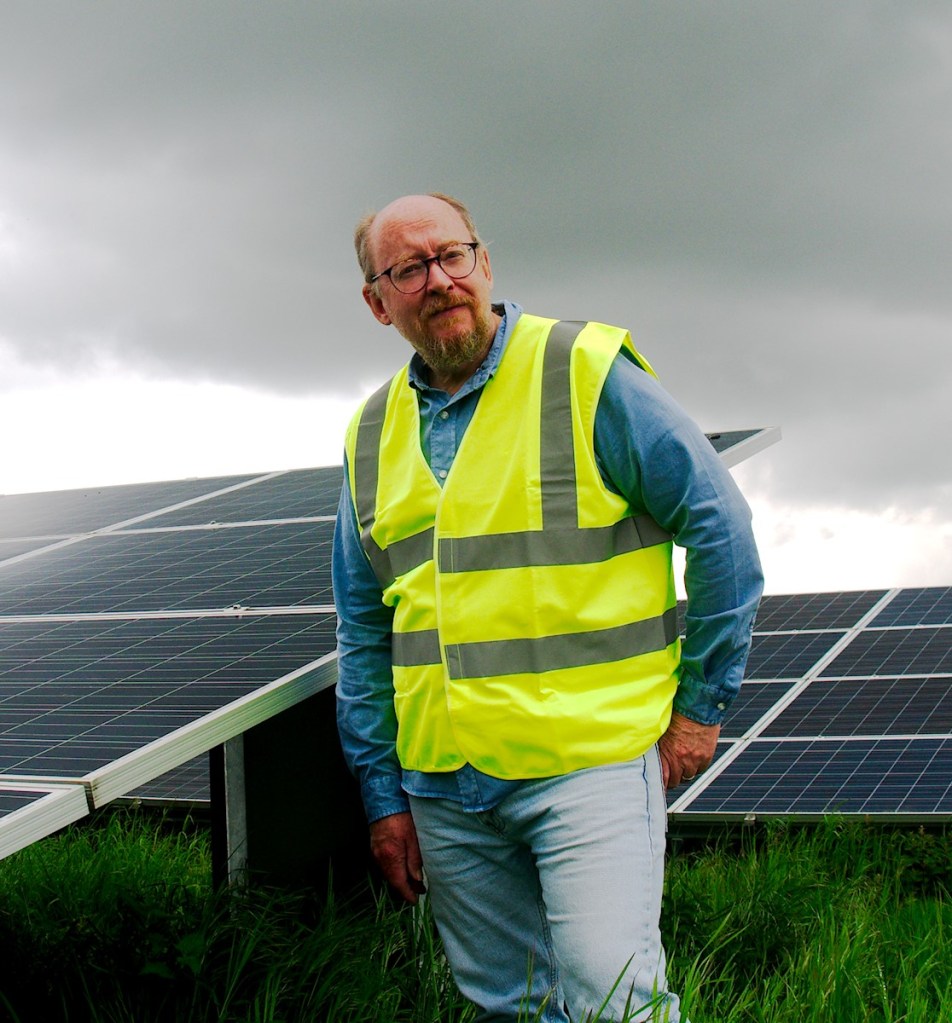
Sitting at his dining room table, overlooking Whitstable’s west beach, energy expert and local Green Party activist, Michael Bax, seems slightly grumpy.
“It’s like paying public money to the junk food companies that made our children obese, so they can sell the kids diet pills,” he says.
Bax is referring to the new Labour government’s recently announced £21.7 billion investment in carbon capture. Carbon capture (or CCS) is essentially using complex industrial processes for capturing the CO2 generated by burning fossil fuels, before it is released into the atmosphere.
“It’s a huge bet to make on something that simply does not work and has no commercial scale anywhere in the world,” says Bax, who has worked on big international energy projects for more than 25 years and has a special interest in renewable energy and CO2 emissions.
Armed with spreadsheets and graphics, Bax demonstrates that the technology is entirely unproven, that the industrial sector it aims at is no longer the most significant CO2 contributor and that the best way to capture carbon is to leave it in the ground and use renewable energy instead—which is usually cheaper anyway.
“The basic premise is to allow fossil fuel companies to keep polluting—if we just stopped emitting carbon we would not need to capture it and put it in the ground,” he says.
He also points out that the long-term nature of the investment conveniently provides the fossil fuel companies with a 25-year license to keep pumping carbon into the atmosphere even if the carbon capture technology fails further down the line.
Bax just cannot get his head around the fact that this public money was not invested in far more effective measures to tackle CO2 emissions like insulating the UK’s leaky homes, reducing dependence on expensive domestic gas heating and getting more EV chargers out on the streets.
Nationally, many are concerned that this policy, dreamed up by the previous Conservative government, is a direct result of lobbying by powerful oil and gas corporations. The Green Party is furious:
“It is the government that has been truly captured here – by the fossil fuel industry,” said Green Party co-leader Adrian Ramsay MP.
In the Guardian, environmental journalist, George Monbiot called the policy “a fossil fuel-driven boondoggle that will accelerate climate breakdown.”
Even a carefully balanced BBC report into climate capture technology concludes, “So carbon capture currently makes very little difference to global CO2 emissions.”
So why is the new Labour government so anxious to spend £21.7 billion of taxpayer’s money on such a dubious and controversial policy, when the public is constantly being told about the so-called, “£21 billion black hole” in public accounts?
Global Counsel

The answer is connected to former Labour Party grandee, Peter Mandelson.
Lord Mandelson is the co-founder and current President of a powerful corporate lobbying and consultancy firm called Global Counsel. The firm uses its connections and influence with the UK government for the benefit of their global corporate clients.
Very unusually, the official No. 10 Downing Street press release dated 4 October 2024, announcing the £21.7 billion carbon capture investment, includes three quotations from oil and gas corporations all singing the praises of the government’s initiative.
These three corporations quoted are BP, ENI and Equinor—all three fossil fuel giants are thought to have close connections to Global Counsel.
“On our side, it reaffirms Eni’s role as a key partner with the UK in enabling its journey towards Net Zero,” said Eni CEO, Claudio Descalzi, in the official government announcement.
Eni is the Italian state oil company currently embroiled in a contentious legal battle with Greenpeace and members of the Italian public, over serious allegations of ignoring and concealing climate change evidence and violating human rights enshrined in Italy’s constitution. In April 2020, the Italian competition authority fined Eni about US$5.5 million for misleading consumers with ‘green’ claims in a diesel fuel advertising campaign. Last year, environmental groups filed a complaint with the Organization for Economic Cooperation and Development alleging that Eni’s plans to increase oil production ran contrary to its goal of reaching net zero emissions by 2050.
It is hard to understand why rich foreign-owned fossil fuel corporates like Eni, which are involved in controversial legal disputes over their environmental credentials, should be the beneficiaries of UK taxpayers’ money.
Equinor is the Norwegian state-owned oil and gas giant pioneering carbon capture schemes in the North Sea. It too has been involved in legal wrangles brought by environmental activists who sought to halt the development of three oil and gas fields. In February 2019, it was reported that Equinor were among clients and special guests at a dinner hosted by Global Counsel at Wilton’s, the historic London caviar-and-oysters eatery and attended by then Secretary of State, Michael Gove.
In 2014, the FT reported that Global Counsel had acquired BP as a client. The oil giant reported a net profit of US$15.2 billion in 2023. It‘s not immediately obvious why a highly profitable fossil fuel company like BP needs the UK taxpayer to subsidise cleaning up its own carbon emissions.
Unless you factor in, that like Equinor and Eni, BP are among, ‘Lord Peter’s friends’.

The Global Counsel website highlights a report on accelerating the delivery of clean electricity which comprises a five-point action plan – point four of five advocates the “urgent deployment of CCS” (carbon capture).
Campaigners at Spotlight on Corruption wrote to the lobbying regulator this month asking the watchdog to investigate whether Global Counsel broke the rules by failing to register lobbying on behalf of Qatar. Global Counsel’s client list is a closely guarded secret, so it is impossible to assess accurately how the Labour government might favour their clients.
Underlining the intimate and murky connections between Global Counsel and the new Labour government, this month Benjamin Wegg-Prosser, its CEO and co-founder, was first choice of chancellor Rachel Reeves for the high-profile government role of Minister for Investment. He turned the job down.
“This is not green industrial policy—it’s a stitch up,” says Bax.
Stuart Heaver
Professional journalist and author.
The Coal Black Sea was published by The History Press on 23 June 2022.
South China Morning Post – The Independent – Hong Kong Free Press – Who.What.Why. – Byline Times – Fragrant Harbour – New Lens International – Daily Telegraph – Post Magazine – Sailing Today
Follow @stuartheaver on Twitter
Whitstable Views
How to use it!
- Make sure you share and like our articles on Facebook and Twitter/X, and whatever other social-media platforms you use. Join us on Facebook here: @whitstableviews
- You can read and contribute articles for free but in order not to miss any, please subscribe to get regular free updates.
- To do so, press the “Subscribe” icon on the bottom right hand corner of the screen. This will take you to the option to sign up. (It disappears as you move the text down then reappears at you move it back again!)
- Please engage by leaving comments on the website, rather than on social media. Let’s get a debate going. All our contributors welcome the chance to engage with YOU.
- To all writers out there, we want to hear YOUR views too, so do submit your own articles. Read our submissions page on how to do this: https://whitstableviews/submissions/
- Finally, to keep Whitstable Views alive and independent please donate if you feel able to do so. As little as £1 would help. Details are on the donations page here: https://whitstableviews.com/donate
 Whitstable Views