
Review of The Making of a Marxist Philosopher by Sean Sayers
by
I’ve just finished reading The Making of a Marxist Philosopher by Sean Sayers.
Sean is Emeritus Professor of Philosophy, University of Kent, Associate Professor of Political Theory, Canterbury Christ Church University, and Visiting Professor of Philosophy, Peking University, Beijing. He has held visiting appointments in Colorado, Massachusetts, Sydney, Istanbul, Shanghai, Wuhan, and Beijing. He is an eminent Marxist scholar of international renown. He has lived in Canterbury since 1969.
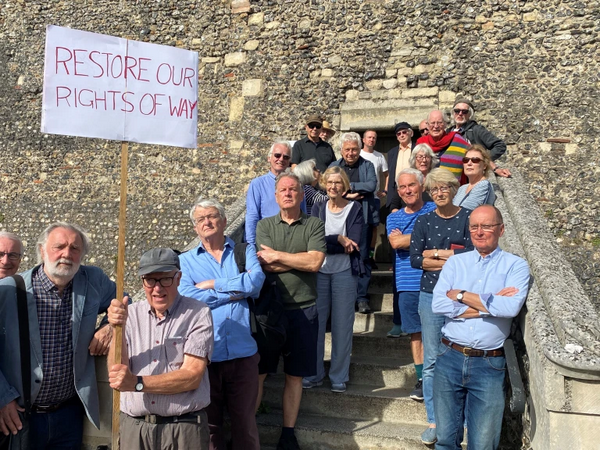
I first met him when he was campaigning to keep the Quenin Gate of Canterbury Cathedral open to the public. This is the side gate to the Cathedral opening onto Lower Bridge Street in Canterbury. The Cathedral authorities, along with the King’s School, were trying to restrict access to King’s School staff and pupils only. The campaign was a success, meaning that holders of a Cathedral pass are now able to access the gate and pass freely into the Cathedral precincts from that direction.
The book is something of an oddity. It appears under the imprint of the Marx and Marxisms: New Horizons series, published by Routledge. This is an academic collection whose cover price reflects its audience: presumably university libraries in the UK and around the world. They are not designed to be read by the casual reader. But The Making of a Marxist Philosopher is not really an academic book. It’s a very readable memoir, more interested in tracing Sayers’ family history than in engaging in deep philosophical debate or in rehearsing Marxist scholarship over the centuries.

Astute readers will recognise the title as a reference to E.P. Thompson’s great work of Marxist history, The Making of the English Working Class, but while that book is very broad in its scope, covering several generations and a whole nation giving birth to a new class, Sayers’ work is much narrower, confining itself to the author’s parents and grandparents and reflecting on the growth of his philosophy in the second half of the 20th, and the early years of the 21st centuries.

Nevertheless it makes for very entertaining reading. Sean himself is what he labels a “red diaper baby”: meaning that his family were all left wing in some form or another. His grandfather on his mother’s side was Luigi Galleani, a notorious Italian anarchist with violent political views, who fled to America in the early years of the 20th century, while his grandfather on his father’s side, Philip Sayers, was Irish of Lithuanian descent. A strong supporter of Irish independence, he hid the IRA leader Michael Collins when he was on the run. Philip was also a very successful businessman, who made two fortunes in his life: the first selling garments in Cork and Dublin, until the crash of 1929 wiped him out; the second as a seller of Christmas cards, which he bought cheap on the American market, once they were out of date, and then resold for a healthy profit in the UK the following year. He was obviously a very clever businessman with a keen eye for a profit, which makes his allegiance to the IRA cause even more remarkable.

Sean’s parents, too, were both very left wing. His father was Michael Sayers, a writer of some renown. He knew Samuel Beckett and Orson Welles and at one time shared a flat with George Orwell. Very early in his career he sent some of his poems to T.S. Eliot, who wrote a long letter in reply, praising his poetry but advising him to stay in law school rather than embark upon a career as a professional writer:
“The law will help you write good verse, far more than it will interfere with you. One cannot write poetry all the time; and the rest of the time it is far better to be in a solicitor’s office than scribbling reviews of books or writing columns for newspapers.”
Michael failed to heed this advice, and in fact spent much of his life reviewing books and writing columns for newspapers. He also wrote short stories, articles, non-fiction books, screenplays, novels, plays and TV scripts – including for such memorable series as The Adventures of Robin Hood, William Tell, and Ivanhoe. As such he is almost as much a part of my childhood, growing up in front of the TV in Birmingham in the 50s and 60s, as he was in his son’s childhood.
Michael moved to New York in 1936 to pursue a career in the theatre. It was here that he met and married Mentana Galleani, known as Tana, Sean’s mother. Sean was the first of two sons. He was born in New York in 1942 and was an American citizen until the age of 24. This would be very surprising to anyone who met him who had not read the book. As he says himself in the opening lines:
“I am a retired professor of philosophy, and to those who meet me I appear to be a typical specimen of my kind. I speak with a middle-class English accent of indeterminate origin. I have all the outward appearance and manners of an Englishman born and bred. And yet I am not.”
Michael wrote a series of books with Albert E. Kahn about Nazi activity in the USA during the war. He moved in left-wing circles and was sympathetic to the Communist cause. It was this that led him to being blacklisted in the McCarthy era, and which drove him back to Europe. Those TV scripts were all written under the pseudonym Michael Conners, not under his own name. I think this was one of the most interesting aspects of the book, something I’d never really thought about before. Everyone knows about McCarthyism, of course. We know the names of its most celebrated victims – Dalton Trumbo, Charlie Chaplin, Pete Seeger – but in fact there were thousands of people subjected to this form of discrimination because of their political views. Many, such as Sean’s parents, were forced into exile, and had to make new lives for themselves in Europe, or in other parts of the world.
Sean’s mum, Tana, came to live in Europe with her two sons in 1947, eventually moving to London in 1949, which is where Sean spent his formative years. This may have been a trial separation from Michael, but in the end it became a permanent one. She, too, was very left wing but she was not, as her father had been, an anarchist. She was a dyed-in-the-wool communist of the old school, with strong ties to the regime in China.
This is another fascinated aspect of the book. Tana was in China at the end of the Cultural Revolution, from 1973-1976, where Sean visited her. He has been back many times. As such he has seen at first hand the changes in China. In 1974 it was “…a very poor country. The standard of living for the vast majority was plain and rudimentary. Housing was basic. Life was simple.”
“Since then,” he says, “everyone in China has got wealthier. There have been enormous gains in longevity, health and education, in the standard of living and in the expansion of people’s horizons and in their awareness of the world. The urban middle class now have a lifestyle approaching that in the West. They have acquired comfortable housing, TVs, cars; they can afford to travel within China and abroad. But huge inequalities have also developed. There are many super rich who flaunt their wealth, but there is much evident poverty. The cities are choked with cars and dangerously polluted. The new-found wealth has led to a great deal of mindless consumerism and showy extravagance. Industrial society has arrived with all its problems: alienation, dislocation and loss of communities and traditions.”
The Chinese Communist Party talks about “socialism with Chinese characteristics” but Sean is sceptical.
“A large and increasing part part of China’s economy is now in private hands and integrated into the world capitalist market. Is it still a socialist country in any meaningful sense? The government claims it has created a new sort of society: ‘socialism with Chinese characteristics’. Is this a mere phrase? Can’t one just as well say that modern China is a form of capitalism ‘with Chinese characteristics’?”
Tana comes across as wilful, wise, brave, intelligent, open-minded and loyal, someone I would have liked to have known. She was wedded to Chinese communism, but still able to see its faults. Without her involvement Sean would not have had the education that he had. He would not have been able to visit China at such a formative age, nor would he have forged the strong links with the country that have stood him in good stead ever since.

The other aspect of the book has to do with Sean’s career as a philosopher and an academic. He has been in academia all his life. He studied at both Oxford and Cambridge. He was the co-founder, in 1972, of the hugely influential journal Radical Philosophy, which is still in existence. He has published a number of books. In the process of telling this story he also tells us about the clashes between the different schools of philosophy: between analytical and continental philosophy in particular, and Sean’s own conversion to Marxism. Whether this was fuelled by his family relations is a matter of debate: but it must have had an influence.
This is far less an adventure story than the stories he tells about his family. We are left with an image of the pettiness of academic life, of personal slights and of being sidelined. I have to say, reading these parts of the book, I was glad I never opted for an academic career myself. Despite the large scope of the philosophical thinking in the book, the narrowness of academic life comes across as stifling.
That said, there’s still much adventure to be had in these pages. If you can’t afford to buy the book yourself, maybe you can ask your library to get hold of a copy?
Recommended.
You can buy the book here.
https://www.splicetoday.com/writing/red-diaper-baby
About CJ Stone
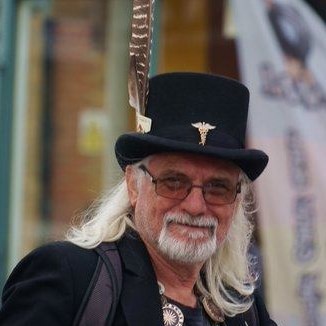
CJ Stone is an author, columnist and feature writer. He has written seven books, and columns and articles for many newspapers and magazines.
Read more of CJ Stone’s work here, here and here.
Whitstable Views
How to use it!
- Make sure you share and like our articles on Facebook and Twitter/X, and whatever other social-media platforms you use. Join us on Facebook here: @whitstableviews
- You can read and contribute articles for free but in order not to miss any, please subscribe to get regular free updates.
- To do so, press the “Subscribe” icon on the bottom right hand corner of the screen. This will take you to the option to sign up. (It disappears as you move the text down then reappears at you move it back again!)
- Please engage by leaving comments on the website, rather than on social media. Let’s get a debate going. All our contributors welcome the chance to engage with YOU.
- To all writers out there, we want to hear YOUR views too, so do submit your own articles. Read our submissions page on how to do this: https://whitstableviews/submissions/
- Finally, to keep Whitstable Views alive and independent please donate if you feel able to do so. As little as £1 would help. Details are on the donations page here: https://whitstableviews.com/donate
 Whitstable Views
astonishing! 2Girls, Glamour, Giggles at the Whitstable Social Club
LikeLike