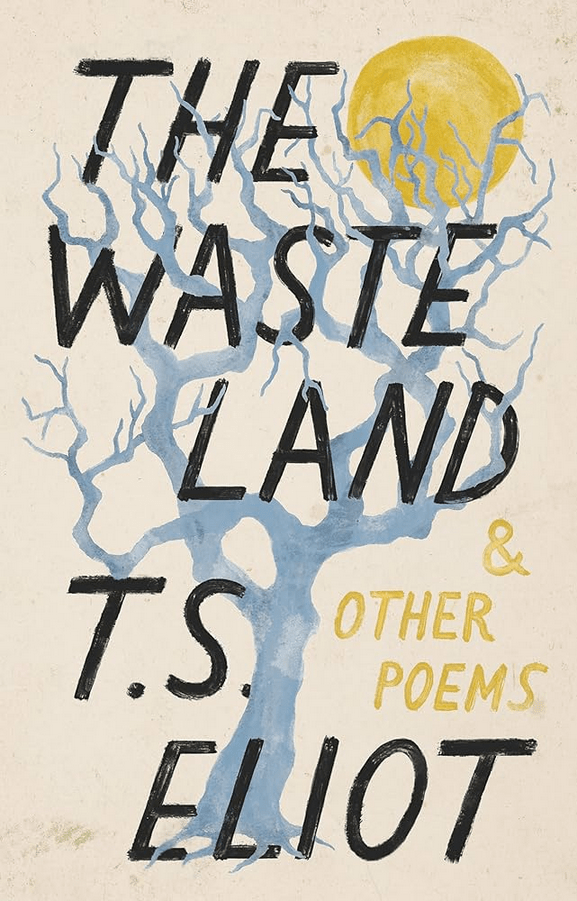
Rituals Of renewal in TS Eliot’s The Waste Land
by
Is April really the Cruellest Month?
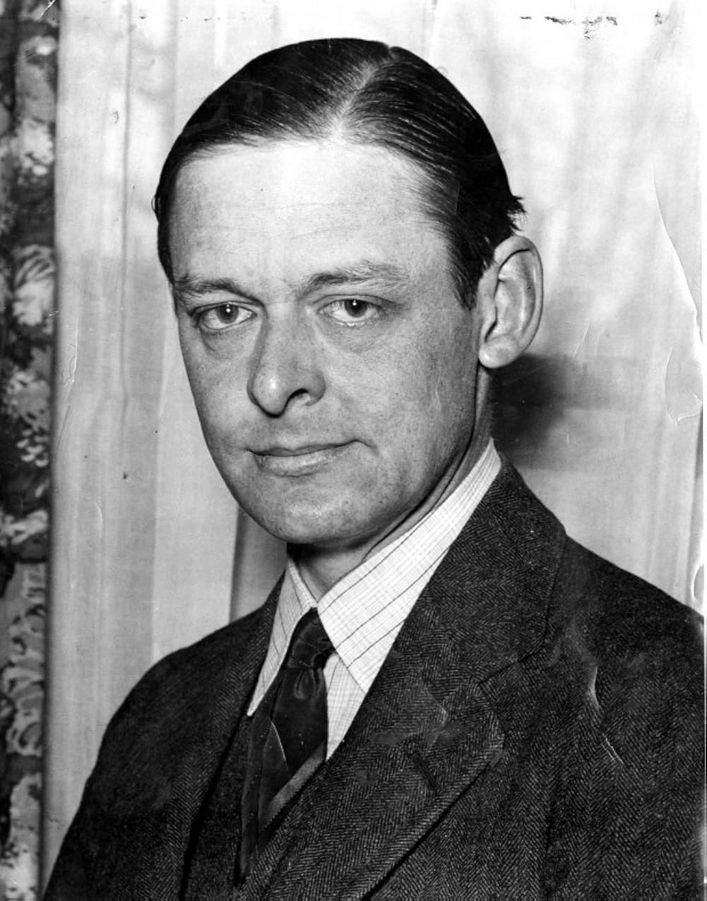
I’ve always disliked the Waste Land. It’s always seemed to me to be a pile of pretentious garbage. I mean, a poem with footnotes, what’s that about? It gives the game away from the start. Footnotes are generally limited to academic texts, so you can see what market Eliot was aiming at. He’s after getting his book put on a reading list for the newly created academic discipline of English Literature. Hence the obscurity of the text. He wants his audience to be reading his poem and puzzling over it for years to come, like some giant cryptic crossword puzzle rather than a poem, during which time his book will be forced upon young readers who are made to study it for their exams. And if that doesn’t put you off reading for the rest of your life, then I don’t know what will.
What has always got on my nerves, particularly, is the opening line: “April is the cruellest month.” No it is isn’t. April is the loveliest month, full of flowers and optimism, with the occasional burst of sunshine between the showers. Even the showers are lovely. They are watering the Earth, making it moist, helping to liven up the seeds so they burst out of the soil in their glorious catastrophe of colour and life.
According to my online annotated edition of the Waste Land, the opening line is a reference to the General Prologue of Chaucer’s Canterbury Tales:
Whan that Aprill with his shoures soote,
The droghte of March hath perced to the roote,
And bathed every veyne in swich licóur
Of which vertú engendred is the flour.
In Eliot’s poem, by contrast, not only is “April the cruellest month”, but “Winter kept us warm”, a reversal of the usual seasonal imagery. Clearly this is deliberate and again an affront to his chosen readership, the young, who will be made to read this drivel as part of their rites of passage through the exam system, sitting indoors bent over books full of dry words, studying in the Spring, when they should be outdoors gambolling in the fields like happy lambs. Yes, “April is the cruellest month,” and you’ve just helped to make it like that, Mr Eliot, with your ponderous versifying.
Having said all that, re-reading it again this year I’ve been forced to re-appraise its value and its purpose once more. There is definitely a quality to it, something deeper and more occult than its display of deliberate obscurity; something emotional that lies hidden between the words; something painful that he cannot quite bring himself to say. It is, famously, the record of a nervous breakdown, a meditation on the failure of his marriage, as well as a reflection of the broken post-war world in which he, as an unknown American writer in exile in England, found himself marooned.
Part of it was written in a shelter in Margate, not more than 20 miles from Whitstable. It’s a bus ride away: the Nayland Rock Shelter. There’s a blue plaque, which announces its cultural importance as the place from which the poet composed some of his most memorable lines. Margate even gets a mention, in Part III, The Fire Sermon:
On Margate Sands.
I can connect
Nothing with nothing.
The broken fingernails of dirty hands.
My people humble people who expect
Nothing.
2022 was the 100th anniversary of the poem’s publication, in celebration of which a few friends and I went down to the shelter to perform it. You can watch that here:
From Ritual to Romance
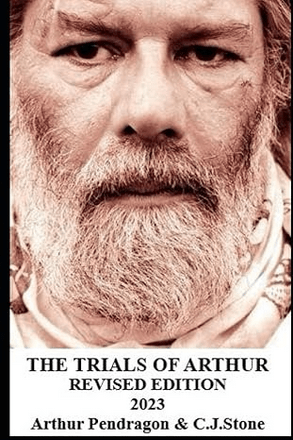
I was reminded of it again this year when I wrote a piece about the writing of my book, the Trials of Arthur. I referred to From Ritual to Romance by Jessie Laidlay Weston, which is mentioned in the footnotes to the poem. You can hear an online reading of that here; although, be warned, it is read out in large parts by non-native and non-professional English speakers with strong accents, which makes listening to it a quest in itself.
From Ritual to Romance is about the possible links between the Grail legend of medieval European literature, and the mystery cults of the ancient world. Weston traces themes in the legend to the myths of Attis, Adonis and Tammuz, about the renewal of the land and the participation in that by human beings in the form of ritual: what you might call, “the Ritual of Renewal”. She then proceeds to link these themes to the Tarot deck, which, she suggests, contains remnants of archaic ritual thought within it. Weston identifies four objects that make up the Grail, which she calls the Four Hallows of the Holy Grail, and which she locates as the four suits of the Tarot. It’s a nice idea, but probably wrong. The Tarot dates no further back than 15th century Italy.
Weston’s book is a classic of Folklorist literature and, while it is hard going at times (she never translates her sources, expecting you to be able to read medieval German or French) it is still a fascinating read. No wonder Eliot found himself referencing it in his famous poem. The notion of the Waste Land is contained in the Grail legend in the form of the wounded Fisher King, whose realms are made infertile by his enfeebled state. There’s a suggestion that the body of the King and the state of the land are linked by some obscure, magical-sympathetic mechanism. He’s wounded in the thigh, which implies sexual incapacity. The quest knights are expected to inquire concerning the nature of the Grail. The question is, “whom does the Grail serve?” If they fail to ask the question, the land remains destitute.
The Waste Land, then, represents the failure of Eliot, as the quester/questioner, to properly engage with the Grail. April is cruel because of its joylessness for him, while being joyous for the rest of the world. The ritual of renewal, which has given life back to the land, has failed to give it back to the poet. Hence the dried up imagery, the “heap of broken images,” “the dead tree that gives no shelter”, “the dry stone” with “no sound of water.” Eliot is describing his state of mind, his own emotional infertility, not the state of the world.
And yet the poem is rich in its language, with dozens of memorable lines, despite its obscurity. The broken narrative is deliberate. It reflects Eliot’s broken world. The use of found quotations is innovative, particularly its references to popular culture and overheard conversations. You are left with the image of a man sitting alone amidst the bustle of life, not quite belonging, overhearing the noisy clamour of the world outside, without ever being able to participate in it.
Unreal City

This idea of ritual as a way of engaging with the world fascinates me. It’s what the poem is hinting at. Usually, to our secular, modern way of thinking, ritual is seen as archaic, a remnant of some primitive misunderstanding of the world and our relationship to it, now thankfully overcome. But I see this as narrow-minded and missing the point. Did the ancient people think that they were bringing the world back to life with their rituals? Well yes and no. In fact they knew perfectly well what was going on. They knew when to plant, and in what kind of soil, where the animals were in order to hunt. They knew the science of it all, it’s just that science and magic and poetry were not separate things back then. Saying a prayer as you planted your seeds in the proper soil, at the right time, under the right moon, was a supplement to the knowledge. Performing a ritual before the hunt was a method of focussing the mind.
To me, ritual is a way of articulating, on a non-verbal level, our relationship to the life all around us. It is a way of being-in-the-world. What is being renewed here is not the world, but ourselves, the ritual actors, through our relationship to it. By performing ritual at a moment of renewal we are participating in it, we are drinking in some of the world’s spiritual water, bringing ourselves ritually to life.
That’s why the Waste Land is such a dismal poem. It is the tale of a man bereft of life, separated from life, having spent his sexual energy on the wrong partner. It is the story of a man who is no longer able to feel the surge of life through his veins as the sap rises all around. That is why April is so cruel to him: not because it is objectively cruel, but because it is subjectively so. While life blossoms he perceives it as breeding
Lilacs out of the dead land, mixing
Memory and desire, stirring
Dull roots with spring rain.
What he is describing is neurosis: the disease of modern life. It’s a kind of death-in-life, which Eliot manages to capture so powerfully in these lines:
Unreal City,
Under the brown fog of a winter dawn,
A crowd flowed over London Bridge, so many,
I had not thought death had undone so many.
Sighs, short and infrequent, were exhaled,
And each man fixed his eyes before his feet.
Flowed up the hill and down King William Street,
To where Saint Mary Woolnoth kept the hours
With a dead sound on the final stroke of nine.
That’s a perfect description of London at its worst: dismal, dreary and uninspiring, more than a little dead. You wonder what Eliot was doing here, having been born in St Louis, Missouri? He was such an Anglophile. He jettisoned his American accent to make himself appear more English, adopting all the worst traits of bourgeois buttoned-up Englishness – rather than the best of working class humour, which is ribald and dangerous – converting to Anglicanism, surely the most pompous, vapid and spiritually bereft form of Christianity, while writing his impenetrable modernist poetry, deliberately elitist, designed to make himself and his class feel superior, while alienating everyone who doesn’t have the time or the energy to read up on the footnotes.
In this sense we can read the Waste Land both as an evocation of his neurosis, and as a prolongation of it. He is bringing it to life and inflicting it on the world at the same time. It’s a measure of the poem’s success that we find ourselves coming back to it, again and again, despite its obscurity.
Story originally appeared here.
About CJ Stone
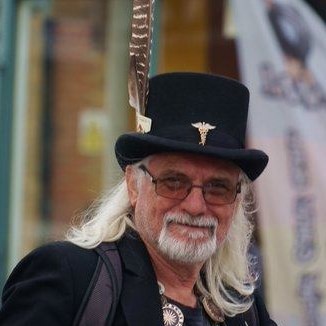
CJ Stone is an author, columnist and feature writer. He has written seven books, and columns and articles for many newspapers and magazines.
Read more of CJ Stone’s work here, here and here.
Whitstable Views
How to use it!
- Make sure you share and like our articles on Facebook and Twitter/X, and whatever other social-media platforms you use. Join us on Facebook here: @whitstableviews
- You can read and contribute articles for free but in order not to miss any, please subscribe to get regular free updates.
- To do so, press the “Subscribe” icon on the bottom right hand corner of the screen. This will take you to the option to sign up. (It disappears as you move the text down then reappears at you move it back again!)
- Please engage by leaving comments on the website, rather than on social media. Let’s get a debate going. All our contributors welcome the chance to engage with YOU.
- To all writers out there, we want to hear YOUR views too, so do submit your own articles. Read our submissions page on how to do this: https://whitstableviews/submissions/
- Finally, to keep Whitstable Views alive and independent please donate if you feel able to do so. As little as £1 would help. Details are on the donations page here: https://whitstableviews.com/donate
 Whitstable Views