
by
My friend Charlie died in August last year. I wrote about him in my column in the Whitstable Whistler, which you can read here:
It’s the fourth story in the collection.
Charlie was two years younger than me. He was born July 7 1955. His full name was Charles Henry Rouse, but everyone knew him as Charlie.
I must have met him when I first came to Whitstable in 1984. I soon became involved with the Labour Club.
His dad, Tom, a fisherman, was one of the founders, and Charlie was a regular. He had a dog, an Alsation named Gelert, who followed him everywhere. Gelert was never on a lead, always at Charlie’s heel. Charlie would call and he would follow. Both of them liked a drink. Gelert would get his in a drip tray. When he died he was buried with a pint.
Someone told me he saw the dog looking miserable one evening.
“What’s wrong with Gelert?” they asked.
“He’s not had his drink yet,” said Charlie.
The name “Gelert” is a reference to a legendary Welsh dog. The story goes that Llewelyn the Great returned home from the hunt to find his baby missing, the cradle overturned, and his faithful hound, Gelert, with blood smeared around his mouth. Llewelyn drew his sword and killed the dog immediately, but within seconds heard the baby’s cry. The child was under the cradle, along with the body of the wolf that Gelert had killed while protecting him. Llewelyn, realising his mistake, buried the dog with great ceremony and was said never to have smiled again. There is a town in North Wales called Beddgelert, which means “Gelert’s grave”, where the dog is supposed to have been buried.
Charlie was one of the “good old boys” of Whitstable. He liked a drink and a smoke, and was often seen puffing on a roll-up with a pint in his hand. He was always very stylishly dressed. He liked to signal his working class roots by wearing a flat cap, but he also had his feet in the alternative community. It was Charlie who told me about the Seasalter free festival that had taken place in the town only eight years before my arrival, in 1976.
You can read about the festival here:
Charlie was a merchant seaman at the time. He’d just got back from a stint overseas when he bumped into someone in the town. They told him about the festival taking place on the levels, opposite The Sportsman. He got on his bike and went down there, hopping the dyke to gain entry. It changed his life. Whitstable was very parochial back then. Taking part in the festival, getting involved with the hippies, gave him a new perspective on life. He was always open to a little “experimentation” after that.
He and I were both involved with the early rave scene in Whitstable, which was led by Paul Anderson, another great friend who has passed away recently. All of us began our spiritual journey at the Whitstable Labour Club.
You can read about Paul here:
After his time in the merchant navy, Charlie became a tiler. He told me that he was responsible for the tiling of The Duke of Cumberland. After he died I went down there to see if I could see it, to pay homage to my friend. Unfortunately it had been removed. It was this that gave me the idea that I put into the Whistler story, to quote:

“Had he been an artist rather than an artisan, he could have signed his work, and everyone would have been able to admire it. As it is, most of it will remain anonymous.”
He once built a bathroom for me. I was renting a flat from my friend Fraser (who also appears in that collection of Whistler columns). Fraser had had a number of quotes, but they were all very expensive. I bumped into Charlie one night in The Coach and Horses and asked if he could do it for us. He said he could. He gave us a quote about half as much as the other bathroom fitters and was immediately hired to do the job. In the end I think he lost out on it. He was a tiler rather than a plumber and it took longer than he had anticipated. To the right is the result of his work.
Charlie was very practically minded. I remember after a rave one time he took me to a tree house he had built. We climbed into it to watch the dawn. He told me that, had he been on the Titanic when it was sinking, he wouldn’t have wasted his time running around panicking. He would have scoured the ship for items to make a life raft out of.
I was reminded of this when I went to see him in the Cheerful Sparrows ward in QEQM Margate hospital about a fortnight before he died. I went with Mary Sullivan. When we arrived he was asleep. He woke up and told us he’d been dreaming about fixing the men’s toilet in the ward. “You should see it,” he said. “It’s horrible.”
So that’s how he spent his last days, dreaming about fixing things.
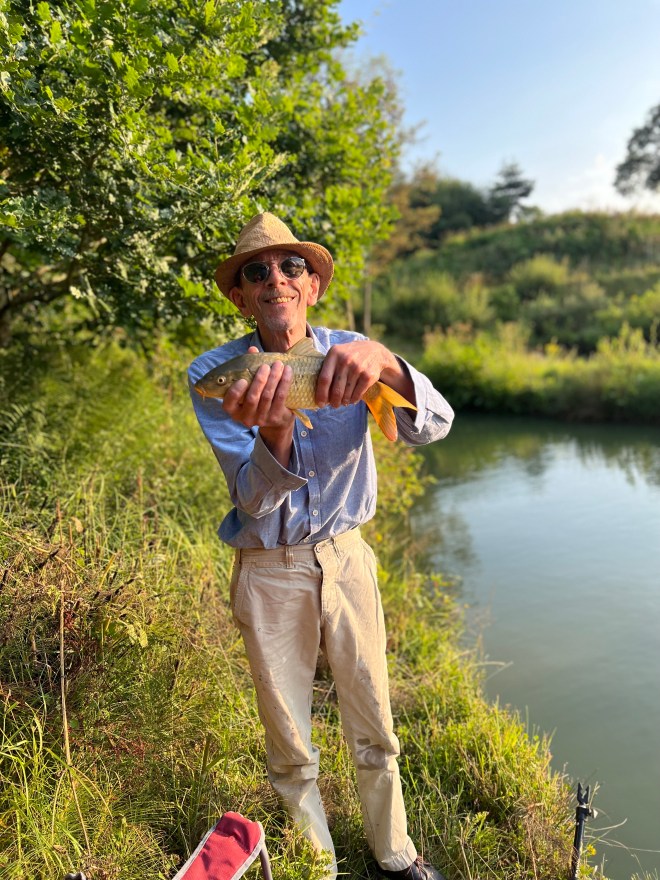
His passing was sudden and catastrophic. Only a few weeks before his death he had been fishing. It was his favourite pastime. He would go to a freshwater fishing lake on the West Coast every year with friends, and always had stories to tell when he got back. They would drink and fish and laugh to their heart’s delight. Only this year he wasn’t feeling too well. He said he thought it was a hernia, and kept putting off going to the doctor’s.
“Typical bloke, he said, “always leaving things to the last minute.”
It was only when the pain got so bad it was making him cry that he went to the doctor’s. Cancer, they told him. It was already too late. He had barely a few weeks to live.
What surprised me when I saw him in the hospital was how cheerful he was. He was laughing and joking and putting Mary and I at our ease. I asked him about it. “It comes to us all in the end, wise man and fool alike,” he said. He told us about someone else in the ward who was wailing constantly. “Sod that,” he thought. He said he didn’t want people crying over him. It was already difficult enough.
So he was resigned to his death and relieved that he was no longer in pain. He had a syringe in his arm which gave him an automatic dose of morphine at regular intervals. He kept inspecting it to see when the next one was due.
That was the last time I saw Charlie. I shook his hand as I was about to leave and asked if I could see him again.
“Of course you can,” he said.
Mary and I planned to visit him once he was settled in a hospice, but he died before his family were able to secure a place for him.
These are my personal recollections of Charlie. Other people will have their own stories to tell. He is survived by his son, Tom, his daughter-in-law Marj, his two grandchildren, Charlie and Freddie, Tom’s mother Jacqui and his brother Tony and his family.
But I know this about him: his last years were amongst the happiest of his life, seeing his son prosper and find contentment with Marj, watching his grandkids grow.
One final thing: Charlie is the model for how I want to exit this life when my time comes. He lived the best way he knew how and departed the world with grace, dignity and good humour.
Gallery
Photos care of Marjorie Rouse . Click on images to enlarge:



About CJ Stone
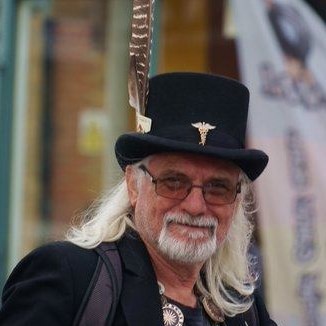
CJ Stone is an author, columnist and feature writer. He has written seven books, and columns and articles for many newspapers and magazines.
Read more of CJ Stone’s work here, here and here.
Whitstable Views
How to use it!
- Make sure you share and like our articles on Facebook and Twitter/X, and whatever other social-media platforms you use. Join us on Facebook here: @whitstableviews
- You can read and contribute articles for free but in order not to miss any, please subscribe to get regular free updates.
- To do so, press the “Subscribe” icon on the bottom right hand corner of the screen. This will take you to the option to sign up. (It disappears as you move the text down then reappears at you move it back again!)
- Please engage by leaving comments on the website, rather than on social media. Let’s get a debate going. All our contributors welcome the chance to engage with YOU.
- To all writers out there, we want to hear YOUR views too, so do submit your own articles. Read our submissions page on how to do this: https://whitstableviews/submissions/
- Finally, to keep Whitstable Views alive and independent please donate if you feel able to do so. As little as £1 would help. Details are on the donations page here: https://whitstableviews.com/donate
 Whitstable Views
One Comment