
Toothpull of St Dunstan by Kevin Davey
reviewed by
I’ve just finished reading Toothpull of St Dunstan by Kevin Davey. Kevin is a Whitstable based author. Toothpull is his third novel.
His previous books are Playing Possum and Radio Joan.
You can read my review of Playing Possum here:
You can read Nick Hayes’s review of Radio Joan here:
Both novels could be described as “Modernist” in their approach. Think James Joyce, Virginia Woolf, TS Eliot, Ezra Pound. It’s a style that flourished in the early part of the 20th Century but which has been largely rejected by the reading public, except in literary circles or on the curriculum of English Literature courses. Toothpull is in the same mould.
What this means is that the reading experience can be quite disorientating. There’s no plot as such. No characterisation. No development. No narrative flow. Time doesn’t seem to work in a linear way. Parts of the action take place in the present, before shifting into the past. 21st century characters meld into 13th century settings and at times it’s hard to know where you are. I read the first 20 pages in complete befuddlement, having no idea what I was dealing with. It was only when I wrote to Kevin to complain, and he told me that it is meant as a memoir, that it came into focus. You are hearing the very particular voice of the narrator as it evolves over time. To be fair, it does say this on the back cover, but for some reason I failed to notice. Once that became clear I started again from the beginning and the reading became easier.
So I’m in two minds about the book. It is not a page turner. You are not compelled to go back to the book to find out what happens next. More often it involves going back to the beginning of a sentence to try to figure out what it’s saying. The story consists of a series of vignettes of historical events as told from the point of view of the narrator, an unnamed 700 year old dentist living on St Dunstans Street, on the approach to the Westgate, outside (“Without”) the city wall in Canterbury, Kent.

It’s not made clear what the episodes represent. Sometimes I was already aware of the historical incidents being depicted, sometimes not. Even when I knew what was supposed to be going on it could be hard to make sense of it. Much of the action is hidden behind veils of literary trickery. There’s alliteration, pun, rhyme, onomatopoeia, glossolalia, ekphrasis. Ekphrasis means to reference another work of art. Toothpull is full of that. It wears its learning on its sleeve. If I was being uncharitable I might say that it bears the mark of intellectual arrogance. You are already expected to know what’s going on. The writer is a learned man writing for other learned men. He wants you to know that and to measure yourself by his standards. Most of us, I suspect, would fail. More charitably, I think that Kevin spends much of his time in his own head, in an ongoing dialogue between the books he reads and the products of his imagination, and that the obscurity of the text reflects his own sense of disconnectedness from the consensual world.

On the other hand, he has an unparalleled historical imagination. He has a way of bringing history to life, not so much on the grand scale as on the small. The life of the street, with its cast of passing characters, from Thomas More to Charles Darwin, is revealed to us in electrifying detail. The language he uses goes in and out of focus. Sometimes it has a precision, a presence, that makes it almost seem to be alive. Sometimes it is so obscure as to baffle the mind.
Take this as an example. There are a number of made-up words, such as “CLOCCAGLONG COLOCALONG” in the 6th paragraph on the first page. And again: “GLOCCACLONG”. Actually, reading the context, it’s clear that this is an attempt to render the sound of bells into English script. It’s a ridiculous task, utterly impossible. So you have to ask: why not simply refer to the bells ringing and allow the readers’ imagination to do the rest? Why bamboozle us with the limitations of the written word?
The book also has the air of an in-joke. There are absurdist elements, like talking heads that narrate their own demise, and a-historical references to 1960s cartoons and a host of other oddities collected together, like the strange items in a Cabinet of Curiosities; and in fact this is one of the motifs in the book, Toothpull’s tooth collection that he keeps in a cabinet in his room, which he spends 700 years putting together, and which is rejected by various institutions when he offers it to them towards the end of his life. We are never told how he manages to reach such a venerable age, nor how he acquired his dental obsession. Dentistry appears to have been born into him. Almost his only discernable personality trait is that he thinks about teeth a lot. Every character he encounters is described in terms of what is revealed when they open their mouths.

Perhaps his great age is a narrative device to allow the author to reflect upon the changing times of this narrow strip of territory between St Dunstan’s Church and the Westgate. This is where the book comes into its own. I’d never really thought about this street before. It was just somewhere I passed through on my way from here to there. Reading about it gave the place a personality. It made it real. It came alive in my mind. I visited the Church for the first time in my 40 years or more of living in this part of Kent. I sat in the garden of the House of St Agnes. I looked at the buildings. I wondered about the generations who had passed their lives here, behind these ancient walls.
Would I recommend the book? Well yes and no, and with the following qualifications. It is hard going, grindingly painful in places. It is an example of a book that embodies its subject matter in the text. Reading it can feel like having your teeth pulled. Its descriptions of dental techniques are toe-curlingly visceral, guaranteed to make you dread your next visit to the dentist. On the other hand, if you put the work in, there are treasures to be found. It takes persistence and concentration. You cannot read it casually. You have to stay focussed, but if you are willing to engage with it on its own terms, if you allow the language to enter you, if you accept the historical spellings that leave you stranded somewhere between the middle ages and modern times, if you surrender to its strangeness and its complexity, it’s worth the struggle. A sense of history coming to life. All the sights and sounds and smells. All the mouths. All the teeth. You’ll never think about St Dunstans or Canterbury the same way again.
https://www.splicetoday.com/writing/a-cabinet-of-curiosities-0546a60b-7470-4400-bc4e-9b68380fdf81
Kevin will be reading from the book at a benefit in the Whitstable Social Club, Saturday 31st May, at around 3.40. In the garden if the weather is good, in the back room if not. Facebook event page here.

You can buy the book here:
Blurb:
The startling memoir of a dentist who for 700 years pulled teeth in the approach to Canterbury, beside its city gate.
The hustle and bustle of a road congested with pilgrims, insurgents, migrants, dissenters, quacks, militias and Mods. Facetime with Thomas More, William Courtenay, Darwin, Marx and the Red Dean.
Toothpull of St Dunstan is a deep dive of discovery into the margin of a cathedral city, revealing how pain, toothcare and life in the street – along with faith, threats and resistance – change and change again in unexpected ways. Autofiction that will set your teeth on edge!
A modern Canterbury tale propelled by dramatic incidents and disturbances which take place outside the gate over seven centuries – from the Peasant’s Revolt to the Blitz, from plagues and protests against the Corn Laws to rowdy mods on scooters in the sixties – packed with striking episodes drawing on the real and probable and at times the outlandish.
After reading Toothpull, the last few yards of the ancient Pilgrim’s Way will never look the same again.
Neither will your dentist. Nor will tired mainstream history fiction – its time is up.
About CJ Stone
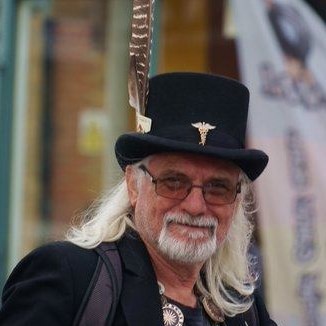
CJ Stone is an author, columnist and feature writer. He has written seven books, and columns and articles for many newspapers and magazines.
Read more of CJ Stone’s work here, here and here.
Whitstable Views
How to use it!
- Make sure you share and like our articles on Facebook and Twitter/X, and whatever other social-media platforms you use. Join us on Facebook here: @whitstableviews
- You can read and contribute articles for free but in order not to miss any, please subscribe to get regular free updates.
- To do so, press the “Subscribe” icon on the bottom right hand corner of the screen. This will take you to the option to sign up. (It disappears as you move the text down then reappears at you move it back again!)
- Please engage by leaving comments on the website, rather than on social media. Let’s get a debate going. All our contributors welcome the chance to engage with YOU.
- To all writers out there, we want to hear YOUR views too, so do submit your own articles. Read our submissions page on how to do this: https://whitstableviews/submissions/
- Finally, to keep Whitstable Views alive and independent please donate if you feel able to do so. As little as £1 would help. Details are on the donations page here: https://whitstableviews.com/donate
 Whitstable Views