
by
The European security order has long been in crisis, but few anticipated the current catastrophic breakdown. War has returned to the continent, continuing the unfinished business of the twentieth century. The end of Cold War I in 1989 was accompanied by endless declarations of ‘strategic partnership’ and cooperation between the former adversaries, but after a 25-year cold peace, Cold War returned with vengeance in 2014 and hot war in 2022. So, what went wrong? It is easy to blame Moscow and Washington, or a European capital of choice, and they all bear their share of responsibility. This article highlights perhaps the most important factor, the failure to create a genuine continental system of collective security.
There is an important difference between collective security and collective defence. The former harks back to the attempts to create a system of collective security in interwar Central Europe, which failed so spectacularly in 1939 (and again in 2022). As the Cold War intensified in the postwar era the Atlantic states created a system of collective defence in the form of NATO, and under the umbrella of US security guarantees the West European states rebuilt their economies and societies. Responsibility for European security was effectively outsourced to Washington, which made a lot of sense in Cold War conditions, with a powerful and hostile Soviet Union in the East. This was a system of collective defence, and its unique combination of power and norms ultimately triumphed.
At the same time, the creation of the UN-based Charter International System in 1945 offered a framework for the peaceful management of conflict between sovereign states. Rather than balancing coalitions and spheres of influence, the Charter system sought to transcend old-fashioned power politics with a more substantive form of sovereign internationalism accompanied by inclusive security regimes. It was to this system that Mikhail Gorbachev and his reformist associates appealed at the end of Cold War I. The New Political Thinking in the late Soviet period appealed not to the principles of collective defence at the heart of the political West, a political and military formation created in and shaped by the logic of Cold War, but to Charter principles. There was no capitulation to the political West. Moscow ended the Cold War in the belief that Charter principles of collective security would triumph. This made it all the more galling when American leaders began to talk in terms of winners and losers, a language that perpetuated the cold war thinking that the Soviet leaders hoped to transcend.
Thus, two models of European security competed in the post-Cold War years. All the fundamental documents of the period reflect the division between the idea of indivisible security – the principle that security cannot be achieved at the expense of another; and the principle of freedom of choice, that each country has the sovereign right to decide on its own security arrangements. The tension is already visible in the Helsinki Final Act of August 1975, and then in the Charter of Paris of November 1990, and all the way through to the Istanbul Declaration of November 1999 and the Astana Declaration of December 2010. This helps explain the intensity of the debate over NATO enlargement, but ultimately the debate over what precisely was promised (although undoubtedly important) is secondary.
NATO enlargement

NATO enlargement may well have been to Russia’s advantage, but only if embedded in a larger system of pan-continental European collective security. Even such a passionate advocate of NATO enlargement as Zbigniew Brzezinski, President Jimmy Carter’s national security advisor from 1977 to 1981, in his Grand Chessboard in 1997 argued that Moscow should have been offered ‘a deal it could not refuse’, namely ‘a special cooperative relationship between Russia and NATO’. His idea was to ‘create a new transcontinental system of collective security, one that goes beyond the expansion of NATO proper’. This is the collective security arrangement envisaged by the architects of perestroika.
Instead, Cold War divisions were perpetuated in the form of the expansion of an exclusive model of collective defence. Understandably, former Soviet bloc hurried to shelter under its protective umbrella, but by intensifying the partial logic of collective defence, European security as a whole was undermined. Bloc politics were reinforced by the political West, once again generating a logic of division and hierarchy. There is a disjuncture between the claimed normative superiority of NATO and the practical espousal of a type of collective defence that is at odds with the precepts of collective security. The only way for the contradiction to be resolved was for all European states to be members (other than those who declared their neutrality), or none. The actual development of the European post-Cold War security order turned out to be the worst of all possible worlds.
With acknowledgement to Oxford Diplomatic Dispatch
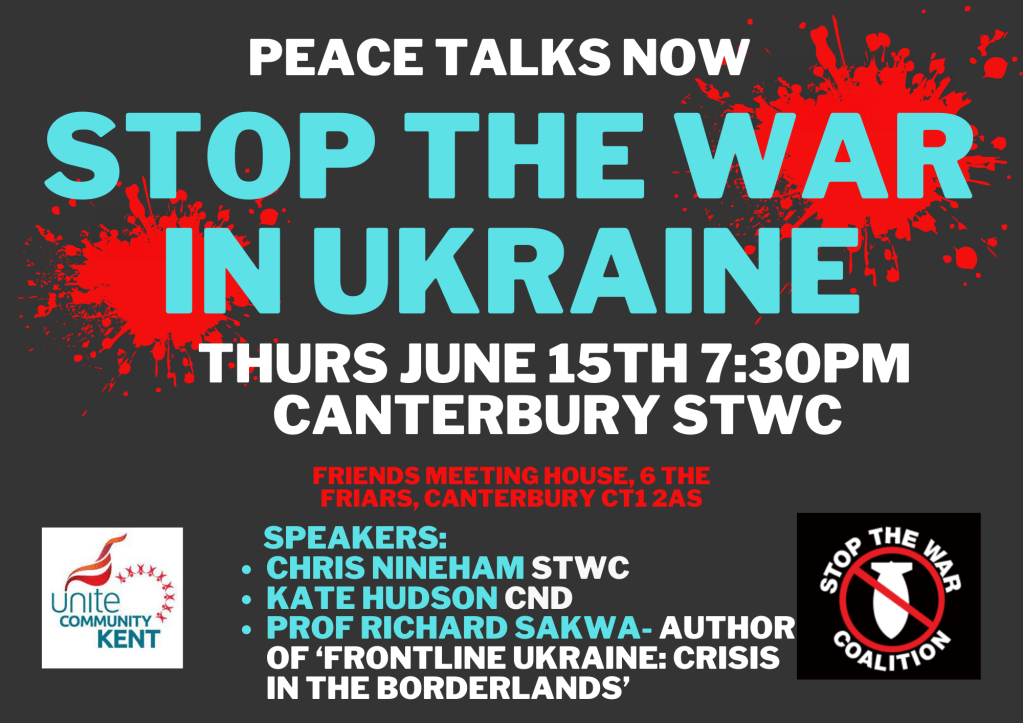
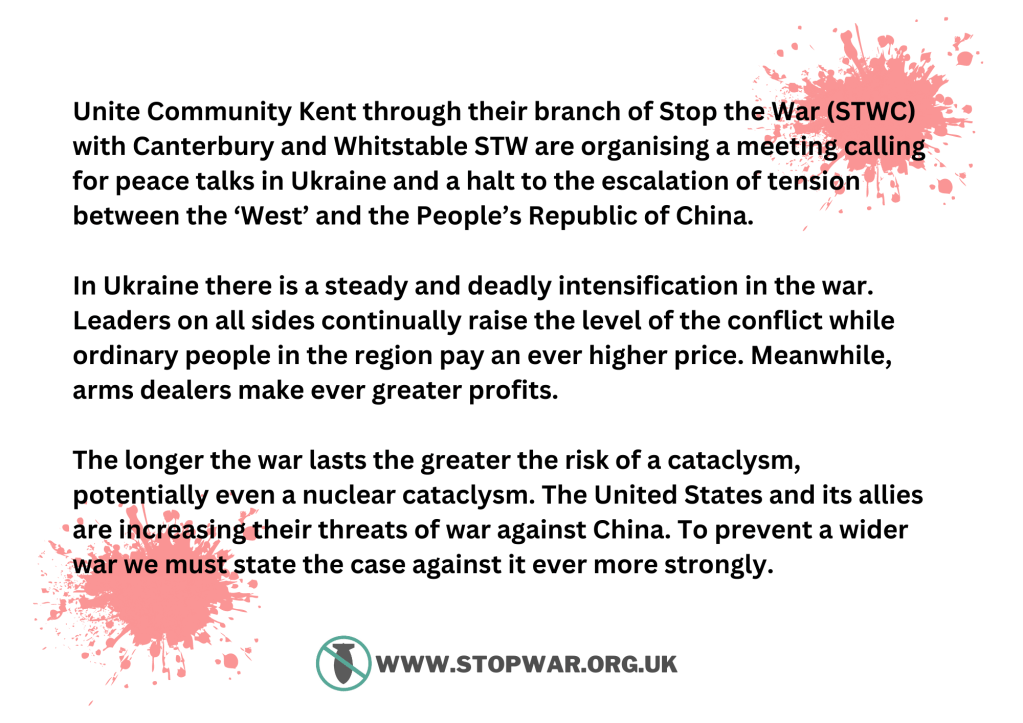
Facebook event page: https://www.facebook.com/events/631915112144634/
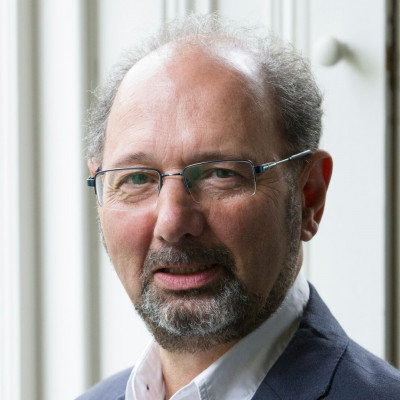
Richard Sakwa is Professor Emeritus of Russian and European Politics at the University of Kent at Canterbury, a Senior Research Fellow at the National Research University-Higher School of Economics in Moscow and an Honorary Professor in the Faculty of Political Science at Moscow State University. He is the author of Frontline Ukraine: Crisis in the Borderlands (Bloomsbury, 2015). His latest books are The Putin Paradox (Bloomsbury 2020) and Deception: Russiagate and the New Cold War (Lexington Books 2022).
Whitstable Views: How You Can Help
- Make sure you share and like our articles on Facebook and Twitter, and whatever other social-media platforms you use.
- Follow the site to get regular updates about new articles when they appear. Press the “Follow” icon in the bottom right hand corner of your screen and that will take you to the option to sign up. (It disappears as you move the text down, then reappears as you move it back up again!)
- Leave comments on the site rather than on Facebook. Let’s get a debate going. All of our contributors are willing to engage with you if you leave a comment.
- To all writers out there, we would LOVE you to make a contribution. Read our submissions page for details on how to go about that: https://whitstableviews.com/submissions/
- Finally you can donate. As little as £1 would help. Details on the donations page here: https://whitstableviews.com/donate/
 Whitstable Views