
New website offers advice on withholding payment
by
A new national website launched this week giving important information to the growing number of customers now undertaking a boycott of their water bills.
This is timely considering recent calls for action, which include an audience member on BBC’s Question Time suggesting we should be allowed to “withhold” water bill payments due to “raw sewage” being dumped into our seas by water companies.
In November 2021, I began withholding payments to my own water company, Southern Water, together with my friends and fellow Whitstable residents, Emma Gibson (the former Campaigns Director of Greenpeace) and her partner, Steve Wheeler (a Green Party councillor) in protest against what the water companies euphemistically label “storm overflows”.
Bob Geldof, who lives in the neighbouring town of Faversham gave us his immediate and very vocal support, and since then we have been joined by many people from all over the country, and from all walks of life, including artists, actors, authors, academics, builders, lawyers, shopkeepers, jewellers….I could go on.
Most boycotters wish to remain anonymous but among those willing to take a public stance are former magistrate, Chris Stanley; yoga teacher, Liz Foreman; retired postmaster, Chris Dash; and the professional singer and recording artist, Mary Carewe to name but a few.
Recently I was contacted by fellow boycotters in Hastings who agreed to be featured in my last article giving their own personal statements.
Why have we all taken this action?
Because we feel we have no choice.
Throughout the last year, untreated sewage was dumped into this country’s waterways for 1,754,921 hours—equivalent to 200 years—according to the latest Event Duration Monitoring (EDM) data from the Environment Agency.
Although companies are permitted to discharge sewage during heavy rainfall, they also discharge during long periods of dry weather—as Southern Water has done lately here on the north Kent coast.
See:
Unable to describe these as “storm overflows”, such “dry spills” are excused as “technical failures”. They also appear to be on the increase, according to campaign group, Surfers Against Sewage.
In July 2021, Southern Water received a record criminal fine of £90m for deliberately dumping billions of litres of raw sewage into some of the “most precious, delicate environments in the country”—for the company’s own financial gain.
That judgement made headline news and succeeded in raising awareness but in fact sewage dumping had been widespread for decades, causing not only environmental damage but a hazard to human health via enteroviruses that cause gut infections, or the proliferation of antibiotic resistance. This has a detrimental effect on tourism connected to beach and water activities, like surfing and swimming, as well as the consumption of seafood that can accumulate toxins and microplastics—a problem that’s particularly acute in Whitstable with its historic link to oysters.
Last November it was revealed that more than 70% of this country’s water industry is now in foreign ownership.
£72bn has been taken out of these companies and paid to their shareholders and owners, and last year alone £1.4bn was paid out in shareholder dividends.
For what?
As a reward for corporate greed, lack of investment – and more sewage dumping?
In 2019, following a formal investigation by the regulatory authority, Ofwat, Southern Water was ordered to pay £126m in penalties and payments to its customers following “serious failures in the operation of its sewage treatment sites and for deliberately misreporting its performance.”
At the time, Ofwat’s CEO, Rachel Fletcher, made a statement which should have rung alarm bells for all Southern Water’s customers – and those elsewhere – if it had only gained as much attention as the company’s £90m criminal fine.
“What we found in this case is shocking. In all, it shows the company was being run with scant regard for its responsibilities to society and the environment. It was not just the poor operational performance, but the co-ordinated efforts to hide and deceive customers of the fact that are so troubling…”
So, having gained a reputation for its criminal activity, and “coordinated efforts” in deception, why on earth should we, as customers, ever trust Southern Water or believe any of the company’s promises about future improvements?
Our seas continue to be polluted by a deluge of untreated sewage but the same is true of our rivers and in spite of national outrage at the scale of the pollution, the government seems unwilling to bring pressure to bear on this industry.
The most recent move towards any meaningful improvements came when Water UK announced that companies now plan to spend £10bn on finally upgrading infrastructure – but at their customers’ expense!
Sewage campaigner, Feargal Sharkey, rightly demanded:
“Why are we being charged twice for a service we’ve already paid for? I can’t for the life of me see why each of the nine water companies can’t raise that £10billion themselves. It would mean just £111 million per company per year, which they could easily afford…”
As an example, Feargal cited Thames Water which last Christmas announced profits “just shy of £500million – and that was made in just six months.”
Direct action as a last resort
I have previously campaigned on various environmental issues, and used non-violent direct action only as a last resort, heeding Martin Luther King Jnr’s advice to educate others about the issue, negotiate with your opponent and then take direct action if no change is forthcoming.
As concerned individuals, those of us who have boycotted payment, first communicated our concerns to our respective water companies in correspondence that after a certain time was terminated with the suggestion that any further complaints can be passed to the Consumer Council for Water (CCW).
Responses received from the CCW seemed to show a fair degree of empathy with complainants on the sewage issue – a tone which appeared to toughen when Catherine Jones, Head of Company Engagement, was recently invited to give comment after Hastings resident, Katy Colley, had spoken about her own payment boycott on a recent BBC Radio Sussex interview.
Jones gave a reminder to customers that water companies have a statutory right to charge customers and that they “can pass the costs of one person’s non-payment on to other people’s bills.” I couldn’t help thinking this was the kind of statement that might have come straight out of a water company’s press department, because companies could equally pass on any such costs to their shareholders or to members of their boards of directors. In 2021, Bob Geldof questioned why those same board members weren’t in jail, while the LBC broadcaster, Nick Ferrari, recently demanded on Question Time that water bosses should actually receive 5-year jail sentences for presiding over sewage dumping.
While the CCW claims on its website to be “the independent voice for water consumers in England and Wales”, it’s interesting to note that the CCW is actually “sponsored” by DEFRA—a government department. Presumably the CCW has no wish to lose its sponsorship.
Privatised in 1980 under Margaret Thatcher’s premiership, the water industry in England and Wales became a government-granted monopoly with each company being given the exclusive privilege of becoming the sole provider of each regionalised service.
Having no consumer contracts with the companies, we are stripped of any consumer power to hold them to account and are legally obliged to pay water bills in the same way we are compelled to pay council tax. Rather than creating more consumer choice in England and Wales, the privatisation of our water industry in this form prevents us from being able to move to any other company who might possibly offer responsible wastewater services. Consequently, customers across the whole of England and Wales are now stuck with providers who have proved themselves to be serious and serial offenders regarding sewage pollution—while I and the rest of Southern Water’s 4.7 m customers in the south east, are lumbered with a company guilty of 51 counts of criminal activity.
In 2021, when our boycott began in Whitstable, we were also joined by Ashley Clark, who was then a local Conservative councillor. Clark was not only willing to criticise the record of his own party on sewage pollution but as a former police officer he also threatened Southern Water with arrest if they ever dared to send bailiffs to his door to demand payment – likening this to “demanding money with menaces.” Clark was then suddenly offered a 50% discount on the sum he had withheld from Southern Water – a proposition made to him over the phone – which he accepted only in order to create a paper trail to confirm that offer. At the same time, another of our boycotters, based in Walmer, was offered a 100% discount – both deals being reported in the Guardian and The Times.
Perhaps Catherine Jones of CCW can tell me if Southern Water passed the “costs” of those “non-payments” on to other customers?
Aware from the outset of the risks concerning non-payment, those of us here in Whitstable have always been willing to withhold payment in order to take a principled stand against sewage pollution.
Southern Water duly warned us that they are entitled to take the following actions:
- Refer your account to a debt collection company – which may take legal action on our behalf to recover the debt. (This will incur administration costs of at least £45.)
- Take legal action – which might involve asking the court to instruct your employers to make deductions from your salary – plus legal costs.
- Notify a credit reference agency – which means a default will be registered on your consumer credit file for the next 6 years.
There also implications for those who are tenants rather than homeowners as the company may pass the debt on to the property owner.
And yet, in spite of all the risks of non-payment, increasing numbers of water customers from all over the country—Kent, Sussex, Hampshire, Lancashire and Yorkshire – have contacted me for information, including a group of people behind the platform, findothers.com, calling unreservedly for a boycott campaign.
I have never actively promoted non-payment as an action to others, being aware of the risks involved, but it’s become increasingly clear to me and to others involved in the existing boycott that there is now a real need for suitable guidance.
After discussion with Hastings boycotters, and in order to prevent vulnerable people taking action about which they may not be fully informed, comprehensive advice is now offered on a brand new website as follows:
https://www.boycottwaterbills.com/
This is not the work of a single campaign group. Instead, as the site explains:
“We are a group of individuals who had enough of paying water companies to pollute our waterways and seas—so we stopped paying!”
Should you decide that, like us, you have no wish to reward companies like Southern Water who continue to pollute our precious waterways while profiting from their own lack of investment, you can weigh up the pros and cons of withholding payment and make your own personal choice about taking an action which we believe sends a bold message not only to the companies and their shareholders but to a government that seems unwilling or unable to protect us – and our environment.
This week, the journalist and broadcaster, David Baker, devoted BBC Radio 4’s Analysis programme to the subject of boycotts, asking whether these are “an effective way for ordinary people to hold businesses and nations to account.”
Time will tell. But should you decide to take this action against our polluting water companies, I can guarantee you will not be alone.
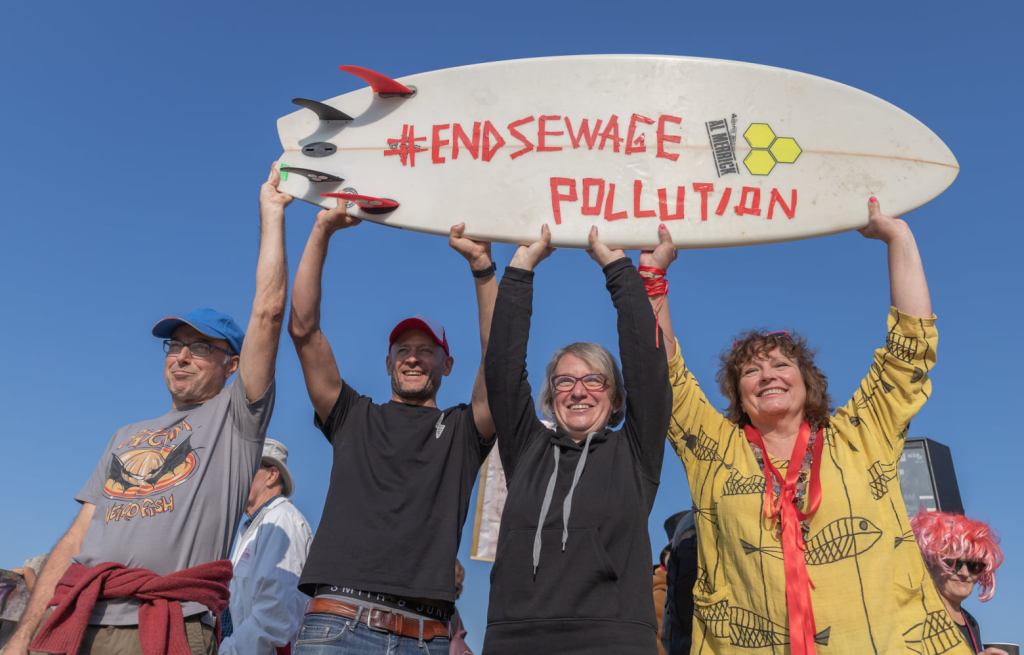
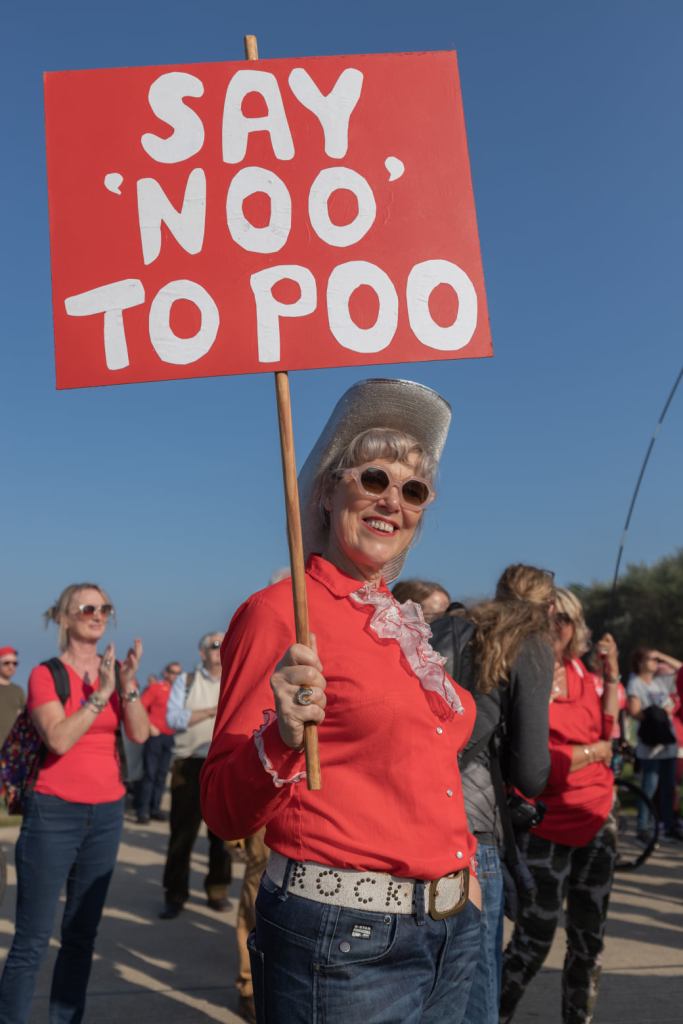
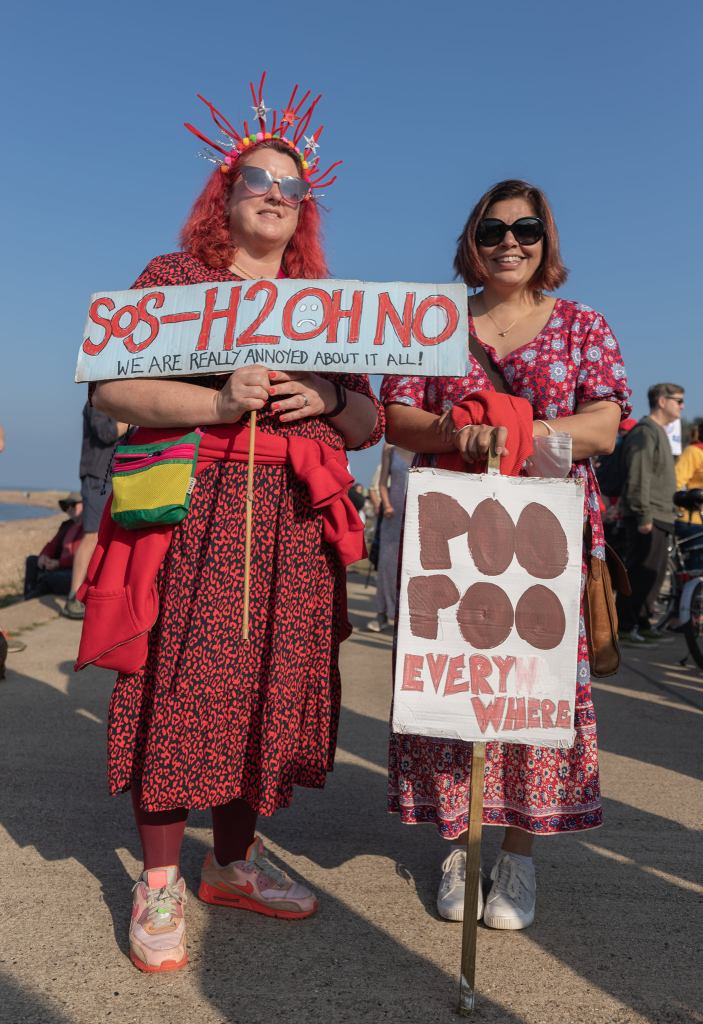
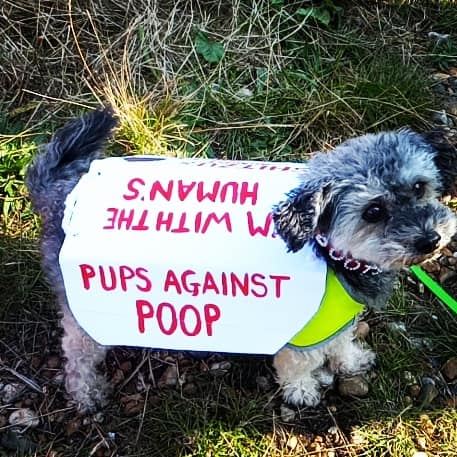
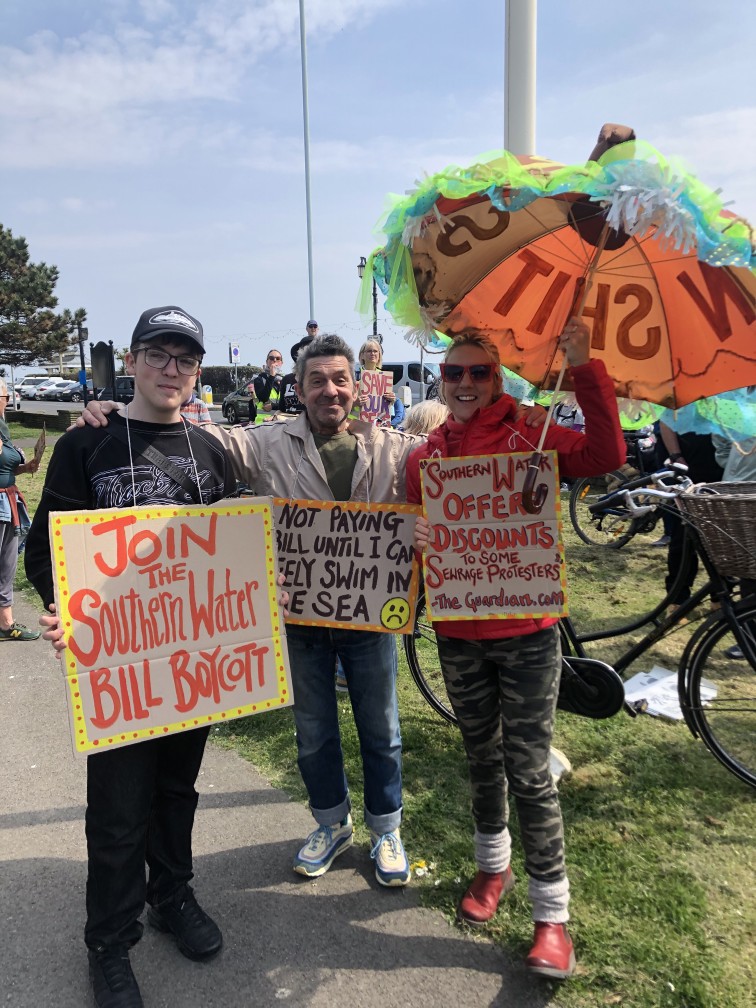
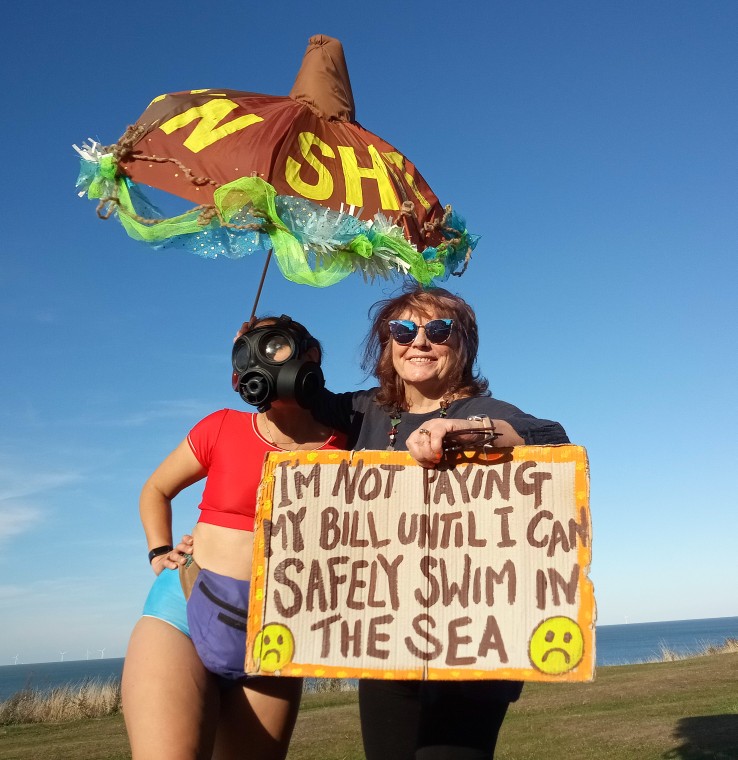
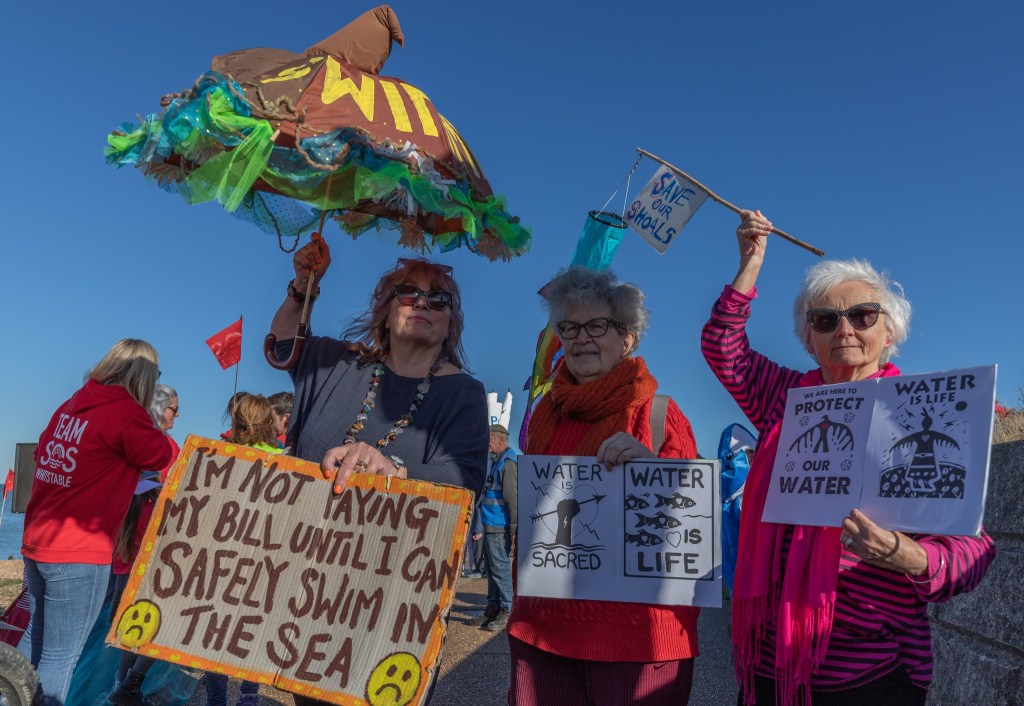
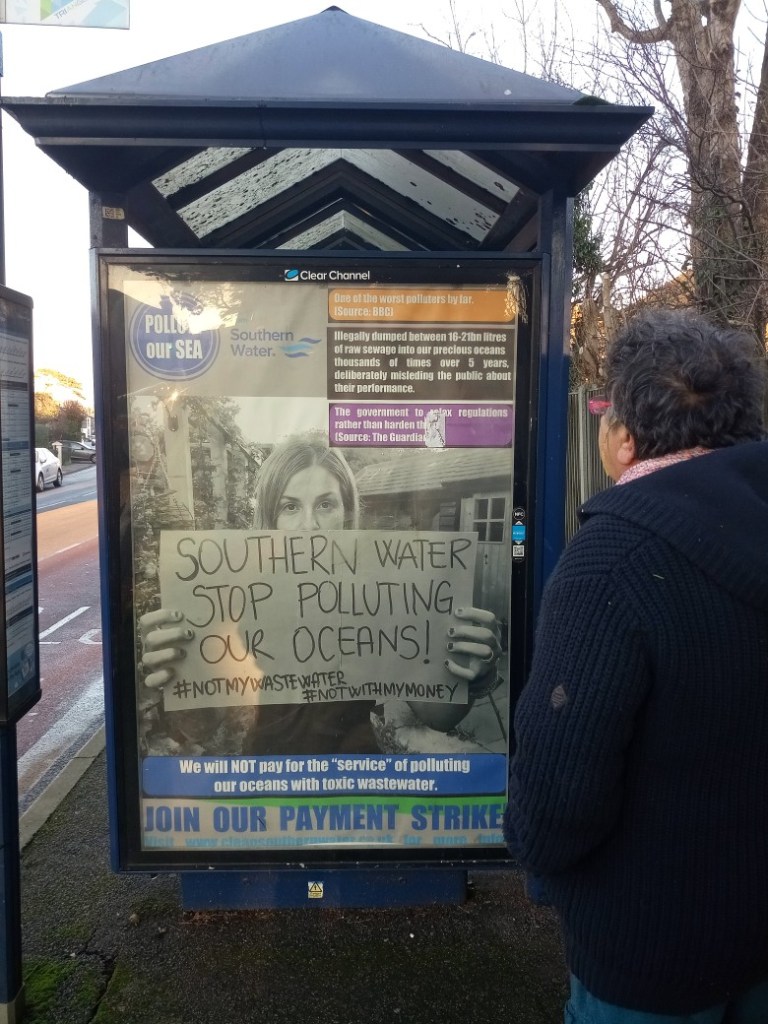
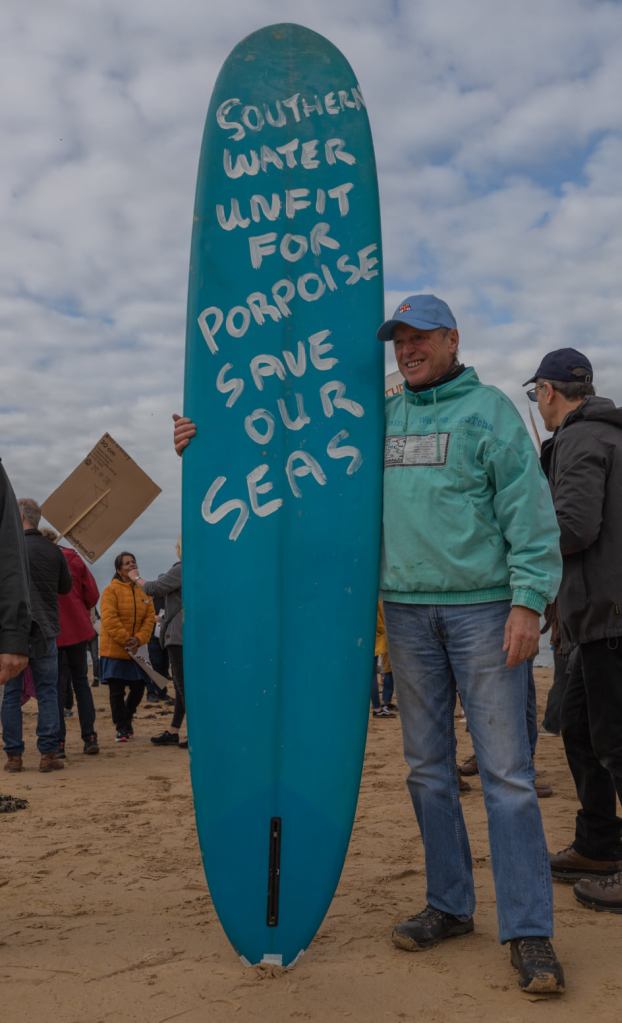
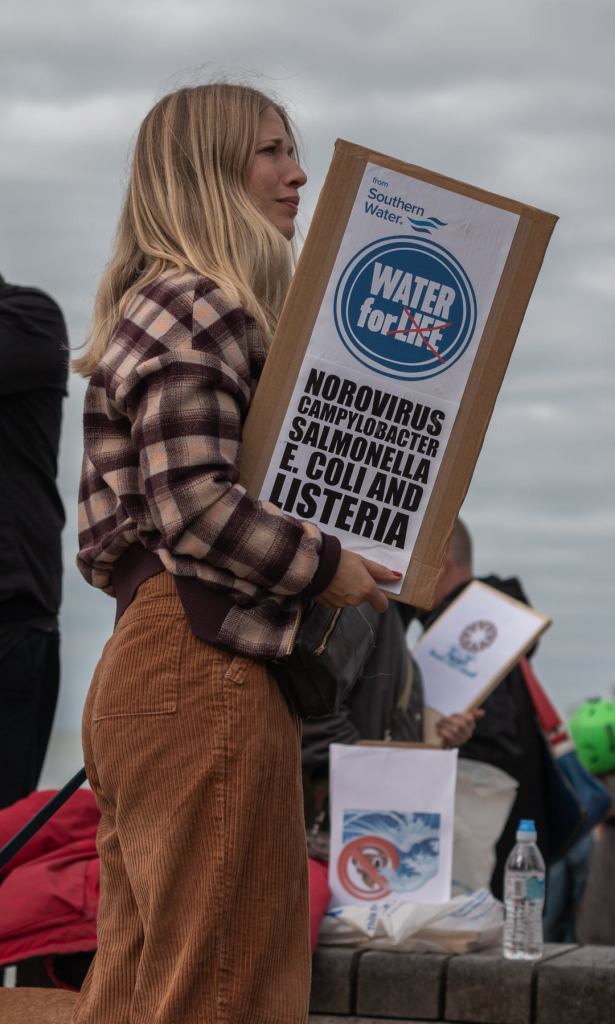
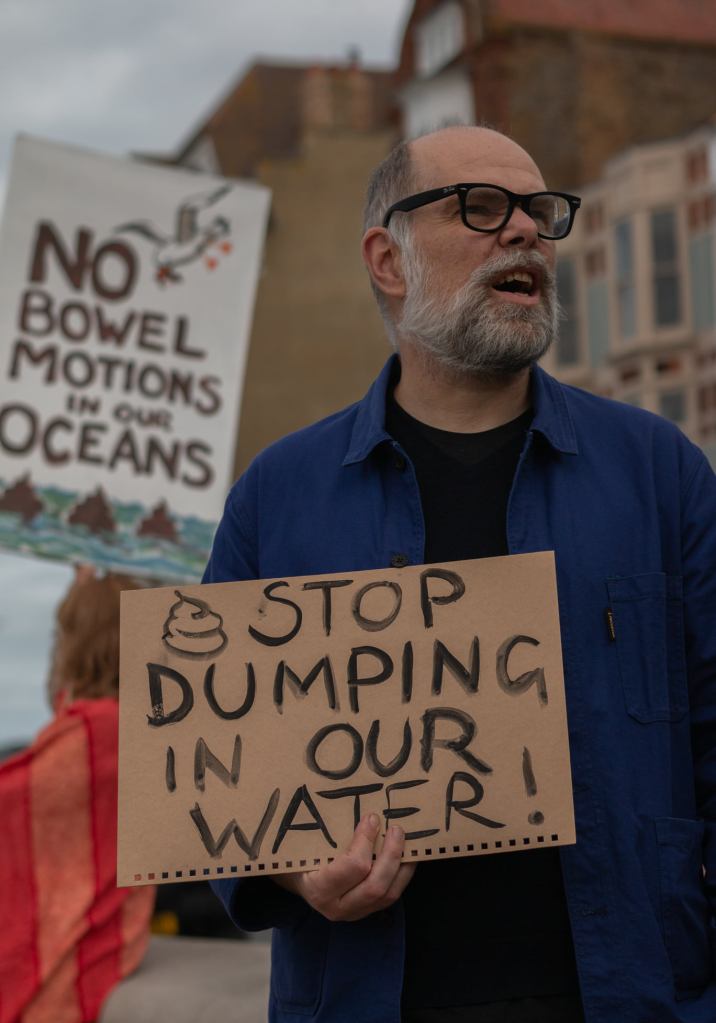
Gallery of Protest: Whitstable
(First three photos by Andrew Hastings, the rest by other photographers: click to enlarge)
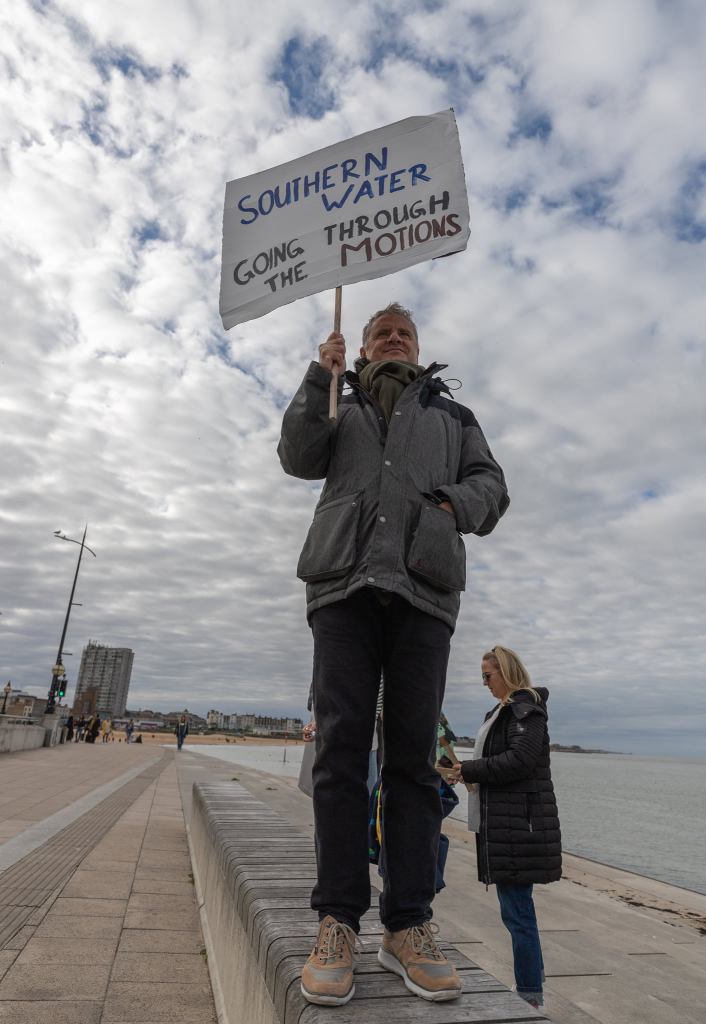
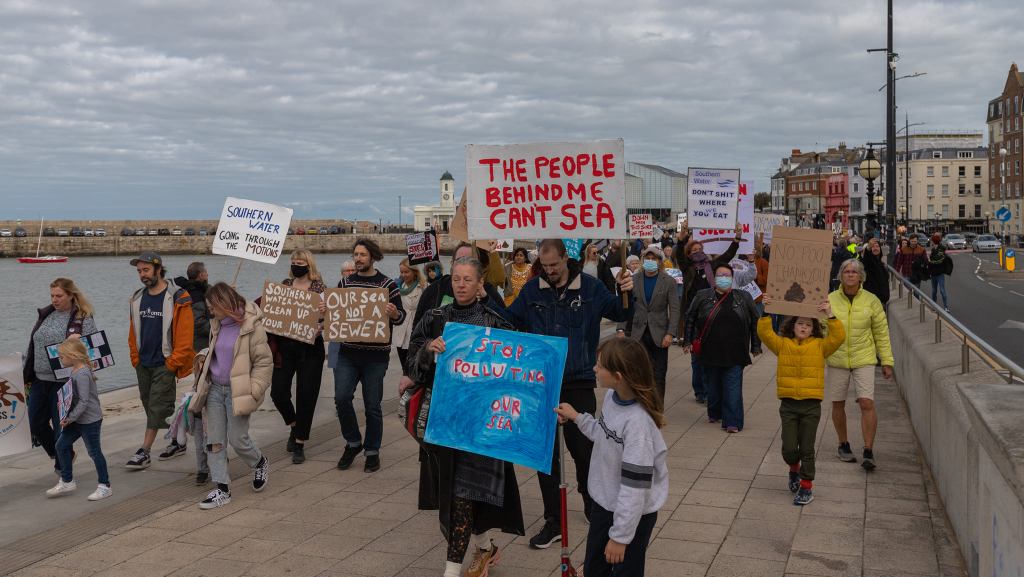
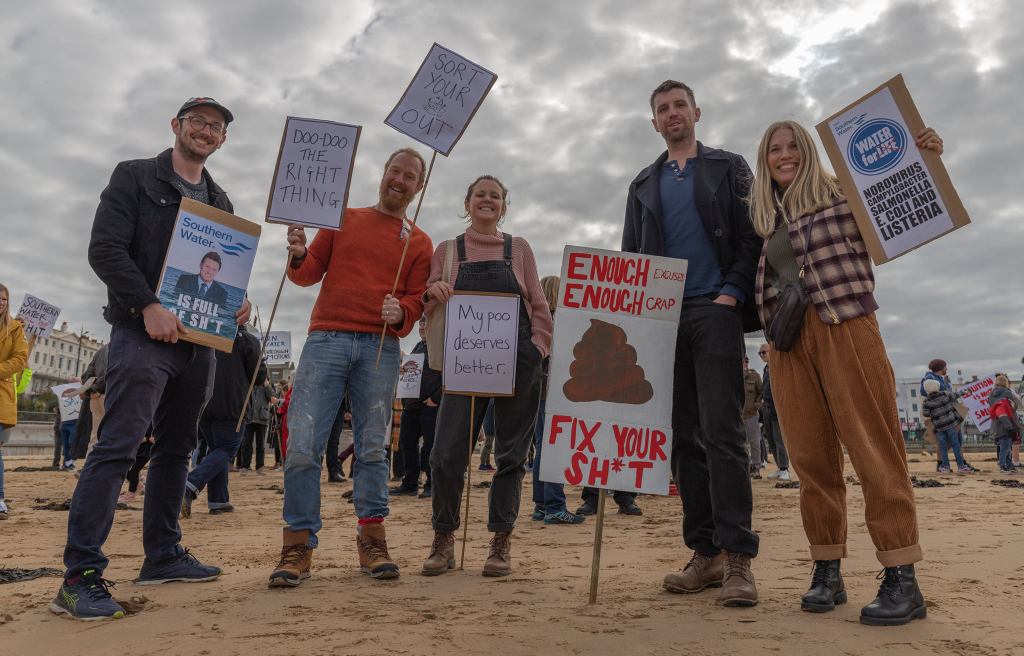
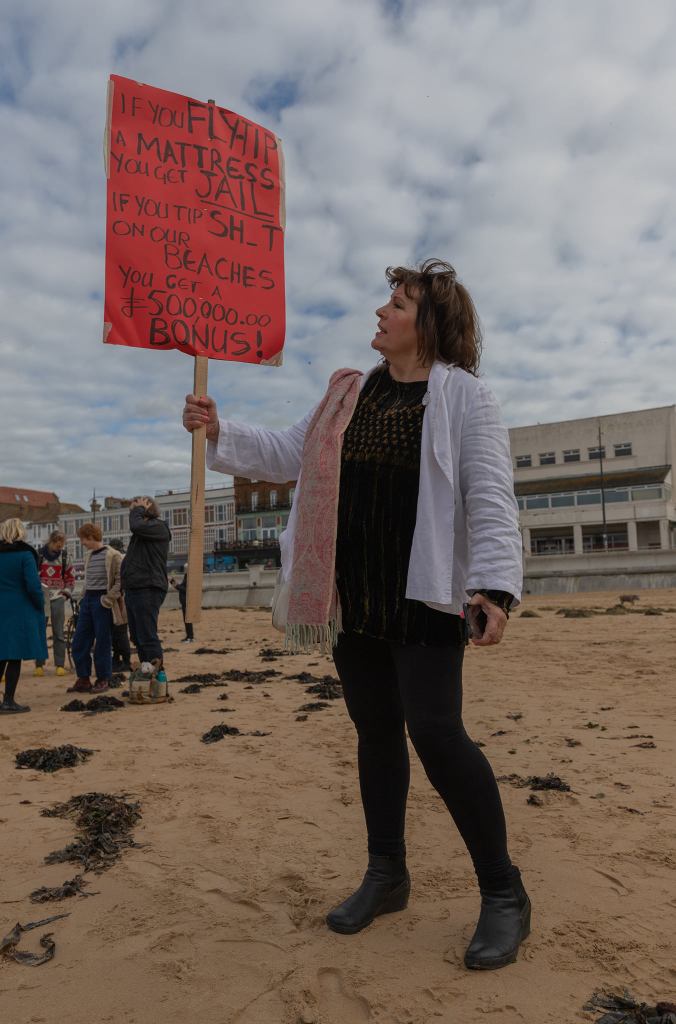
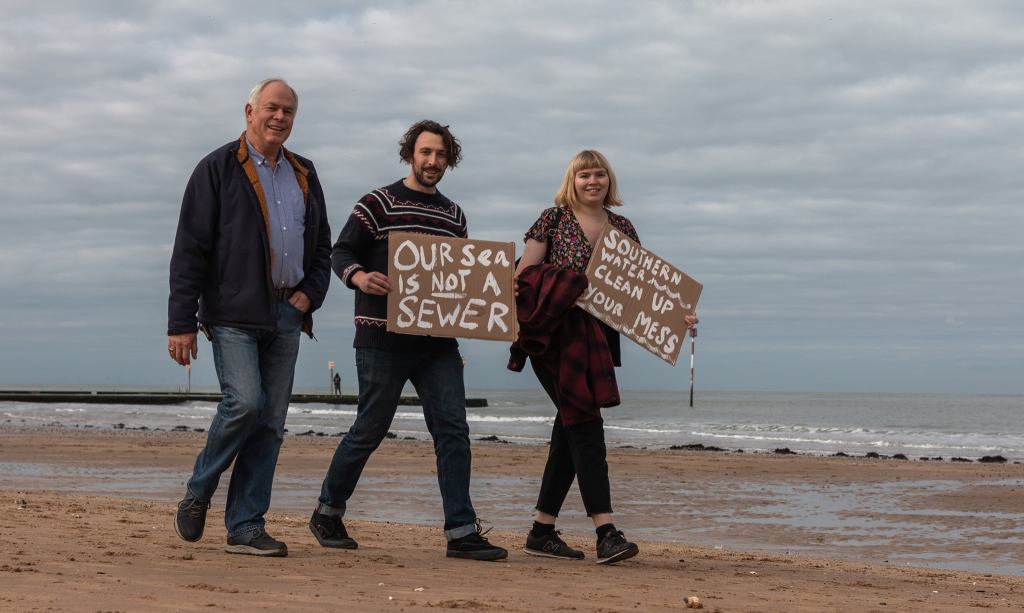
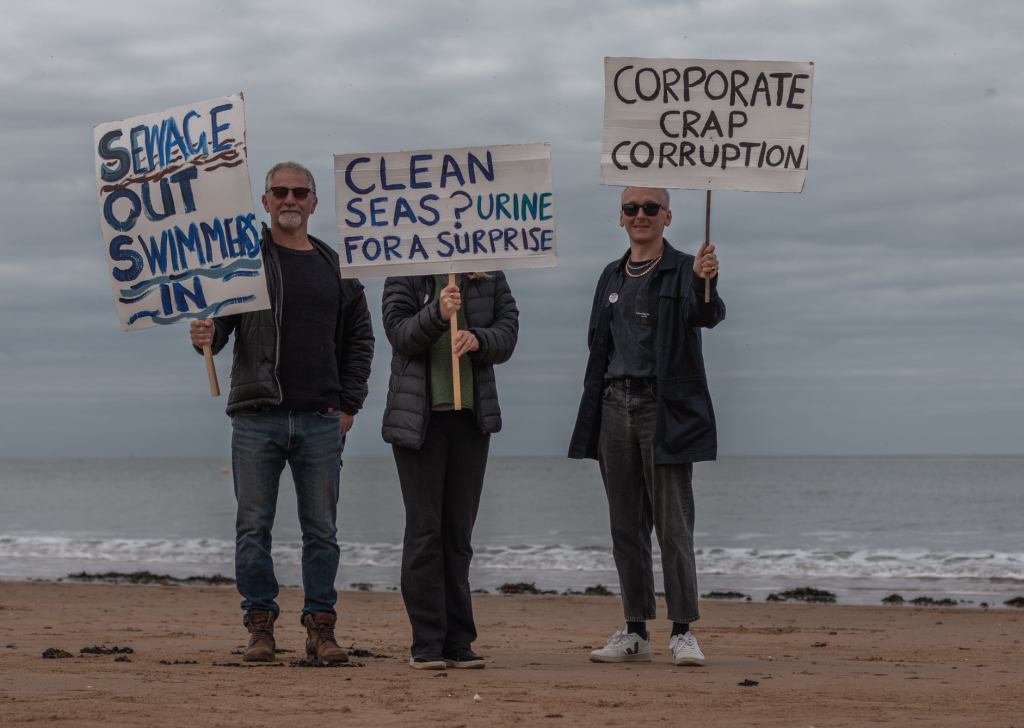
Gallery of Prostest: Margate
(All photos by Andrew Hastings: click to enlarge)
ABOUT:

Julie Wassmer is a Whitstable-based author, TV writer and environmental campaigner.
She has successfully fought a number of environmental issues, including fracking in Kent and tree clearances by Network Rail. Her Whitstable Pearl crime novels are now a major TV series, starring Kerry Godliman.
Whitstable Views: How You Can Help
- Make sure you share and like our articles on Facebook and Twitter, and whatever other social-media platforms you use.
- Follow the site to get regular updates about new articles when they appear. Press the “Follow” icon in the bottom right hand corner of your screen and that will take you to the option to sign up. (It disappears as you move the text down, then reappears as you move it back up again!)
- Leave comments on the site rather than on Facebook. Let’s get a debate going. All of our contributors are willing to engage with you if you leave a comment.
- To all writers out there, we would LOVE you to make a contribution. Read our submissions page for details on how to go about that: https://whitstableviews.com/submissions/
- Finally you can donate. As little as £1 would help. Details on the donations page here: https://whitstableviews.com/donate/


2 Comments