The New Buses Are Rubbish
by
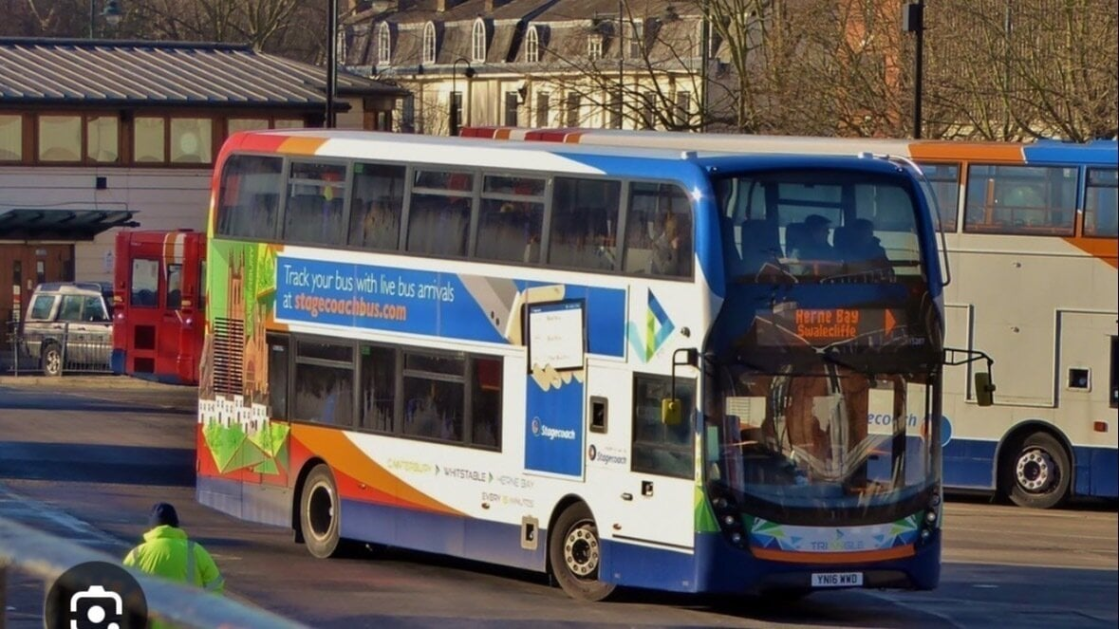
People who use the buses between Whitstable, Canterbury and Herne Bay will know that they changed last year. The old Triangle bus, which ran continuously every 15 minutes either way between the three towns, has been replaced by four new buses: the 600, the 601, the 400 and the 401.
The 600 and the 601 run alternately every 15 minutes between Canterbury and Herne Bay. At Greenhill the 600 changes and becomes the 400, where it continues on to Whitstable, while the 601 turns around at the Greenhill roundabout and goes back to Canterbury. The 401, meanwhile, travels between Canterbury and Tankerton, where it waits for about 10-15 mins outside JoJo’s, then turns around and goes back to Canterbury, while the 400 goes to Greenhill, where it turns into the 600 and continues on to Herne Bay and Canterbury. The 400 stops off at Estuary View, while the 401 stops at the University, otherwise they are effectively the same bus between Canterbury and Tankerton.
Astute readers will immediately recognise that one part of the old route has suffered a diminished service in this change. People in Swalecliffe have been reduced from a bus every 15 minutes to Whitstable and Herne Bay, to one every half an hour.
People who travel this route on a regular basis will have noticed something else. The inclusion of Greenhill – previously only occasionally served – has added between 10-20 minutes to the journey. While the Greenhill bus (one an hour) used to do a quick circle around the area, it now takes in a new estate plus a number of new roads. Someone I know described it as “a magical mystery tour”. Usually not many people get on or off. Not only has the bus between Whitstable and Herne Bay been reduced to one every half an hour, but it is now a significantly longer journey.
This is not to say that Greenhill shouldn’t be served, but, it seems to me, it would be much better if it had its own dedicated service. The journey from Blean (where I live) to Herne Bay now takes in excess of an hour. What this change of service has done is to weaken the connection between Whitstable and Herne Bay, while enhancing the connection between Canterbury and Greenhill. Greenhill is the overall winner, while Swalecliffe is the loser.
Another consequence is that the route between Canterbury and Tankerton, while it hasn’t been reduced, has been noticeably effected. There are now two buses an hour arriving by the circuitous route from Canterbury via Herne Bay, which is subject to delays. What this means is that, on a significant number of occasions, the two buses – the 400 and the 401 – are travelling though Whitstable at the same time.
When I pointed this out to the driver on one occasion when two buses arrived at my stop at the same time, his response was to say that they are two entirely different services. This is true beyond Whitstable, but between Whitstable and Canterbury they are virtually the same route. What this means is that, overall, the service between Whitstable and Canterbury, as well as the service between Whitstable and Herne Bay, has been diminished. Add to this the fact that buses are regularly cancelled, due to lack of staff and other reasons, and you can see that this has had a significant impact upon people, such as myself, who are dependent on the buses. If a 400 is cancelled it could mean a delay of up to an hour in your journey to Herne Bay. I will often get an earlier bus and have to wait around at the other end, rather than risk the possibility that the bus is cancelled and miss my appointment altogether.
Cuts
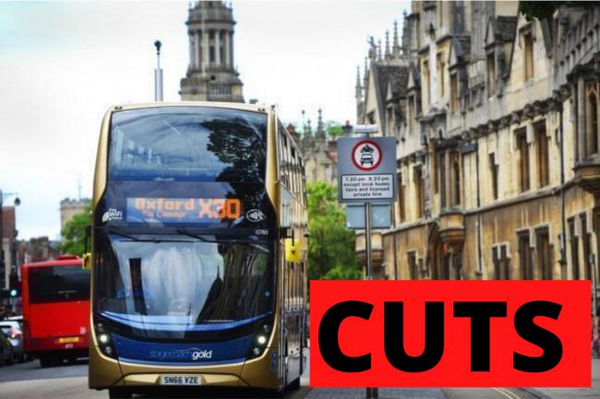
Quite why this change has occurred is unclear. I don’t remember being consulted about it. When Margaret Thatcher privatised the buses in 1985 she assured us it would mean “lower fares, new services, and more passengers”. In fact the opposite has happened. The £2 single fare cap, introduced by the Tories, has been increased to £3 by Labour, making a return journey £6. Fares are rising, services are being cut and passenger numbers are falling, with more and more people being forced to take to their cars. We thought we were getting competition. Instead what we have is a set of privatised monopolies, with the same bus companies running services around the country. Stagecoach alone has bus routes serving more than 100 towns and cities. Everywhere you go in the UK, from the North of Scotland, to the far South West, you will see the Stagecoach livery on passing vehicles.
More than 3,000 local-authority-supported routes have been cut or reduced in the past 20 years in England and passenger numbers have sunk. As Bassam Khawaja says: “Bus services are fragmented, with multiple operators running uncoordinated routes, each with their own tickets, schedules and maps. Passengers complain of unreliable service and poor coverage.”
The system has also turned out to be expensive. Unlike publicly owned companies, which reinvested profits and used profitable routes to subsidise unprofitable ones, private companies extract money as shareholder dividends, while still expecting the public to subsidise them. Taxpayer money accounts for 42% of funding for bus services in England outside London, and hundreds of millions of pounds had to be allocated to support services during the pandemic.
Object
If you would like to object to these changes please write to Matthew Arnold, The Bus Station, St Georges Lane, Canterbury, Kent, CT1 2SY.
Or contact Stagecoach at: https://www.stagecoachbus.com/regional-help-and-contact/south-east
Or email them at: southeast.enquiries@stagecoachbus.com
You can contact Kent County Council online here, or write to them at:
County Hall
Maidstone
Kent ME14 1XQ
Here is a list of your councillors by ward: https://democracy.canterbury.gov.uk/mgMemberIndex.aspx?VW=TABLE&PIC=1&FN=WARD
Petition
“The shift from the ‘Triangle’ bus service to a more complex system has made public transportation less accessible for many individuals, including those with disabilities or autism. This change has not only disrupted daily routines but also imposed an unnecessary struggle on those who rely heavily on this service.
“The ‘Triangle’ bus service was known for its simplicity and reliability – two attributes that are now sorely missed. It provided a clear route that was easy to understand, making it an essential part of our community’s mobility. Its discontinuation has left many users feeling lost and frustrated.
“Statistics show that approximately 1 in every 100 people in the UK is on the autism spectrum (source: National Autistic Society). Many of these individuals have difficulty understanding complex systems and thrive best with routine and predictability – something that our previous ‘Triangle’ bus service offered.
“Furthermore, according to Transport For All (a UK-based organization advocating for accessible transport), reliable public transportation is crucial for people with disabilities to live independently. By reinstating the ‘Triangle’ bus service, we can help ensure their freedom to travel without undue stress or confusion.
“We urge local authorities and transport providers to consider these impacts seriously. Let’s bring back our beloved ‘Triangle’ bus service – making travel easier, more reliable, and inclusive once again! Please sign this petition if you support this cause.”
About CJ Stone
CJ Stone is an author, columnist and feature writer. He has written seven books, and columns and articles for many newspapers and magazines.
Read more of CJ Stone’s work here, here and here.
Whitstable Views
How to use it!
- Make sure you share and like our articles on Facebook and Twitter/X, and whatever other social-media platforms you use. Join us on Facebook here: @whitstableviews
- You can read and contribute articles for free but in order not to miss any, please subscribe to get regular free updates.
- To do so, press the “Subscribe” icon on the bottom right hand corner of the screen. This will take you to the option to sign up. (It disappears as you move the text down then reappears at you move it back again!)
- Please engage by leaving comments on the website, rather than on social media. Let’s get a debate going. All our contributors welcome the chance to engage with YOU.
- To all writers out there, we want to hear YOUR views too, so do submit your own articles. Read our submissions page on how to do this: https://whitstableviews/submissions/
- Finally, to keep Whitstable Views alive and independent please donate if you feel able to do so. As little as £1 would help. Details are on the donations page here: https://whitstableviews.com/donate
 Whitstable Views
All cuts, for example cuts to bus subsidies, are due to governments struggling for funds, just as ordinary people are. Why? Because of increasing wealth inequality. Who now owns the assets. An increasingly small number of super-rich. Oxfam, the Kings College Inequality Knocks report, Patriotic Millionaires, Richard J Murphy and the economist Gary Stevenson all spell out the dangers of increasing wealth inequality and call for taxes on the super rich. Inequality underlies so many of society’s current problems, including the rise of the far right. Please join the international campaign for taxes on the super rich and taking back control of the assets.
LikeLike