A modern fable for uneasy times
by
Anthony Rix
There was once a seaside town called “Oyster Hollow”, a place of salt and gulls and half-mended nets, where cottages leaned together as if gossiping about the sea. The people there were as different as the shells along the shore, some sharp and shiny, some rough and kind, but mostly they lived well together.
They bickered, of course, over ale measures, market tolls, and whose turn it was to patch the roof, and whose Stew could fell a Knight! but when the storms rolled in, they pulled together without a second thought.
The old ones said the Spirit of the Sea had blessed the town long ago. She had promised that as long as the people of Oyster Hollow stood side by side, their harbour would never freeze, and their hearts would never turn to stone. And for a long time, they believed her.
Then, one warm evening in midsummer, strangers came.
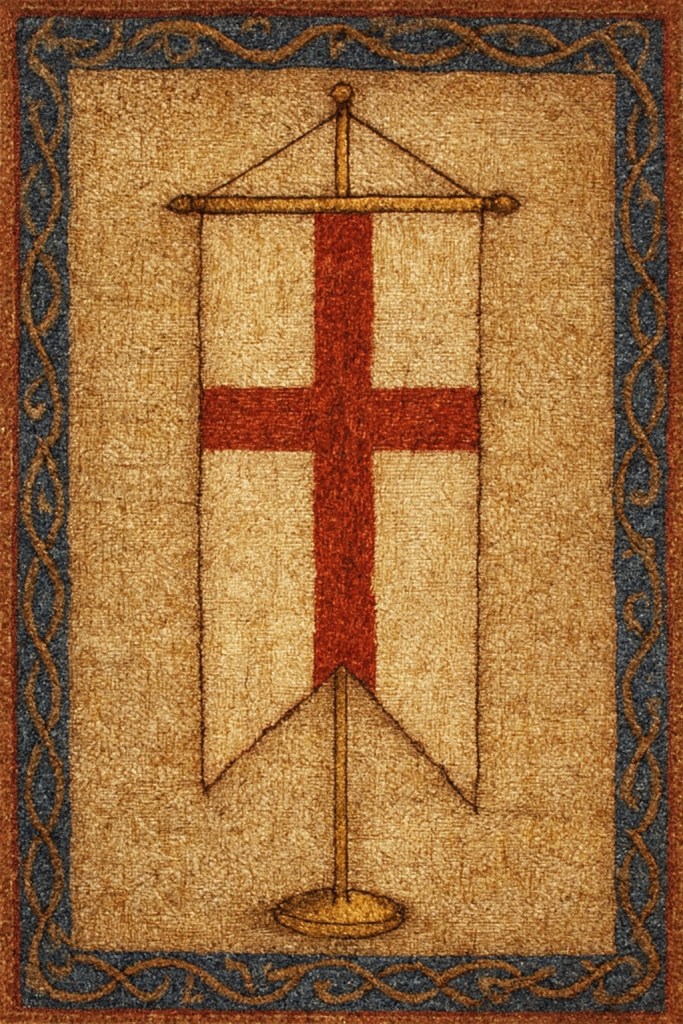
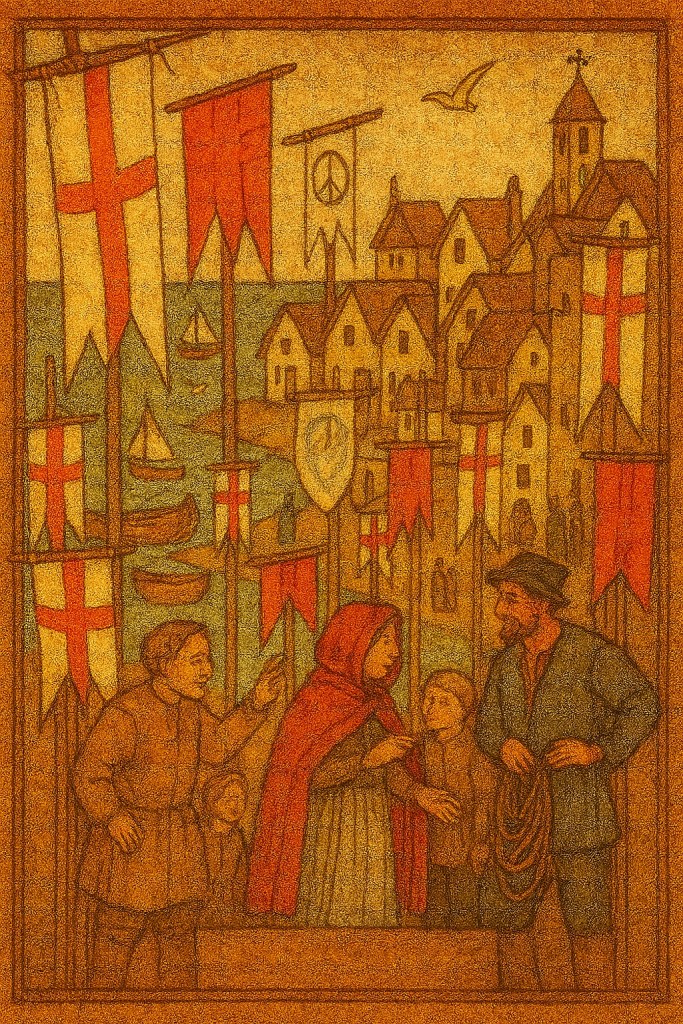
They arrived quietly from the Seasalter marshes faces hidden beneath hoods of red and white. They carried bundles of flags, bold cloth, red and white and blindingly bright, and said they were patriots. They called themselves “The Keepers of the True Banner of the Hollow.”
At first, no one thought much of it. A flag, after all, seemed harmless enough, the kind of thing you hang out on a holiday, or when someone wins a cup. And when the strangers began tying them to lampposts and fences and the old railings by the harbour wall, a few folks even smiled. It looked cheerful, they said.
But others, the ones who listened when the tide spoke, felt something wrong in it. The gulls grew restless. The sea came in hard that night, pulling the shingle with a sound like whispering. The colours looked too bright against the grey sky.
“Who are they?” asked the woman who sold cockles at the harbour.
“They say it’s for the Hollow,” answered a fisherman, uncertain. “To show we’re proud.”
That night, though, the whispers began, not from the sea this time, but from the strangers themselves. They huddled in pub corners, talking about purity and strength, about who belonged and who didn’t. Their words were honeyed but their eyes were cold. And little by little, those words began to spread.
They told the villagers there were enemies among them.
They said some didn’t love the Hollow enough.
They said real patriots would fly the flag.
And so, people began to look at one another differently.
“Why don’t you hang a flag?” the baker asked the carpenter. “Don’t you love your town?”
“I do,” said the carpenter. “But love doesn’t need a banner.”
The baker frowned and turned away. “That’s what they all say.”
Before long, people started judging one another by their doorways. Those with flags were called patriots. Those without were whispered about as traitors. The colours no longer felt like celebration. When the wind blew, the flags didn’t flutter; they cracked and snapped, sharp as arguments.
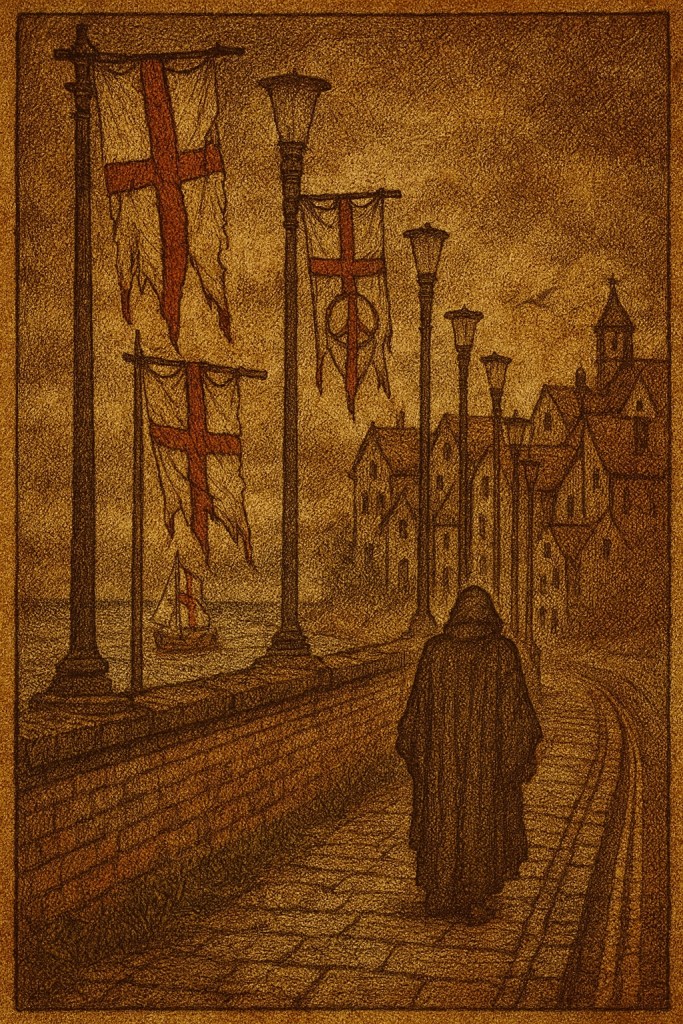
From the top of Borstal Hill you could see hundreds of them, flapping red and white like open wounds. It looked as if the town had caught a fever.
Then came the small cruelties that grow when fear takes root. A child’s window smashed because her father wouldn’t hang a flag. The traitors fences were daubed with crooked symbols, twisted shapes that looked far too much like the marks from old wars everyone swore would never return… Old friends crossing the street rather than meet each other’s eyes.
The cockle seller shook her head. “This isn’t pride,” she said. “It’s poison.”
But no one seemed to hear her.
And then came Remembrance Day, the quiet time each year when the town remembered those who’d gone to war, not for conquest, but so others could live in peace. Every November, they laid poppies at the memorial, soft petals, red as the evening sea, promising memory would outlast hate.
But that morning, when the mist lifted, something was wrong. The flags were there first. Draped across the stone, crowding the flowers, turning the stillness into spectacle. The poppies seemed to vanish beneath the noise of it all.
For a long moment, no one spoke. The gulls circled, uneasy. And somewhere deep beneath their feet, the ground seemed to sigh. The people of Oyster Hollow felt it then, that something had been stolen from them. Not the stone, not the flags, but the meaning itself.
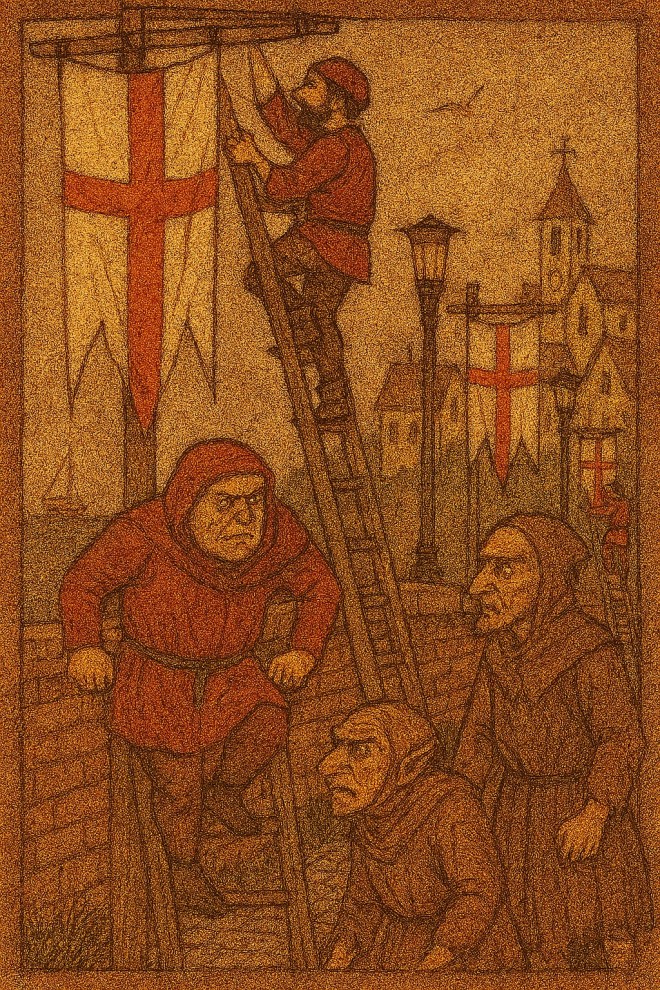
By midday, they began to act. The baker untied the one above his shop. The carpenter climbed a lamppost and cut another loose. The fisher people pulled them down from the harbour railings. Teachers, shopkeepers, singers, even the quiet ones, all joined in.
By two o’clock, the streets were bare again, and the sea wind ran free through the town.
When the strangers came back that evening, their banners were gone. Their slogans hung limp in the salt air. They cursed and said the Hollow had betrayed them, that the town had forgotten what pride meant.
But the good people of Oyster Hollow knew better.
They gathered by the harbour, young and old, shoulder to shoulder, and watched the beautiful sunset sink over the water. Someone brought out a flag, a small one kept folded in a drawer. It was faded, edges frayed, but it was theirs. They raised it carefully, not to boast, but to remember.
And when it fluttered in the dusk, it didn’t divide them. It drew them closer.
The cockle seller smiled. “Real patriots build community,” she said. “False ones build walls.”
They knew then what those other flags had been, not symbols of love, but tools of fear.
That day, they learned that pride without compassion is just vanity, and loyalty without kindness is just control.
So, they made a vow, no flag would ever again fly in Oyster Hollow unless it flew for everyone.
That night, as the tide crept in, the Spirit of the Sea returned. She whispered through the waves, “You remembered.” The harbour lights burned brighter than they had in years.
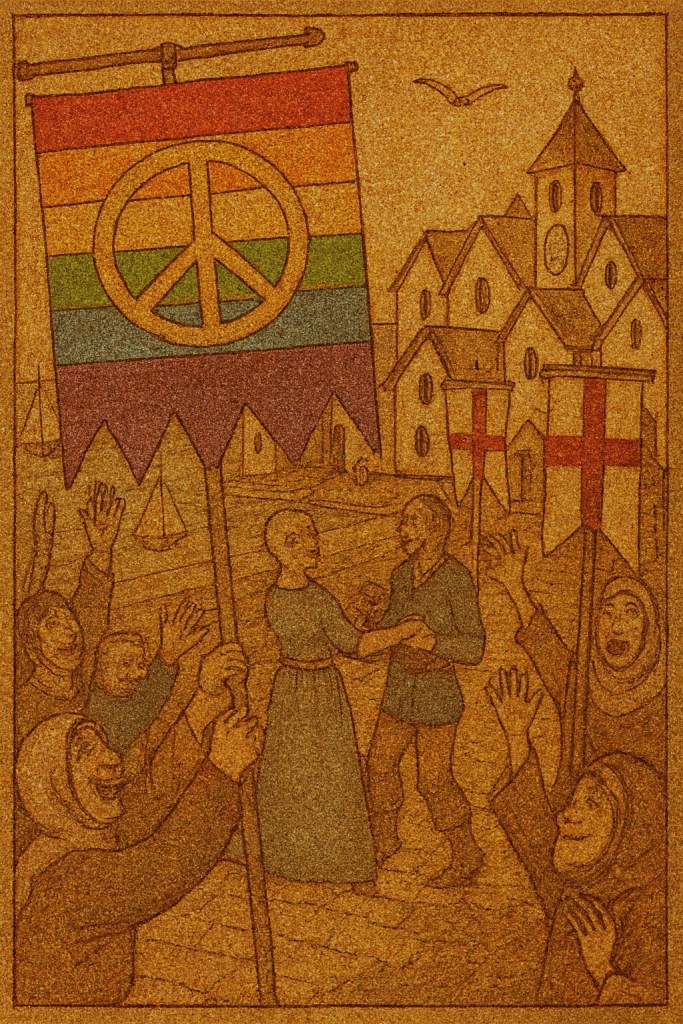
By morning, the strangers were gone. Their flags lay torn and salt-stained along the shore. But in the town square, a new banner was raised, sewn by many hands. It wasn’t one colour, but many. Not one symbol, but countless small threads, woven together.
And beneath it, someone carved these words:
Unity, not uniformity. Pride, not prejudice. Real patriotism welcomes everyone.
Since then, whenever storms roll in or tempers flare, someone glances up at that banner and remembers the lesson of this little Town.
That hate often wears the mask of honour.
That division often comes wrapped in silk.
And that it isn’t the loudest who love their country most, but those who love its people, all of them, equally.
For Oyster Hollow was never saved by flags.
It was saved by its people.
And that, in the end, was the truest mark of pride.
Anthony Rix
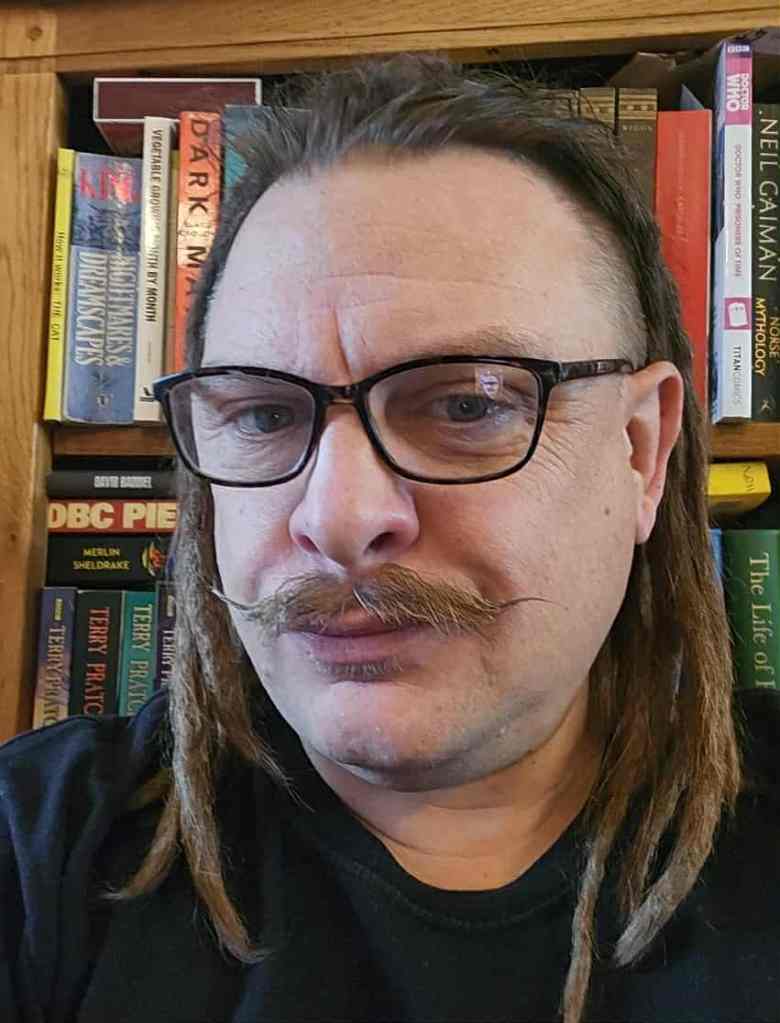
is a native, born-and-bred Whitstable writer and local personality. A former film cinematographer, now a curator of rare, lost media and cult film, and huge vintage toy, and Pokémon collector, his work blends realism with olde myth. Passionate about community and outspoken against fascism, he celebrates stories that honour inclusion, memory, and courage.
Whitstable Views
How to use it!
- Make sure you share and like our articles on Facebook and Twitter/X, and whatever other social-media platforms you use. Join us on Facebook here: @whitstableviews
- You can read and contribute articles for free but in order not to miss any, please subscribe to get regular free updates.
- To do so, press the “Subscribe” icon on the bottom right hand corner of the screen. This will take you to the option to sign up. (It disappears as you move the text down then reappears at you move it back again!)
- Please engage by leaving comments on the website, rather than on social media. Let’s get a debate going. All our contributors welcome the chance to engage with YOU.
- To all writers out there, we want to hear YOUR views too, so do submit your own articles. Read our submissions page on how to do this: https://whitstableviews/submissions/
- Finally, to keep Whitstable Views alive and independent please donate if you feel able to do so. As little as £1 would help. Details are on the donations page here: https://whitstableviews.com/donate


Thank you.
LikeLike
Bloody marvellous. Brought a tear to my eye
LikeLike