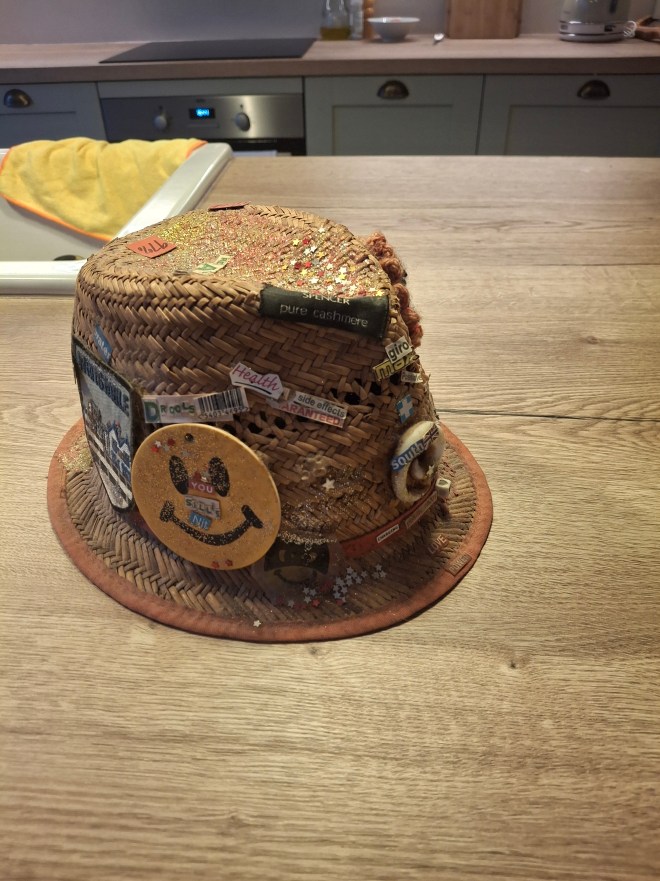
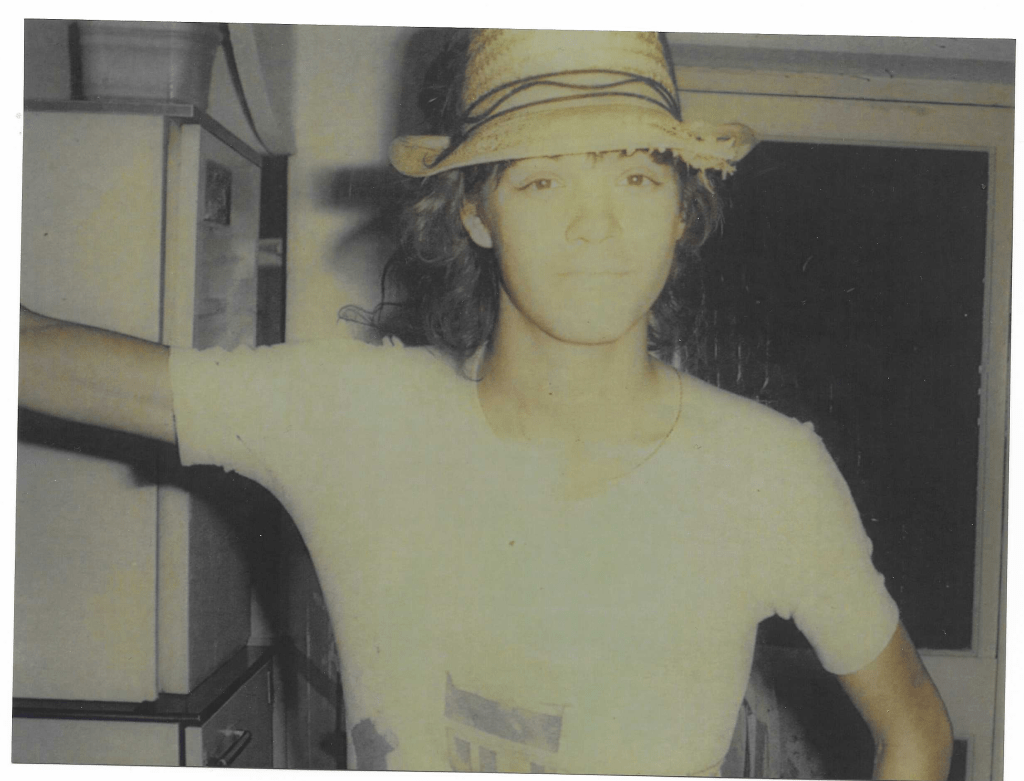
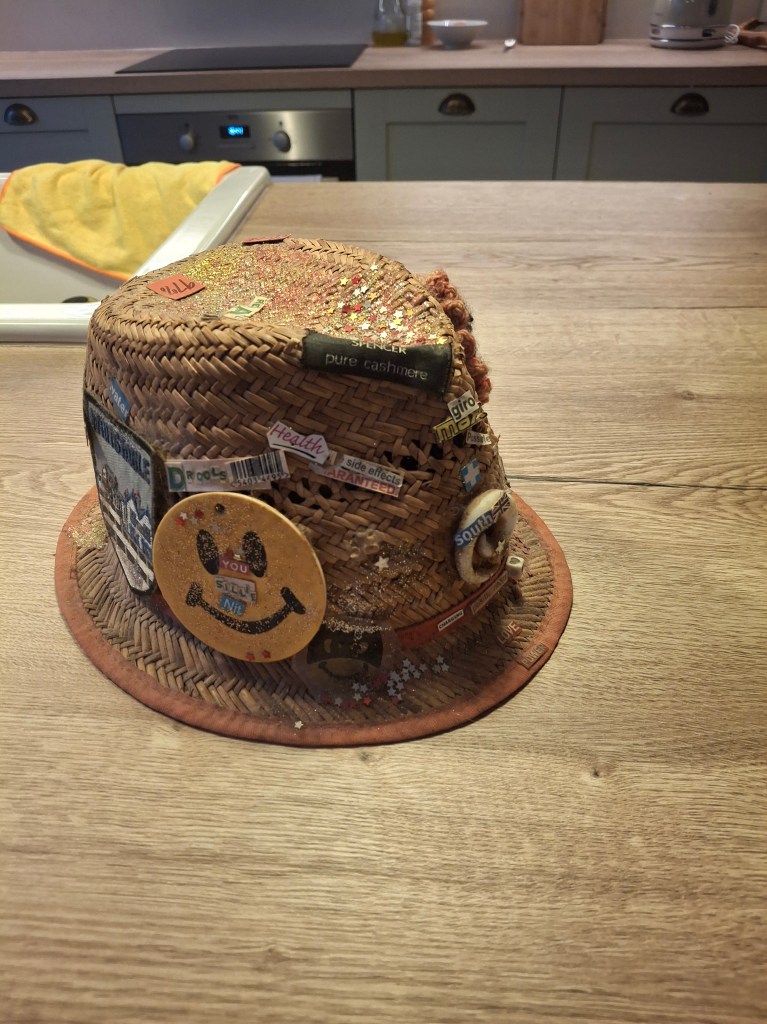
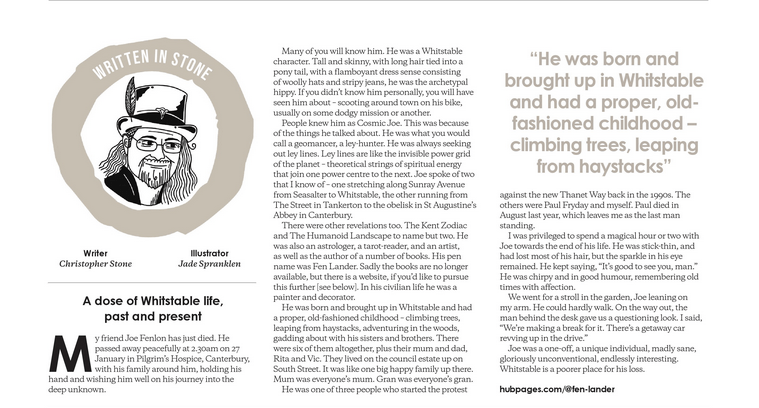
Photo: Joe Fenlon’s hat
by
”I’m an astrologer, and I write because I have to. I’ve been involved in a couple of environmental campaigns to try and prevent certain roads being built (unsuccessfully) – the so-called Blue Route here in Whitstable and a road in Somerset at a place called Dead Woman’s Bottom. While I was there holed-up in my pyramidal bender come temple, my Mum became very ill and died. I thought it highly ironic that I was at Dead Woman’s Bottom. I discovered then that the landscape has a curious way of blowing-your-mind, ‘cos that blew mine. I met King Arthur while I was there, and Guinevere.” Joe Fenlon, aka Fen Lander, from his website.
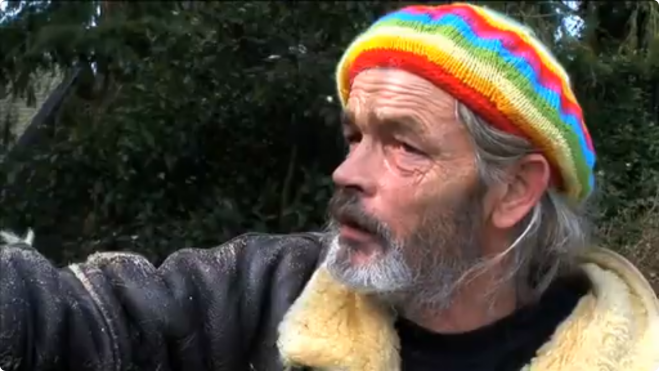
I dreamt about my Grandad the other night. He gave me this look as if he didn’t quite know who I was. I offered him my arm so we could go for a walk outdoors. He accepted and lent on me as we stepped out into the sunlight.
It was only on reflection that I realised that it was Joe Fenlon I was really dreaming about. My dream had substituted my dead Grandad for my dead friend. They were both tall and skinny and both died around the same age. Joe and I had gone for a walk when I’d gone to see him in the Hospice where he spent his last days. He was very weak and I had offered my arm. He lent on it as we walked out into the air. As we were stepping out, the man behind the desk gave us a quizzical look. I said, “we’re making a break for it. The getaway car is revving up in the drive.” There was a bench on a small patch of grass under the trees and we sat down.
The last time I saw Joe we had also gone for a walk, but this time the nurses tried to stop us. Joe’s oxygen levels were low and he was receiving oxygen through a tube attached to his nose. The nurses had warned him that the walk could kill him. Joe had dug in his heels, setting his jaw in that characteristically stubborn way of his. They insisted he should at least use a wheelchair, which he agreed to. I pushed him to the same bench, where we sat for about 20 minutes. One of the nurses kept coming out to check his oxygen levels. She told us off when we were back inside. “We advised you not to go out!” she said, but his oxygen levels had gone up by then. So I was a party to Joe’s last rebellious act upon this earth: disobeying the nurses so he could breathe the air and listen to the wind as it rustled through the trees.
“I used to go out into the woods and light a fire,” he said, remembering himself in his more vigorous days, miming the striking of a match, then the flickering of the fire, wriggling his fingers to represent the flames as they danced upward into the air. He was invoking the fire of his youth, even as his own flame was going out.
It was Nick Dent who told me where he was. I rang up the hospice and asked if Joe Fenlon was a patient and they said they weren’t allowed to tell me. I said, “well if he does happen to be there, tell him Chris Stone called,” and I left them my number to pass on to him.
He rang back fairly quickly. I still have his message on my answer phone. There was a rasping quality to his voice. He was obviously having difficulty breathing. He said, “Hello Chris, it’s Joe here. Just bring yourself tomorrow, it will be great to see you. Don’t worry about it. Everything is good. Hopefully the weather will be good. I’ll see you tomorrow hopefully. Cheers mate,” after which he added a chirpy “bye!”
When I went into the ward I was shocked at how skinny he had become. He always was very thin – “like a taught bow ready to spring” as I once described him – but he was even skinnier now, arms and legs like thin twigs ready to snap. I commented on his drastic loss of weight and he said, “I know. I caught sight of myself in the mirror. I look like an escapee from Belsen.”
But he was very cheerful. He kept saying, “it’s good to see you man.”
“It’s good to see you too,” I said.
I’m not sure how many times I went to visit him. At least twice. I took my friend’s dog with me the second time and she jumped up on his bed. She kept licking his arm. I asked if this was alright and he said he didn’t mind. She was very persistent. She started with his hand and worked all the way up his arm. It was like she was trying to lick his illness away.
He sent me a text after that. This is what it said: “Peculiar, odd. Strange. Am getting better!” He was in denial. He told me that he was receiving palliative care but that, once he was stronger, they would start a course of curative treatment. He said he would be going home soon. But at the same time he was very complimentary about the Hospice and its staff. He felt safe, he said. The staff were a special kind of people.
He never did get to go home: or at least, not to a home on this earth. The last time I saw him was Monday 19th January 2026. He died on the 27th. I was planning on going to see him the following day.
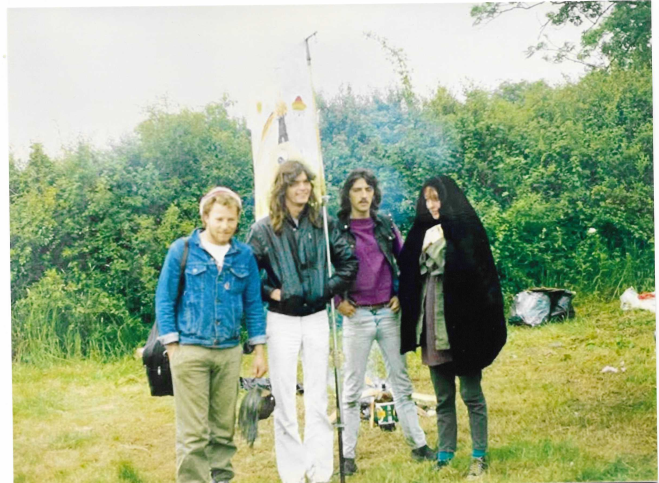
I’ve known Joe for many years, almost as long as I’ve been in Whitstable.
I first met him at the old Labour Club, at one of the gigs we used to put on. This would have been in the ‘80s: 1984 or ‘85.
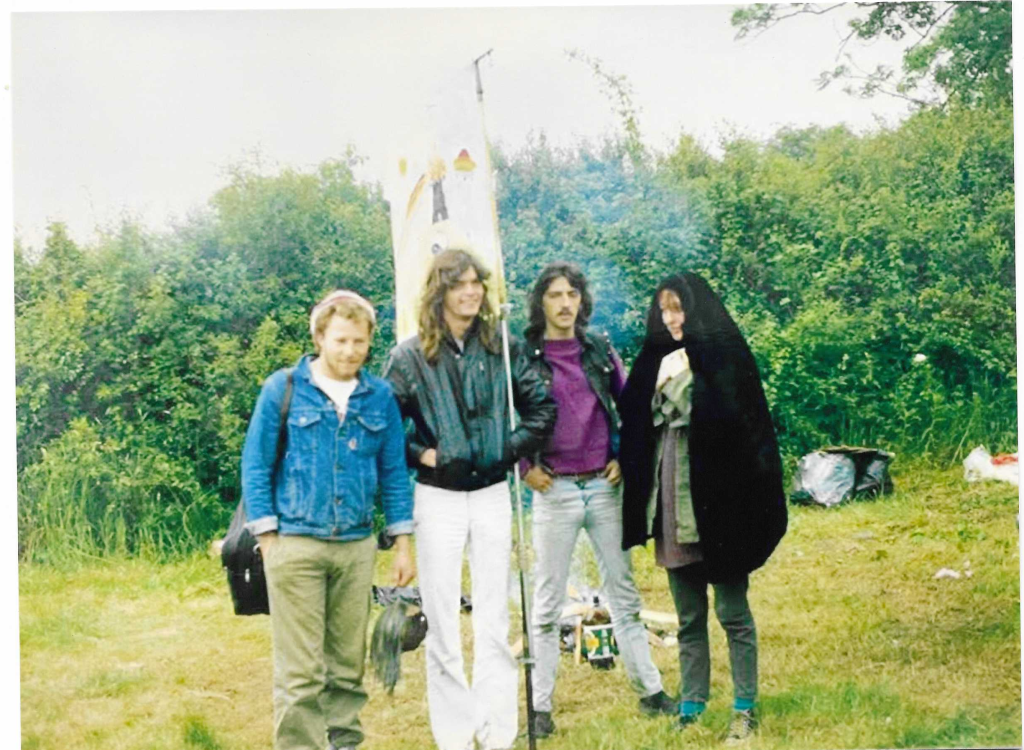
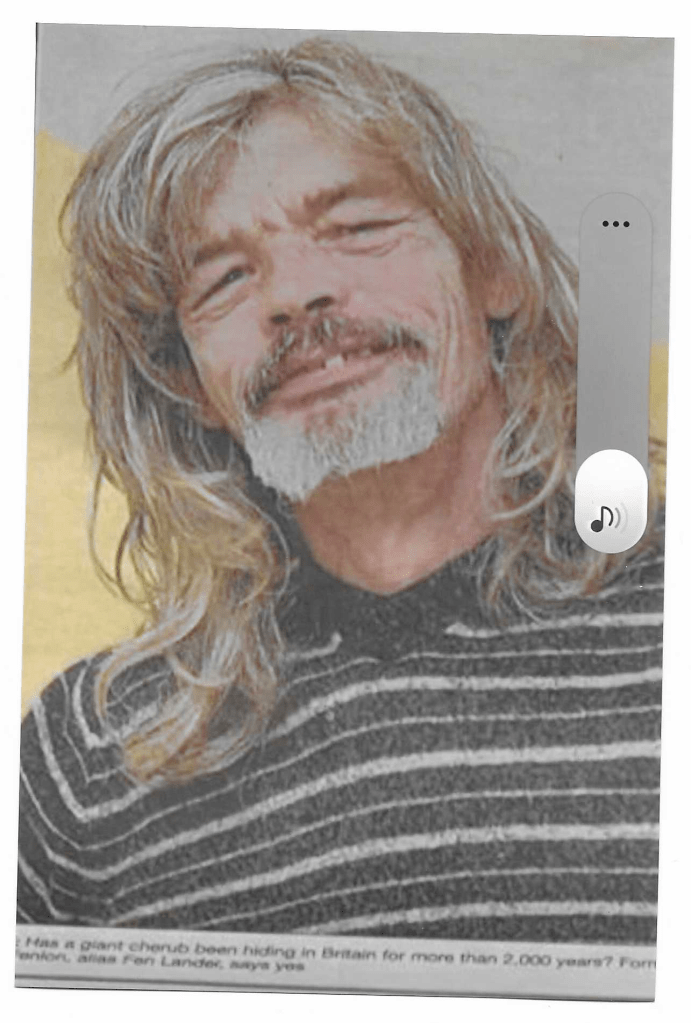
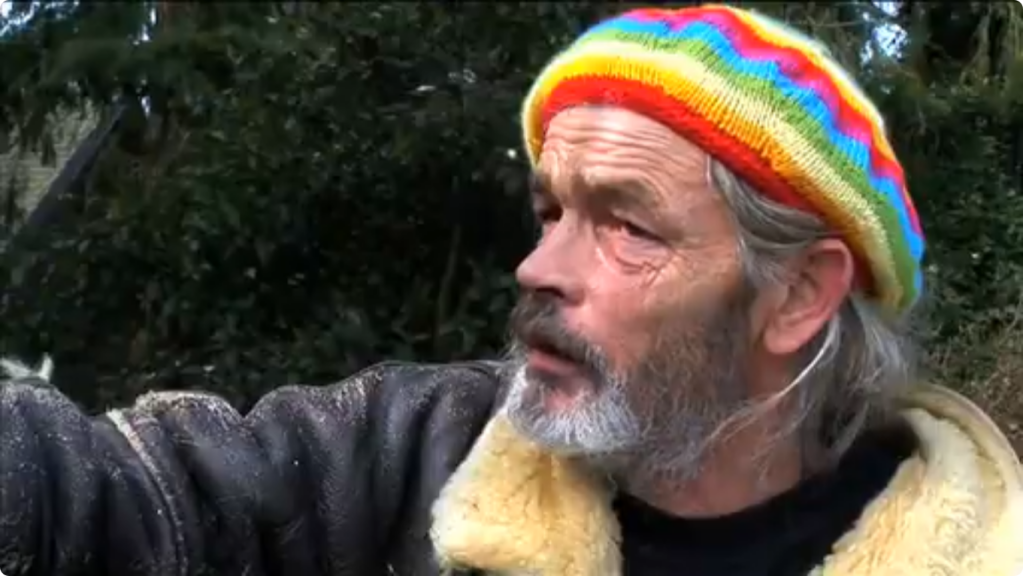
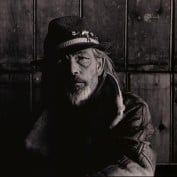
He was very striking to look at. Tall and thin, with long mousy-coloured hair, he dressed very distinctively: like a hippy, you might say, and, indeed, many people knew him as Hippy Joe or Joe the Hippy. He had a pair of blue and white stripy trousers which you would often see him wearing. He was wearing them when I first saw him. He must have had a source as there was also a pair amongst his belongings after he died.
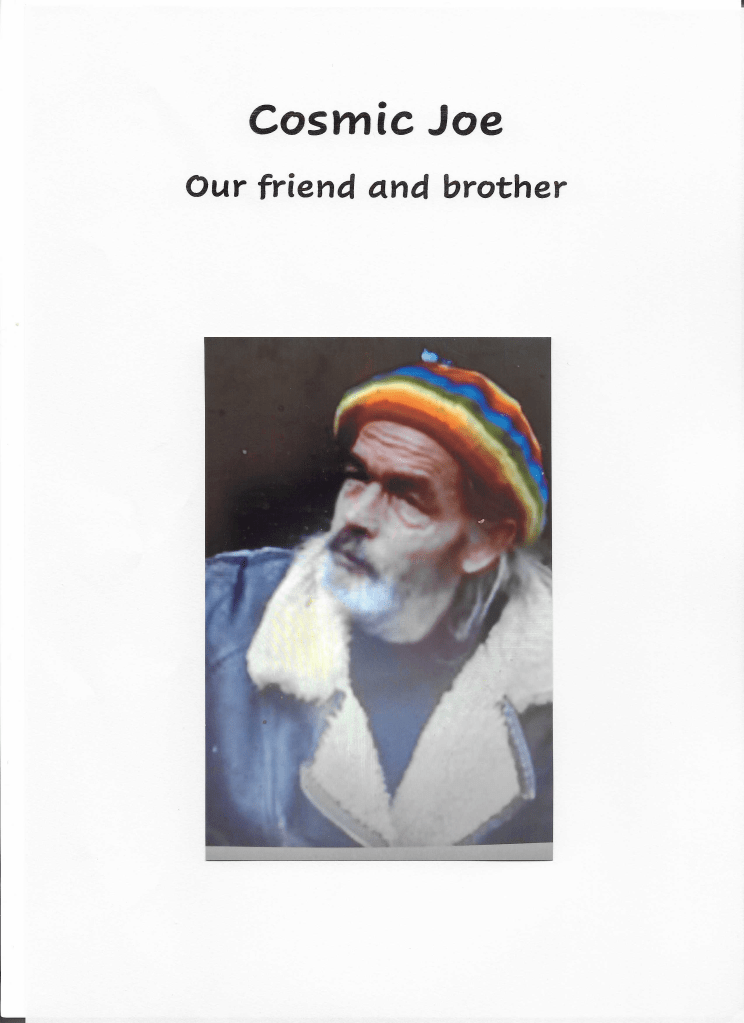
Another name he was known by was Cosmic Joe, but this had less to do with the way he dressed, more to do with the things he spoke about. It was this that made him distinctive.
He was a painter and decorator by trade, very skilled at his craft, though often unreliable. I think he thought that painting and decorating was beneath him, as he had more interesting and engaging things to think about. What he thought about most was the land. He was a geomancer by persuasion: that is, he looked for signs in the landscape and interpreted them according to his own unique philosophy. He was interested in ley-lines, and spoke of two that I know of. One of them runs along Sunray Avenue, from the old chapel in Seasalter along the back of Joy Lane School towards Canterbury Road. He said it was called Sunray Ave because the sun rose along it at certain times of the year. The other runs from The Street of Stones (as he called it) to the obelisk in St Augustine’s Abbey in Canterbury. He made these discoveries by poring over maps, looking for places of significance along the way, drawing a line and then walking the route. He spent large portions of his life doing this.
The Humanoid Landscape
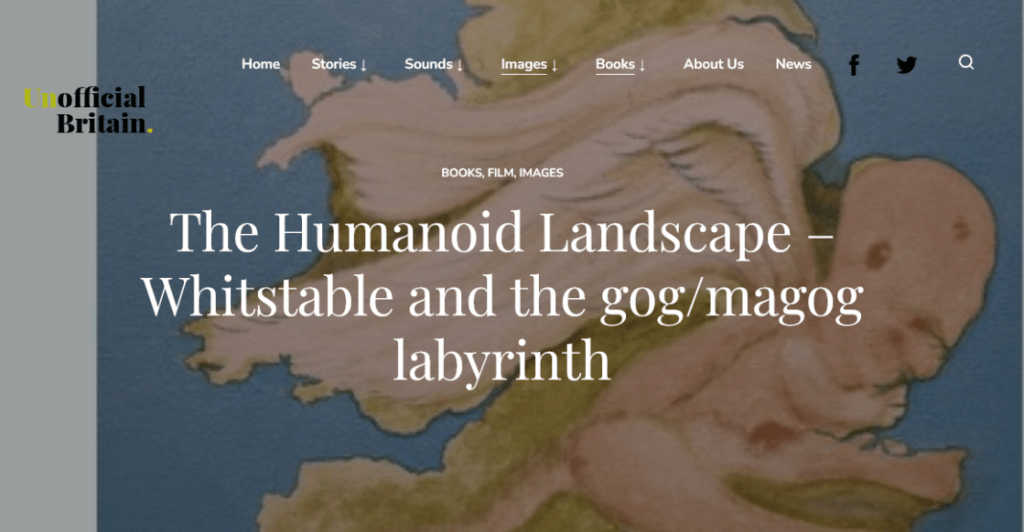
The other “signs” he discovered were the Kent Zodiac (in imitation of the famous Glastonbury Zodiac) and Gog-Magog, a giant creature he discerned in the landscape covering large portions of England and Wales, from Norfolk in the North to Sussex in the South, and from Essex in the East to Anglesey in the West. This was probably the maddest and grandest of all of his obsessions.
I remember the first time he told me about it. He was living in a shed in someone’s back garden in Foxgrove Road at the time. I went to see him. He was in the garden in front of a painting he was working on, brush in hand. “It’s really there, it’s really there,” he kept saying, leaping about barefoot like a crazy wood elf who’s drunk too much blackberry wine. When I looked at the painting it was of a giant baby inscribed upon the English landscape: the skull being the rounded bit above the Wash in East Anglia, the face being in Suffolk and Essex, the spine being the Chiltern Hills, and the legs being in Kent and Sussex. If you look at a geological map of the British Isles you’ll see that there does seem to be a figure there, but it’s a bit like looking at a cloud and seeing dragons and castles and galloping horses. There was also a tail, which slithered down the line to Devon and Cornwall, and a giant pair of wings that rose from its back through Lincolnshire to the Humber, and then extended westwards into Wales, covering most of the Midlands. The nose was the Naze. “Naze” sounds like “nose”, and indeed, might refer to noses, Naze being the old English word for a promontory. Noses are, after all, a kind of promontory on the face.
That’s the way Joe’s brain worked: huge leaps of the imagination based upon the sounds of words. He had an Anglo-Saxon dictionary, which he pored over obsessively, teasing out meaning from the names of places based upon their similarity to aspects of the human body or human behaviour. If you read the book he wrote based upon his researches, The Humanoid Landscape, you’ll see it’s full of stuff like that. So Braintree in Essex is evidence of the brain inside the giant’s skull, while Eye, Iken and Occuld are all evidence of its eye.
He told me he was like a mad professor, living in that shed of his, with his maps and his dictionary, chasing coincidences across the landscape. He was a great map-gazer and dictionary reader, as well as a student of arcane and occult literature. It was this that made him so fascinating to talk to. There can’t be many people in Whitstable who have read Madam Blavatsky, or GI Gurdjieff. Joe had read both, and a lot more besides. He was a great reader, a great absorber of hidden knowledge and obscure ideas, and could speak with confidence on such matters. He was also an astrologer, a tarot reader, an artist and an author.
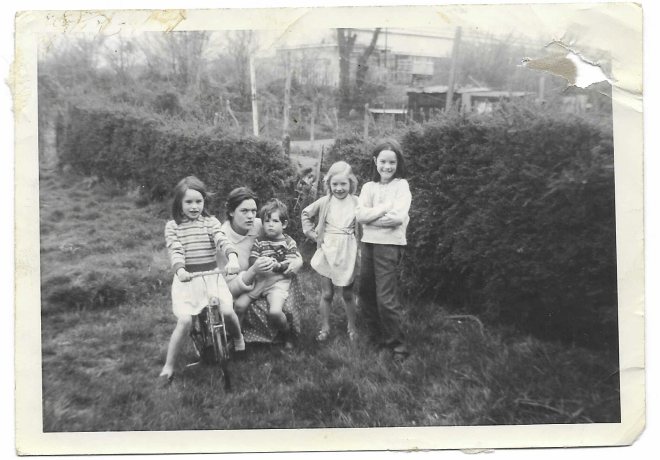
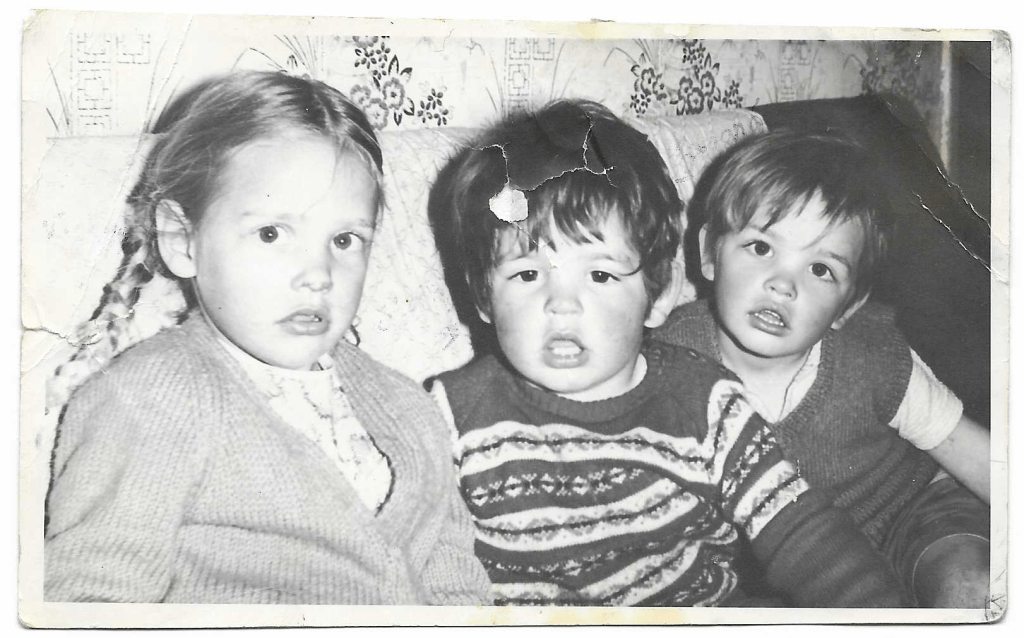
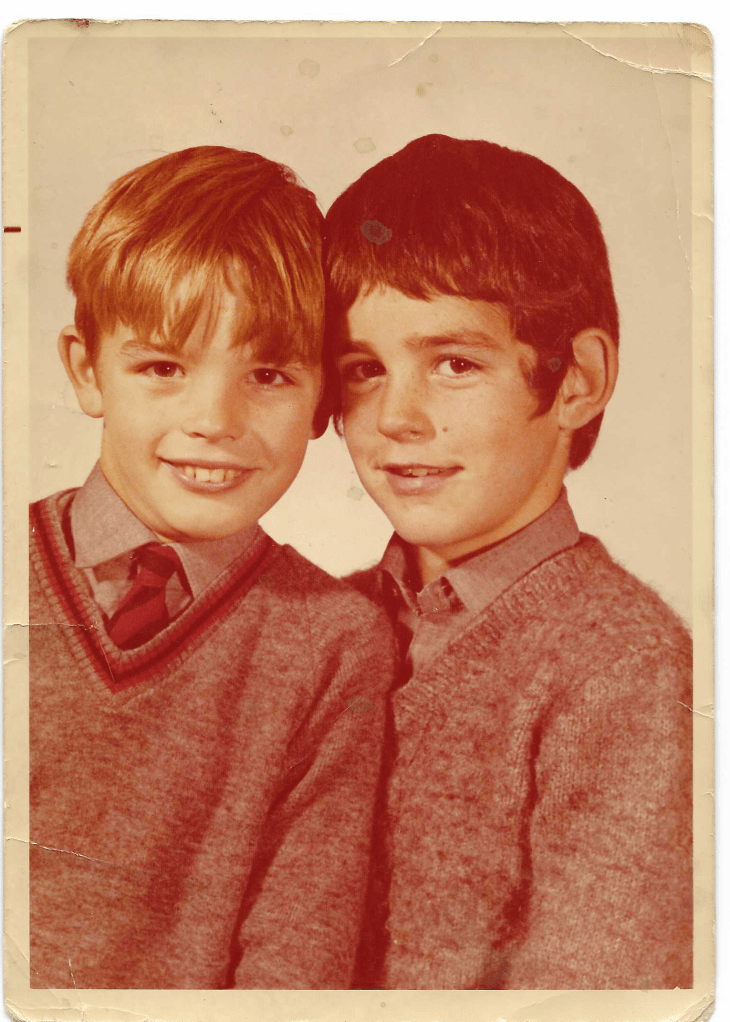
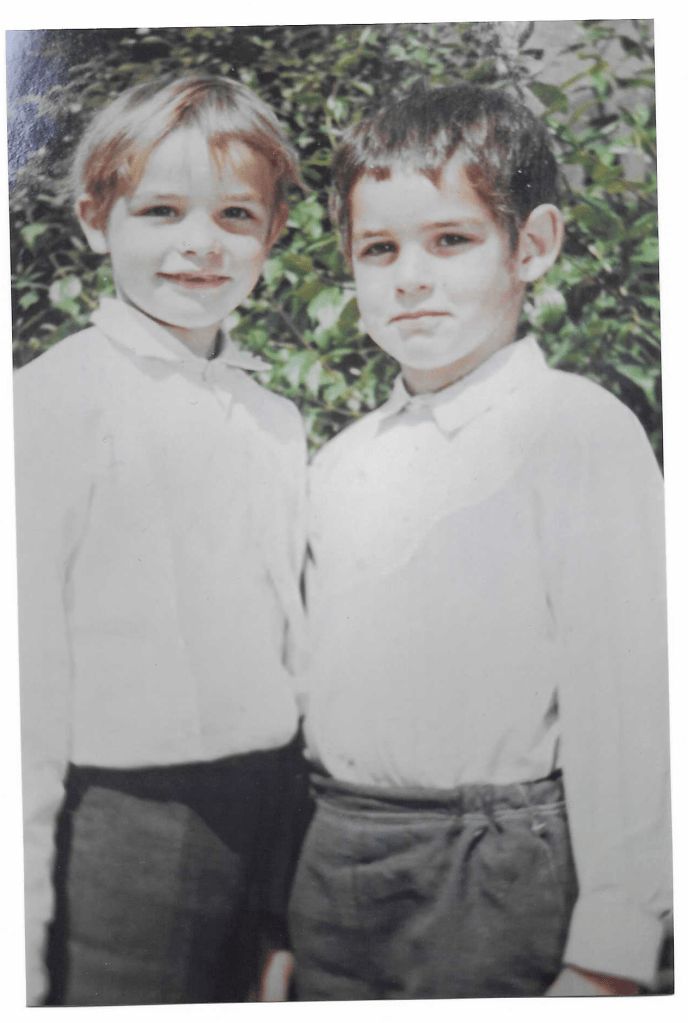
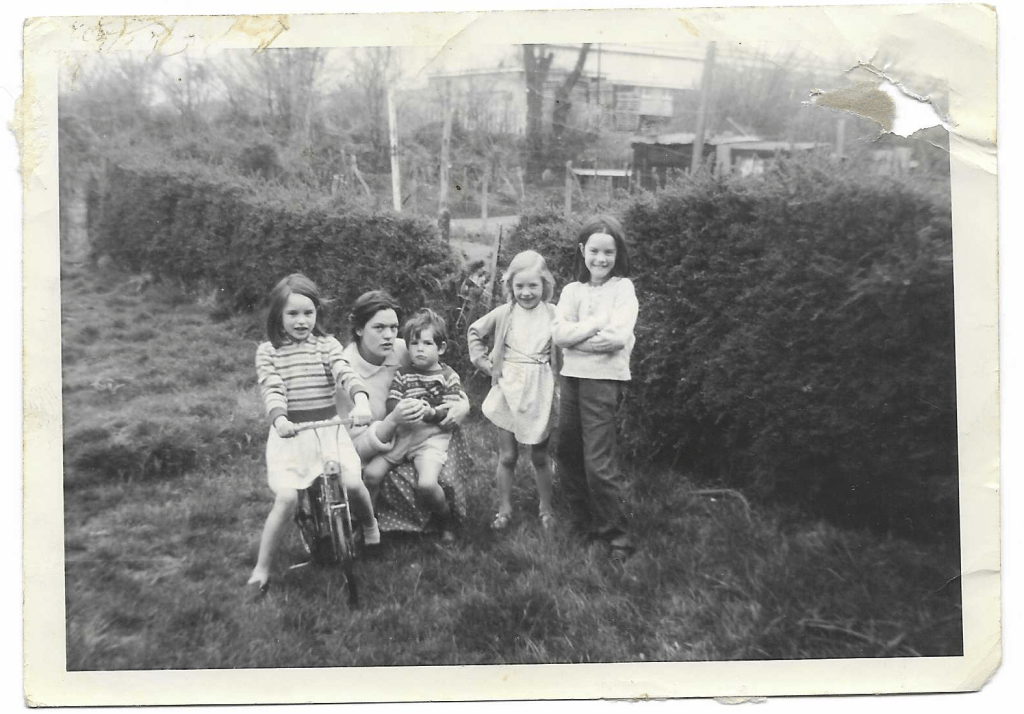
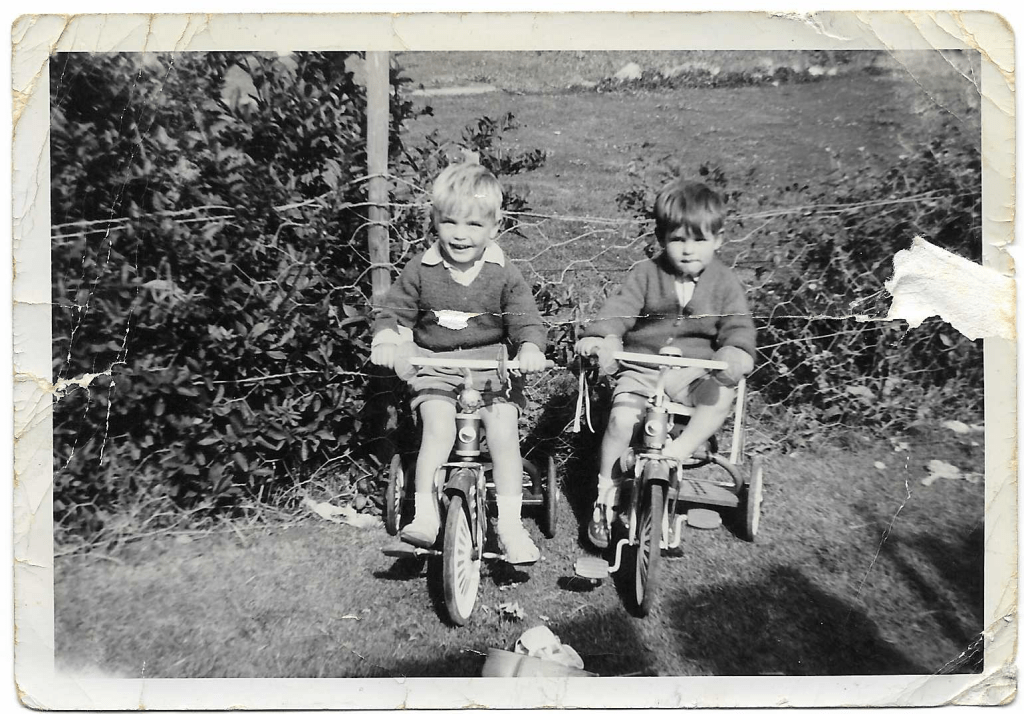
He was born in Whitstable on the 15th November 1960, to parents Vic and Rita. There were six kids altogether, in order of age: Lesley, Lisa, Vicky, Leonard, Stephen and Kate. Joe was number four on the list, Leonard, though everyone knew him as Joe.
It was a proper old-fashioned childhood. They lived on the South Street estate on the outskirts of town, and would spend their time gadding about in the woods and fields, leaping into haystacks, climbing trees, having adventures.
It was up here that Joe first learned about the magic of the landscape which was to play such a major part in his life later on. An old lady, who lived in a house called Aquarius, and who claimed she was the reincarnation of an Egyptian Princess, pointed to some lumps on the horizon and told him that there were dead giants buried in the woods. Later he came to realise that what she was pointing at were tumuli, ancient burial mounds overgrown by trees. It was this that set him on the quest that was to take up the rest of his life.
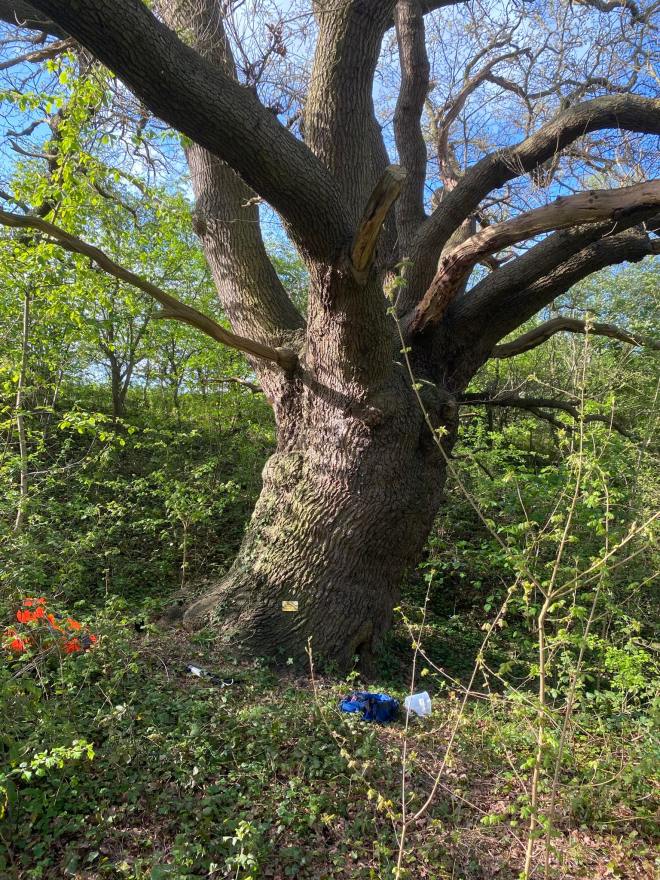
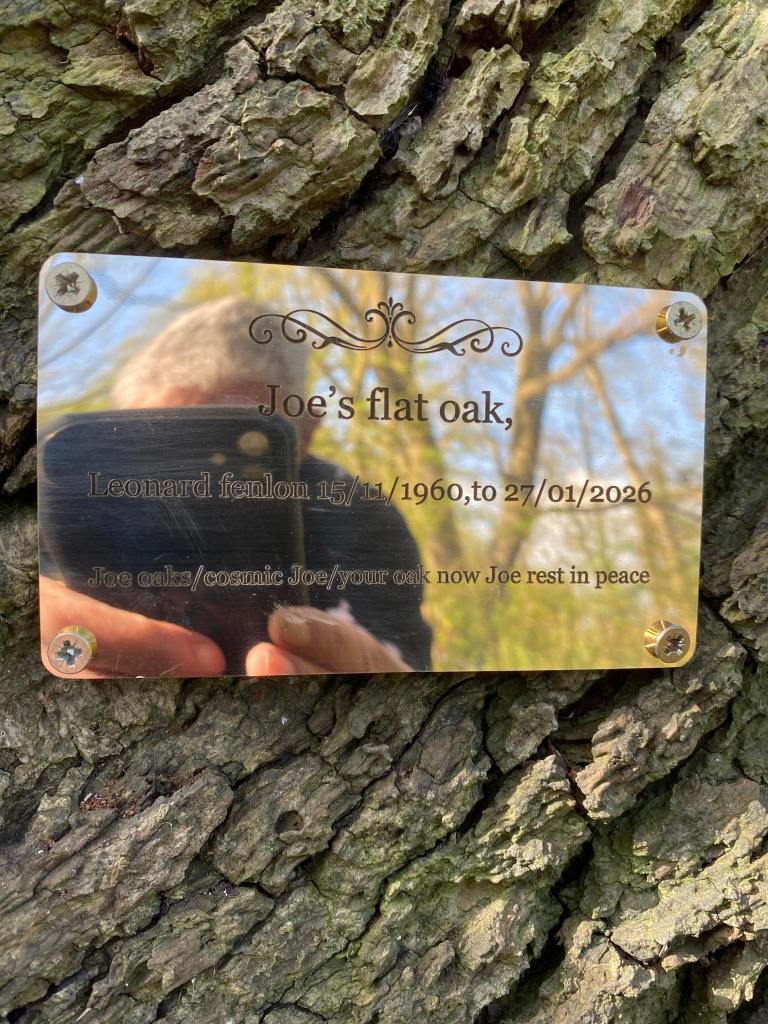
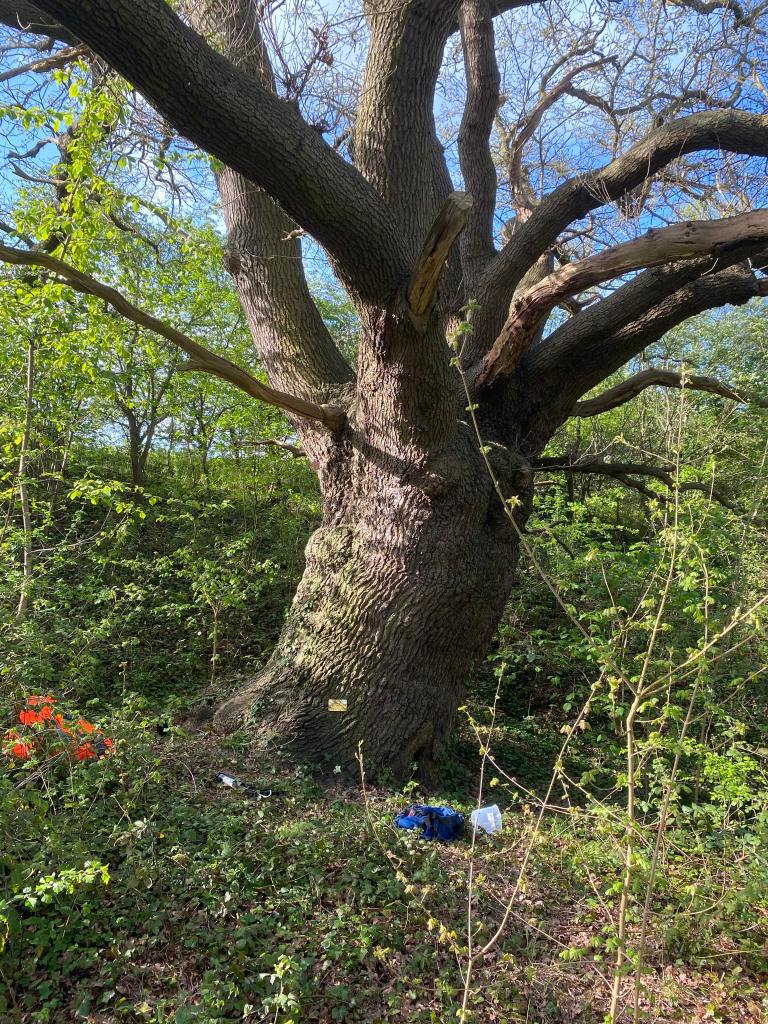
It was also this that sealed his commitment to stop the building of the A299 by-pass in the 1990s. There was one tree on its route that he used to climb as a boy: the Flat Oak. They called it that because between the upraised branches there was a flat platform, which as kids they used to sit on. Joe used to sit on it in later life too: playing the penny whistle and watching the world go by. It’s a very ancient tree: at least 300 years old, possibly older. He once described it as: “the reservoir of memory in the landscape, the anchor knot in a pattern, the focus around which the landscape weaves.” Those were his exact words. I know because I wrote them down at the time.
When we first heard about the by-pass I offered my help in organising a protest. Joe rejected this with an airy wave of the hand. “It’s OK,” he said, “I’ll meditate in the field and create a psychic barrier.”
Well the psychic barrier must have worked because, while the road went ahead, the tree was never cut down. Also the road becomes uneven around here. It has acquired bumps, which means that there is a 50 mph speed limit, which means that people driving by have to slow down at this exact spot and think about where they are in the world.
His youngest sister, Kate, remembers him in the following words:
My childhood memories of my big brother are a bit vague and sketchy but I remember that he was kind, sweet natured, funny, cheeky and very protective of me.
Our childhood was a happy one, spent with our cousins and neighbours. We climbed trees, we swung off them, jumped out of them, played in haystacks, our street was like one big family, loads of kids, everyone was Auntie, Uncle or Grandma and these really happy memories will beeverlasting.
We didn’t see a lot of Joe after we’d all left home. He was a gentle, kind man, a bit of a loner and he lived a different life to us, one he chose and loved. He was always true to himself, he was non compliant, wouldn’t be led and didn’t like ‘The System’. He led his life how he wanted to and I admire him for that. I’ll miss him and his wackiness but I won’t miss the ever-present aroma of weed.
I’d call him a hippy, long hair, colourful clothes and wacky hats. But aside from what we saw, he was clever, he was a published writer, an astrologer and a talented artist and always had a story to tell. He loved nature and I’m proud that MY brother became an activist, trying to stop roads being built through fields where he’d played as a kid.
But even though we didn’t see much of him, we spent the last few months by his side, caring for, and loving him! Helping him to come to terms with what he was facing.
He was desperate to get well and get back to his home and his beloved bike and he fought as hard as he could, but it wasn’t to be, he passed away peacefully with family holding his hand.
His niece, Leah, remembers his like this:
When I was about 14/15 I used to bunk off school outside the arcade in town. I’d hide because there was always someone I knew around and everyone knew the family so they would grass me up to a parent or an aunty. One day I tried to hide from Uncle Joe thinking he’d walk past. Turns out all my mates knew him as Cosmic Joe (if you know, you know) and he spotted me straight away – needless to say I was actually pretty popular after that!
His niece, Gemma, has this to say:
One of my favourite childhood memories will always be the adventures I had out into the fields and woods in South Street with Uncle Joe, accompanied by my cousins Leah and Dan, Simba the Dog and our bikes that Jo often hid in the long grass when they became too much of a hindrance.
I will also fondly remember the laughter we had together during my visits to the Hospice. One particular occasion where I thought I was being helpful applying Fixodent to his false teeth, however after having completed the task it was quite apparent I had used far too much of the stuff. After a good 30 mins Joe was still unable to talk properly. At this point we both realised that I had used far too much of the Bright Pink gel! Thankfully Joe thought this was hilarious and we both had a real giggle about it, especially as Joe pointed out because I was the Dental Nurse!
That was one of Joe’s qualities. Although he was called Cosmic Joe, and had a nice line in speculative thinking, he was also very down-to-earth. He had a great sense of humour. Even his cosmic revelations were tinged with his absurdist imagination. In his last days he was dosed up with morphine to keep the pain at bay. What this meant was that he was also subject to hallucinations. He was seeing things that weren’t there. He said that one day a bunch of gnome-like characters had jumped down from the ceiling as if on wires. One of them had bounced up and down in front of his face and put on an absurd goggle-eyed look, as if it was trying to make him laugh. Even Joe’s hallucinations were comical.
Joe’s funeral took place on Monday 16th February 2026 at 11.00 am at Herne Bay Crematorium.
Here is the text of the Eulogy I read out on the day:
His sister, Kate, niece Gemma and I spread some of his ashes on The Street in Whitstable on the morning of the Spring Equinox, Friday 20th March 2026.
On Sunday 29th March Joe’s family assembled to bury more of his ashes at the Flat Oak. His brother, Steve, had dug a hole by the roots and, after a suitable introduction, we poured his ashes into the hole, along with a sprinkling of marijuana, Joe’s favourite herb, and a good glug of Stella Artois. Steve said that Joe’s DNA would feed the tree, so that he would always be present in this place.
Here is the introduction that I read out on the day:
Written on the occasion of the scattering of Joe Fenlon’s ashes, The Flat Oak, Sunday 29 March 2026
We’re gathered here at the Flat Oak in remembrance of our brother, uncle, friend Joe Fenlon, at this propitious time of the year, between the spring equinox and Easter, in order to plant his ashes. This is very appropriate for a number of reasons. Firstly that, as we can all see and hear and feel, the world is coming to life again after the dead of winter so, although we must grieve at the passing of a loved one, we can’t be sad. There’s a difference between sadness and grief. We can be sad while watching a sad film, or reading a sad book, or listening to a sad song, but we don’t feel grief at these things. Grief is what we reserve for those we truly love, it is felt in the body, not the mind, and it is shared by many of our fellow creatures on this planet, birds and animals alike. When we feel grief we are feeling the ache of love on its deepest level, and it is love, of course, that makes the world go round.
So rather than be sad, let’s celebrate. Joe wasn’t sad. He spent his life exploring the world and its mysteries. He grew up around here. He spent many hours, days, weeks, months even, in this very place. It was one of his favourite places on the planet. He meditated here. He spent wild, ecstatic nights here, loaded up to the eyeballs on sacramental chemicals. He smoked his weed here. He took acid. He built bonfires. He cooked food. He made tea. He even lived here, when he was protecting the oak from the road. This was back in the 90s, when they were constructing this very carriageway, the one that is rushing by from here to there, with its 50 mile an hour limit because, for some strange reason, it has acquired bumps. Joe always said that he mediated in this place in order to create a psychic barrier. Well he may not have stopped the road, but it looks like he might have sabotaged it on some level. They built the road in order to save time on your journey from London to Margate. Joe has made sure that, just as you are passing his oak tree, you have to slow down and think about where you are.
I don’t know why this is called the Flat Oak. I only know it is because Joe told me. You may also know that it is on the route of Joe’s ley-line. Joe was always looking for ley lines. He was always seeking out signs in the landscape, visible markers for his spiritual quest.
This is what Google says about Ley lines: “they are straight, invisible alignments connecting ancient monuments, landmarks, and prehistoric sites, first proposed by Alfred Watkins in the 1920s as ancient, practical trade routes. While initially viewed as historical paths, the concept evolved into a New Age theory suggesting they are energetic meridians of Earth power or spiritual “highways,” often linked to paranormal activity, UFO sightings, and magnetic energy.”
In the case of Joe’s ley-line , it stretched from The Street in Whitstable, to the Flat Oak here, to the prehistoric tumuli that lie hidden in the woods over there, to Canterbury Cathedral, and on to the ancient obelisk which they found in the grounds of St Augustine’s Abbey. We’ve already scattered his ashes on the Street, at low tide, at the spring equinox. After this I plan to complete the journey scattering Joe’s ashes along the way, from here to the obelisk, joining the Street to the Abbey and making sure that, whether you personally believe in ley lines or not, we have honoured Joe’s belief. Like a lot of things in this life, we make things real by acting them out.
So this is why we are here: to honour Joe and his beliefs, to remember him, to leave a little bit of Joe’s remains, that they might feed the tree that he loved, and to remind ourselves that, no matter how deep the grief we feel, that life will go on, that celebration is better than sadness, and that, whenever we want to remember Joe, we only have to come here, to sit by this tree, while listening to the traffic as it rumbles by, slowed down on its journey by Joe’s psychic barrier.
After that the artist, Hélène Williams, read out a poem and we shared some mead.
Here is the text of Helene’s poem:
SONNET TO THE FLAT OAK
Dedicated to Cosmic Joe.

QUERCUS, QUERCUS.

Praise be, to the venerable Green Empress.
With your bark-ed arms and leaf furled gown,
Rooted feet commune in flinty earthed one-ness.
I raise my heart in worship of your emerald crown.

Cloaking wood glade, your strong maternal presence,
Dost preserve space, from a straight patriarchal road.
A place to secretly meditate, shields the ancients,
Trees and spirits alike to remain in protected abode.

QUERCUS, QUERCUS.

Circled by Denstroude brook and Convicts wood,
A chalk trout stream once a hidden path-way,
To soldiers and smugglers up to no good.
A majestic symbol, enduring to-day.

Glorious iconic, Oak-en tree.
Immersed in your sacred heart, you set  Joe free.

QUERCUS, QUERCUS, QUERCUS.

Written by Hélène Williams
www.helenewilliams.com
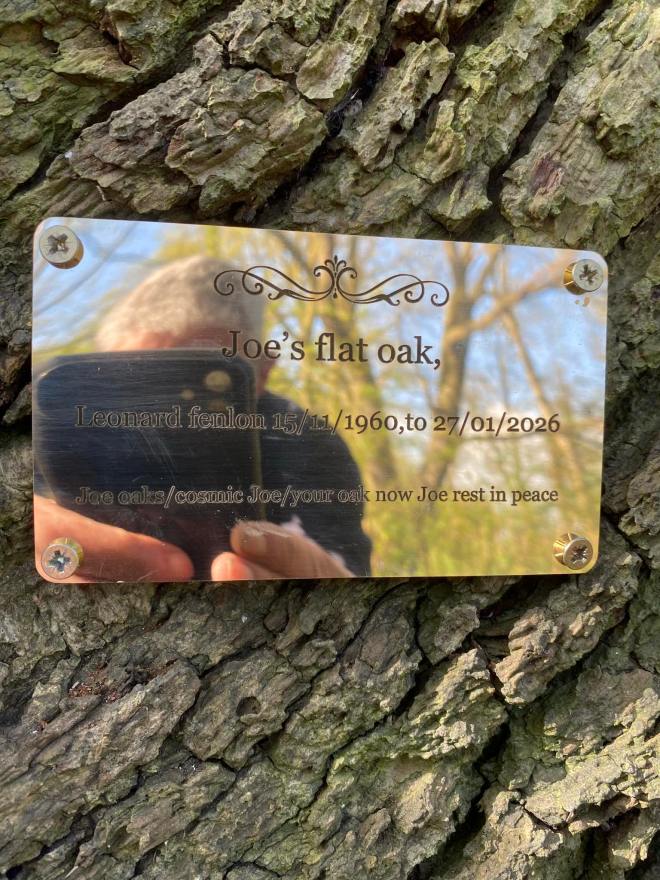
A small brass plaque has since been placed on the oak by his brother, Steve.
Gallery
(Click on images to enlarge)
Postscript: Mission accomplished!
On Thursday 2nd April 2026 (a full moon) I walked from Tankerton to Blean, following the route of Joe’s ley-line, scattering a little of his ashes at significant places along the way. He’d told me many years ago what some of those places were. I also included the South Street estate, where he grew up, and the by-pass, which he protested against. I was always careful to put the ashes under a tree, except over the by-pass, where I scattered them from the bridge. I thought Joe would like that. Reinforcement for his psychic barrier.
The following day (Good Friday, 3rd April) I caught a bus to St Dunstan’s and walked from there. I scattered ashes under a particularly magnificent oak in the church, and then some in the herb garden and the Garden of Remembrance in the Cathedral. Lastly I went to the Abbey. It’s £14 to get in, which I can’t afford, so I was looking for a way to get around that. I was scouting it out. There’s a bit of fence as you approach the Abbey entrance, which looks out onto a lawn, and a gate by the entrance.
I thought I might try reasoning with the staff. I went in and someone approached me for payment. Apparently you aren’t even allowed to go into the entrance hall without paying. So I spoke to this person, and told them what I wanted to do. I thought maybe they could do it for me.
“We don’t allow that,” she said.
“Well I’m going to do it whether you like it or not,” I said.
“Then I’ll call the police,” she said.
“I don’t care if you call the police, I’m going to do it,” I said.
As I left I could hear her telling the rest of the staff to call the police. So I left the entrance hall, walked quickly back passed the fence, and emptied the last of the remains onto the lawn. After that I disposed of the bag in a nearby bin and caught the bus home.
I thought Joe would enjoy all that. I couldn’t see his obelisk, but I got as near as I could to it, and finally broke the law to scatter his ashes.
Disobedient as always. Joe would be proud of me.
“A most-excellent spot in all the world to tune in and resonate with the landscape is at Tankerton Bay, at the far-end of The Street. Especially in the dead-of-night beneath the stars and crescent moon. Out there at the end of the road on a gash of dry pebbles, totally engulfed in silent space and very aware of the endless sea-of-night; you seem to hover in the midst of the awesome, overwhelming darkness and silence, a slightly terrifying yet lullingly peaceful experience you can—if you’re brave enough—really feel the power…” Joe Fenlon, aka Fen Lander, from his website.
Joe’s website:
https://hubpages.com/@fen-lander
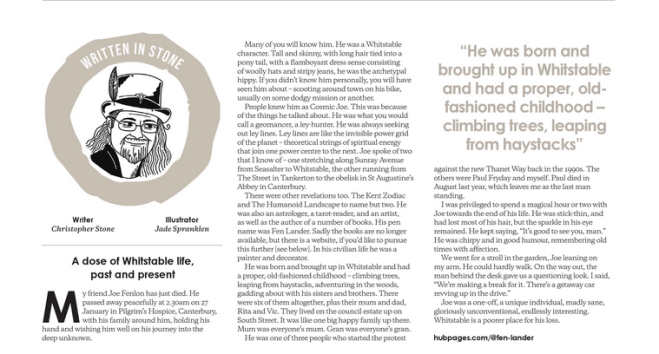
From the Whitstable Whistler:
CJ Stone is an author, columnist and feature writer. He has written seven books, and columns and articles for many newspapers and magazines.
Read more of CJ Stone’s work here, here and here.
Whitstable Views
How to use it!
- Make sure you share and like our articles on Facebook and Twitter/X, and whatever other social-media platforms you use. Join us on Facebook here: @whitstableviews
- You can read and contribute articles for free but in order not to miss any, please subscribe to get regular free updates.
- To do so, press the “Subscribe” icon on the bottom right hand corner of the screen. This will take you to the option to sign up. (It disappears as you move the text down then reappears at you move it back again!)
- Please engage by leaving comments on the website, rather than on social media. Let’s get a debate going. All our contributors welcome the chance to engage with YOU.
- To all writers out there, we want to hear YOUR views too, so do submit your own articles. Read our submissions page on how to do this: https://whitstableviews/submissions/
- Finally, to keep Whitstable Views alive and independent please donate if you feel able to do so. As little as £1 would help. Details are on the donations page here: https://whitstableviews.com/donate
 Whitstable Views
Brilliant – what an adventure!!!
LikeLiked by 1 person
Thanks Chris for that humane and affectionate account of Joe’s extra ordinary life. I’d often see him about but never knew him. Reading your words I do now, at least.
LikeLike