Personal Chronicles of the groundbreaking years for UK Green Parties
by
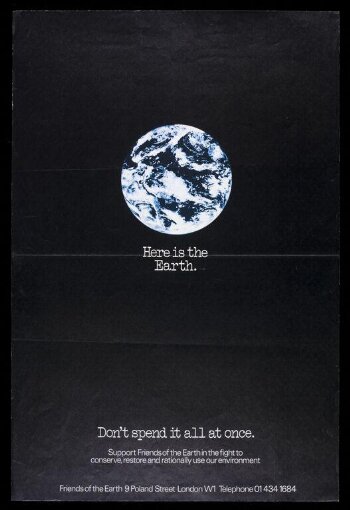
A 1970s Friends of the Earth poster showed a colour photo of Earth from space with the line: “Here is the Earth. Don’t spend it all at once.” This outlook resonated with the Club of Rome’s Limits to Growth report. Its computer models warned that, to sustain blind economic growth, continued consumption and population growth would lead to depletion, pollution, and, within a hundred years, possible societal breakdown.
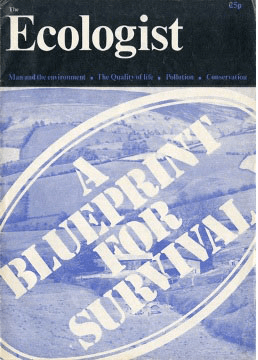
The Ecologist magazine devoted an entire issue to the Blueprint for Survival, laying out how the economy could be reshaped in steps to avoid that fate. A small group gathered in a Birmingham pub in 1973, resolved to form a new political party, to actually put the Blueprint into action. Today’s UK Green Parties (the Green Party of England and Wales, the Green Party: Northern Ireland and the Scottish Green Party) can trace their beginnings to that meeting.
By 1979, the Ecology Party, as it then was, still had under 500 members. However, by fielding 50 general election candidates that year, the party ensured a party-political broadcast, reaching many more people. Membership increased tenfold, allowing the start of a national office and a press officer.
This growth enthused some long-standing members but worried others. They feared that newcomers—some from the 60s hippy counterculture and leftist libertarians—might take the party they had nurtured away from them. Despite these tensions, veterans and radical decentralists still found ways to cooperate on the Party’s administrative national council.
Through a series of policy papers adopted (if passed) at successive conferences, the party compiled a standing compendium to be titled Policies for a Sustainable Society.
The 1970s Green economic policy had three principles:
- Shift the tax burden away from taxes on income toward more taxes on resource consumption.
- Promote local economic self-reliance, seeking only to use local materials and labour. (The priority being to minimise consumption and maximise conservation of finite resources.)
- Redistribute wealth: using revenue raised from a tax on land site values to fund a universal Basic Income Scheme by which the government would pay every adult citizen unconditionally an equal amount, whether they are in employment or not.
In the mid-1970s, Ecology Party members in Thanet were the only ones in east Kent contesting local elections, but momentum shifted to Canterbury when a key member relocated. David Conder became the Canterbury candidate in the 1983 General Election. His leaflet had the headline:
“The Ecology Party: new ideas on recycled paper.
Other parties: recycled ideas on new paper.”
The Canterbury campaign won nearly 1,000 votes (around 2%).
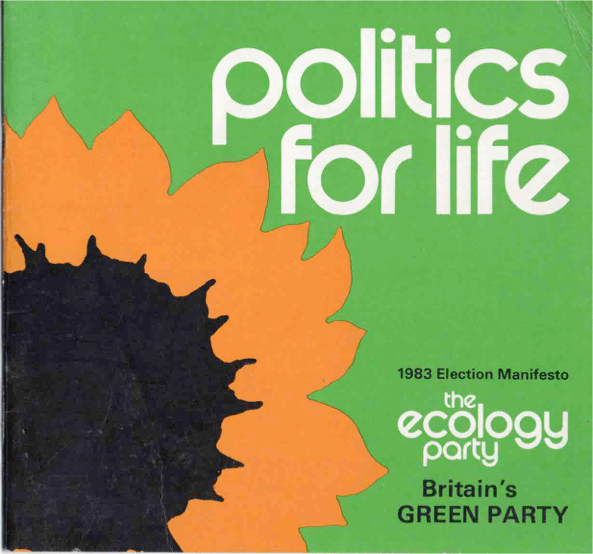
The national Ecology party manifesto, Politics For Life, with the slogan “for peace, liberation and survival,” had introduced radical policies with invective, fundamentally opposed to the orthodoxies shared by the other parties:
- Opposed
- …to every aspect of the nuclear state…
- …to the economics of more and more…
- …to those who have no respect for other creatures…
- ….to those who endorse today’s unhealthy and uncaring society,
- which disregards the people of the third world
- … to a society which leaves no room for the spirit.
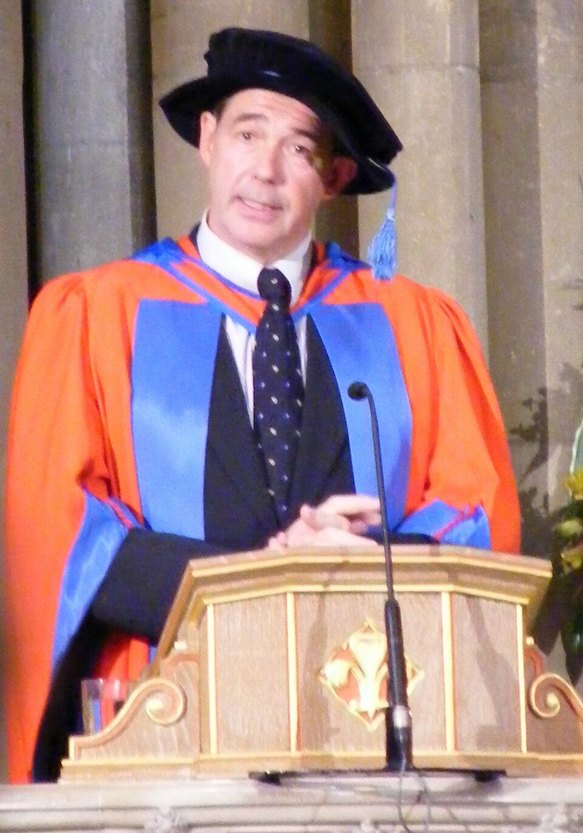
In that ‘83 General Election, co-chair Jonathon Porritt‘s appearance on the BBC’s election call phone-in series drew attention. Those buying the Party’s manifesto via a Guardian advertisement were contacted by local parties and urged to join. It had attracted political activists from campaign groups such as CND (in my case) and Animal Rights. This is how I became involved. I was a party activist for the rest of the eighties.
From my town, Whitstable, I took the initiative to arrange a meeting for prospective new members in the neighbouring town of Herne Bay. Afterwards, one recruit from there led efforts to revive the local Party in the Thanet district (as Herne Bay lay within the Thanet North constituency).
Hostility from established parties was persistent. At a public meeting in Canterbury, a key local Labour Party officer had heckled the Ecology candidate: “All you do is siphon votes from Labour!”
Many Labour activists took up this refrain, as if working-class votes were owed to Labour, like a feudal tithe, and so the Ecology party’s participation was theft. In Herne Bay, however, it was Liberals who were similarly convinced all Green votes were “stolen” from them.
At the first European Green Congress in Liège, Greens adopted a Common Programme for the 1984 European elections. François Roelants of Belgium’s Ecolo told the Ecology Party’s 1984 spring conference that he’d act as a de facto representative for us in the European Parliament, since the UK, lacking Proportional Representation (PR), prevented us from claiming seats. Some UK voters would tell local MEPs that they considered Roelants their MEP.
While observing the election count for East Kent, a fellow member asked me: “Who is this Jackson who gets so many votes?” I replied frivolously, “Never heard of him! And we won’t for another five years. He won’t say anything on Green issues.”
Only then did I notice Christopher Jackson (Conservative MEP for East Kent) was standing behind us, viewing the counting over our shoulders.
After his re-election, Jackson increased his media presence. Every couple of months, his press releases appeared in local newspapers—often on environmental themes. We shamed him into action.
In the 1985 county council elections, Ecology Party candidates contested a quarter of the Kent seats. Only one got a double-figure percentage: In a rural seat, the local doctor gained 18% for the Party, partly because the Liberals/SDP did not have a candidate on the ballot.
On my first time standing, I won 3.3% of the vote in the Whitstable West ward. I was almost the only Green canvasser door-to-door in the district. Interest was minimal until one street, where nearly everyone wanted to discuss policy and ask questions. I later learned this followed Jonathon Porritt’s appearance on the Wogan chat show.
In the following weeks, a number of residents who, on their doorsteps, had mocked the question of whether they’d vote for Ecology would stop me in town, pleading for me to arrange doorstep waste-paper collection from their homes. (Voting Green would have helped bring it on: the local council didn’t adopt recycling until 1989, after Green support rose in that year’s elections.)
In the spring of 1985, the Ecology Party hosted the second European Greens Congress in Dover, with 600 Greens from 19 countries. Sessions had speeches on policy topics, followed by delegate question-and-answer sessions rather than decision-making. The press ignored the lucid, challenging nature of this content. In his terse report, the Times journalist reduced the Green Congress to “the agreeable face of Environmentalism.”
Party organisation
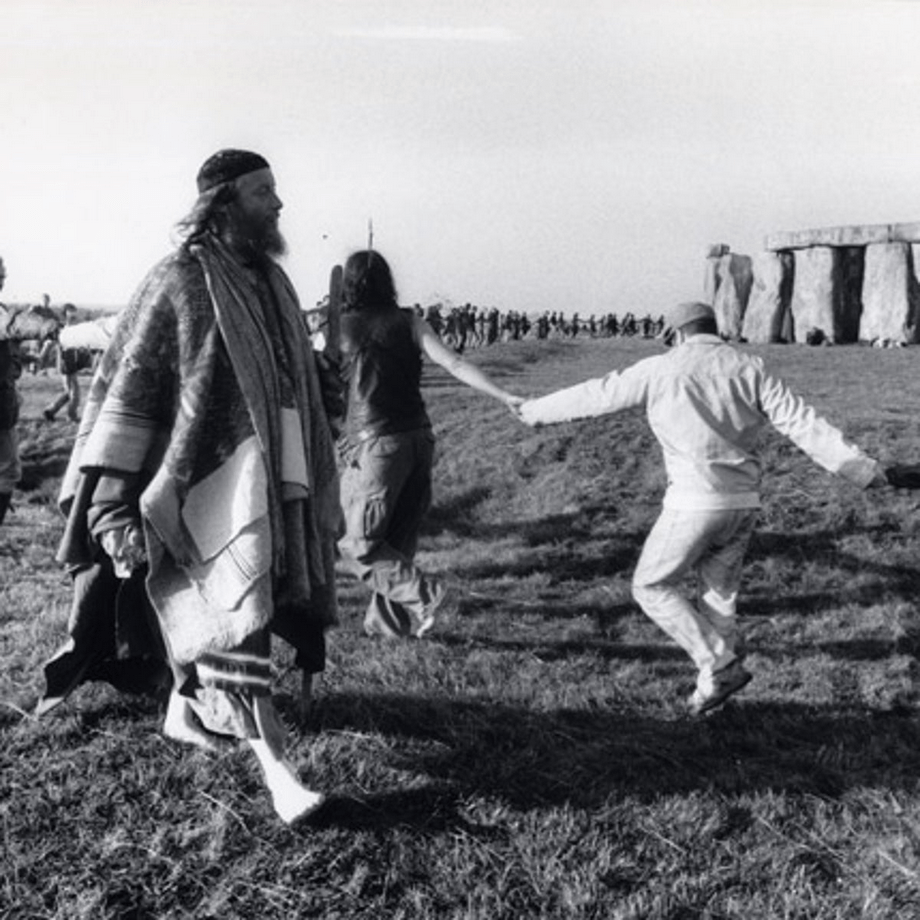
To promote local autonomy, the party allocated part of each membership fee to members’ Regional or “Area” Parties. While many area parties barely functioned, Scotland—the most active—became independent in the 1990s.
The key decision at the 1985 annual conference was the vote to change the party’s name to the Green Party. The Party Organisation Working Group (POWG) failed to submit its new draft constitution in time for the agenda, but secured timetable space for conference workshops. Conference workshop comments and straw polls were ignored, and the voting paper remained unchanged the following spring.
POWG proposed replacing the party’s administrative body (reps from 14 regions, plus four elected by postal ballot and four from the annual conference) with a body of area reps under a small executive, a more conventional hierarchy.
The plan’s leading opponent, hippy Sid Rawle, drew on his CND experience, warning that once the executive set the budget, the representative body would be powerless, unable to initiate or implement changes. Advocates of the new structure had no answer other than to imply that dropouts in opposing ‘leadership’ didn’t understand real-world needs.’ At the deciding vote in the 1986 spring conference, the proposal received over 50% support but fell short of the two-thirds majority required for adoption.
The zealots for the new model constitution took the defeat badly. They organised a slate for the four Party Council seats due to be elected by a national members’ postal ballot. The schemers aroused members’ resentment by declaring that the party needed to remove excessive influence of dropouts (i.e., Sid the hippy) for Green politics to become acceptable to the mainstream. Helpfully, the single transferable vote system wrought a defeat for 3 of the four on the slate.
That year, gains were at last made across the UK with the Greens winning district council seats in the May local elections.
My local council, Canterbury, held its next elections in 1987; 13 wards, accounting for half the district’s voters, were offered a Green Party candidate. Canterbury Greens’ high water mark was in Tankerton, a two-seat ward then with a large Tory majority; I beat the two Labour candidates.
The 1987 district elections were followed rapidly by the General Election.
The Green Party, with around 7,000 UK members, fielded 133 candidates in the 1987 General Election. Richard Lawson, a new councillor, did best in Weston-Super-Mare, with 3.5%.
The Green Party’s party-political broadcast featured a series of women, each speaking directly to the camera. I found that this disturbed a few.
In five of the hundreds I canvassed in Whitstable, the woman answering the door told me, ‘My husband says (sic) we cannot vote Green because it is a feminist party,’ since all but two of the speakers were women in that broadcast.
Green Party Council (GPC) area reps were highly active, serving on national committees for years while working to maintain what passed for regional party organisations. Often, then, being a general election candidate also left them drained, and most stepped down. Their replacements did not find and take up previous committee remits. Instead, they drafted new ones based on intuition, believing they were the first to establish such guidelines.
The Party Council’s approach of acting as servants of the party, responsible for executing tasks, was lost. The newcomers, becoming committee convenors, formed a clique, viewing themselves not as party servants but as its High Command, expecting that adopting resolutions stating what should be done would suffice. They wouldn’t realise the need to put in the effort to make it happen. This neglect weakened the operation. Only the former conference committee convenor, returning the following year, ensured the party’s two annual conferences took place on time.
Conservative Prime Minister Margaret Thatcher delivered a speech to the Royal Society‘s scientists in September 1988, lending credibility to the Green Party’s particular concerns: Rising population, intensive agriculture, fossil-fuel use, and deforestation.
“Put in its bluntest form: the main threat to our environment is more and more people, and their activities…” Mrs T said.
And: Growth must not “plunder the planet today and leave our children to deal with the consequences tomorrow.
Her government still did nothing on the issues her speech raised, such as climate change. Yet her validation of what had been the Green Party’s prime concerns (which voters had felt they should view as eccentric or ‘fringe’ issues, as ‘that’s what everyone thinks’) abruptly conferred respectability on them. It broke many people’s inhibitions about voting Green. Opinion polls included the Green Party as its electoral support rose.
In 1989, the party received a larger share of the vote—first in local elections, then in the European Parliament election.
In the 1989 Kent County Council elections, I again stood for election in the Whitstable West ward. We handed out leaflets on Saturdays in the High Street, and this time, people crowded around, eager to take one.
I got 13%, almost four times the previous vote, beating the Liberal Democrat.
Across the county, the Greens commonly received three to four times as many votes as at the previous County Council election. Eleven of the 35 Green candidates in Kent out polled at least one major-party opponent.
The best Kent result was in Sandwich, where the Green Party finished second to the Conservatives with 21%. This Green vote boom prompted them to establish environmental committees in both the Canterbury and Kent councils. Yet the party was unprepared for this surge, and my 13% in Whitstable would not be improved on for twenty years.
Greens contested all 81 UK seats in the 1989 European Parliament elections for the first time. The rise in interest after Thatcher’s Royal Society speech peaked, and the party won over 2 million votes; 15% of the national vote—though the First Past The Post (FPTP) system left it without seats.
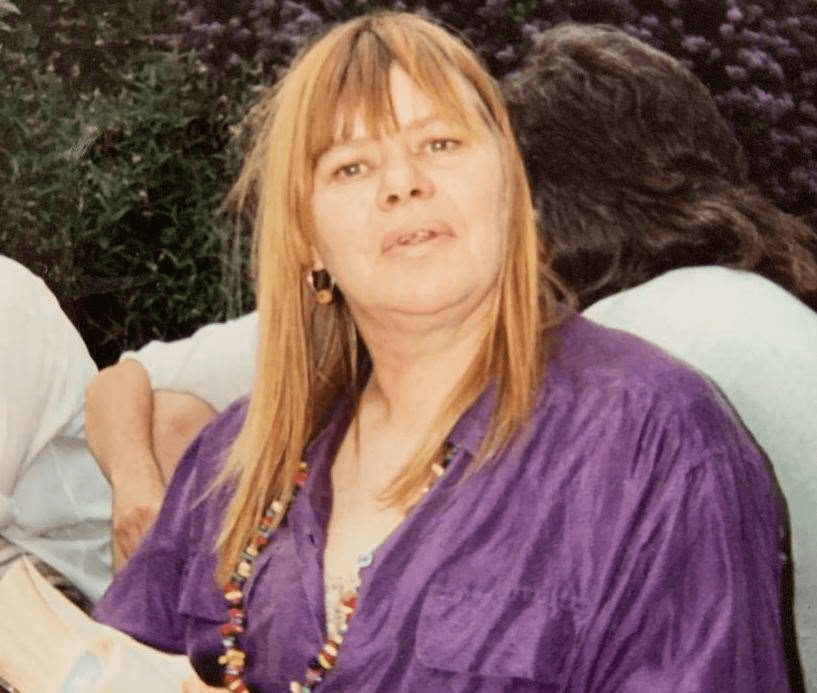
The next Green Party Council (GPC) meetings ought to have focused on how best to use party resources to retain this support. Instead, it was dominated first by a no-confidence motion against Penny Kemp, a GPC co-chair from Kent, as she questioned in the party newsletter why the new ‘high command’ had curtailed discussion of the draft Euro-election manifesto; previous practice (of internal debate, amendment, and approval) had been ditched.
After the Daily Mail reported that Penny Kemp intended to share a platform with Ken Livingstone MP at a Labour conference fringe meeting, [shock horror], the following Party Council meeting was diverted by those pressing her to withdraw from it. The year’s new intake of Party Council members feared that, consequently, the Greens would be seen as unsavoury left-wingers (gasp) as the Daily Mail insinuated.
Newer committee chiefs on Party Council, allied with some former party officers, put their names (and party titles) to a letter in the members’ newsletter. Headlined “Working for a Future,” it attributed the election success to their ‘strategy’ of writing the committees’ remits. (How having new internal committee job descriptions could bring about 2 million public votes was not explained.) They declared the way forward would be to create an executive to lead the party. In truth, as I had witnessed, the Party Council had operated more efficiently when coordinating the 1984 European election campaign. The enlarged public vote in 1989 was despite the Party Council, not because of it.
These chiefs then formed a faction, Green 2000, to push their constitutional change. The redesign was passed at the Party’s 1991 conference.
Under the new structure, the old Green Party Council responsibilities were transferred to an executive composed of individually elected “coordinators,” each responsible for the tasks previously handled by a committee.
Green2000 ran a full slate and won every position. Oddly, the former officers who sold these reforms to the Party were not on the ballot. Most of the slate lacked national experience and were ignorant of how the roles were previously conducted. They expected that surmising by intuition would see them through. The structure was dysfunctional: without any committee support, executive officers were overwhelmed, most resigning within a year.
Membership, steady at about 10,000 in the mid-eighties, rose to over 19,000 in the year after Mrs Thatcher’s Royal Society speech and the increased vote. But before the new executive began, membership had fallen. Many who joined during the boom did not renew after a year or two.
As the Party budgeted in anticipation of retaining its expanded membership, a financial crisis followed. There were, in the next years, in the doldrums, some beneficial innovations: a mutual support association for elected Green Councillors; a new logo and house style for the party’s election leaflets and publications; and a campaign worker whose achievements included getting Liberal Democrat MPs to adopt and steer the Greens’ traffic reduction Act through parliament.

Back in 1989, the Greens 14% vote share in the European elections had resulted in no MEPs under the first-past-the-post system. When PR was introduced for the 1999 European elections, it raised hopes… And the Greens did finally gain MEPs. Caroline Lucas, previously the national press officer and an Oxfordshire County Councillor, won a seat in the Southeast Region; Jean Lambert was elected MEP for the London region, and the party nearly took a seat in the Southwest.
Under those Green2000 reforms, the role of national spokesperson was transferred to separate member-elected positions, one male and one female Speaker. In a 2007 party members referendum on whether those posts should be changed to leader and deputy leader, the majority voted to approve having a formal Leader:
Caroline Lucas was already prospective Green candidate for Brighton Pavilion when elected party leader in 2008. Brighton Pavilion constituency got the highest vote for the Green Party in the 2005 general election, when Keith Taylor gained 22% of the vote, having raised it from 9.3% in the 2001 election. When the party opted for a single leader, it had over 100 elected councillors, plus the two MEPs and members of the Greater London Assembly. At the 2010 General Election, Lucas won the Brighton seat.
Lucas served two spells as leader, covering 8 of her 14 years as the Greens’ only MP in parliament, before she stood down in 2024. A persistent, articulate advocate on green issues (criticising failures to address climate change, for example), some noted that this was without saying much about what the Green Party would do.

When Lucas was succeeded as Green Party leader by Natalie Bennett, she chose to emphasise the introduction of a Basic Income Scheme (party policy since the seventies) above all other policies. In media interviews, launching the Party’s 2015 election campaign, Bennett was unable to answer questions on the cost of certain policies and where the money was going to come from.
When the UK Greens adopted the Basic Income Scheme policy in the 1970s, they proposed that funding would come from a tax on land values. But in 1987, when Thatcher introduced a Poll Tax for local government, the Green Party conference reassigned that land-value tax as the Green alternative to the Poll Tax. The party did not, at that time, identify what could fund the Basic Income scheme instead.
So, Natalie Bennett’s failure to say how the Greens would pay for the Basic Income scheme was not down to the ‘brain fog’ which she confessed to, but due to the party having lost sight of an answer.
The Party in my time and beyond has evolved into a different animal.
When I attended my first Green Party conference in 1984 (it was then open to any member who wished to attend) I wore a tie, but found I was the only one wearing one, so took it off. It seemed clear most had read the conference agenda papers and were focused on the business of working through it.
My last conference was in 1989, after the membership boom. Still not wearing a tie, I was in the minority. Men attending were in jackets and ties. Yet it was evident this new intake of members often hadn’t cared to read the agenda papers. A conference means conferring, yet the new intake resented the time spent pondering minor details. Maybe they expected a conference like the one other parties appeared to hold, a self-congratulatory rally.
In recent years, Labour under Starmer has moved away from social democracy. He dumped member-driven policy preferences aimed at improving the rights, lives, and opportunities of the working classes, whilst purging members. In this time, the Green Party has seen a massive membership surge, in large part as a refuge for those alienated by Labour—an alternative home for left-of-centre aspirations.
In 1985, founder member Rudi Bahro had resigned from the German Greens, saying that their approval of policy permitting experiments on animals marked a departure from opposing the industrial system. He wrote of Die Grünen: “The main thing is for it to get re-elected to parliament. It has no basic ecological position. It is not the party for the protection of life.”
Two distinctions previously set the UK Greens apart from other Parties: putting the planet first and living within the limits of Earth’s finite resources. It remains to be seen whether the Green Party drifts into being just a fresh left-leaning party and loses its distinguishing view on ecology entirely.
About
Although born in Whitstable, Matt Sands now lives in Canterbury. He has worked in office administration, and for a mental health patient advocacy scheme. In the late eighties he was a candidate for the Green Party three times in local elections whilst he acquired a degree in Politics & Government from the University of Kent, which he has described as “the biggest cul-de-sac on my CV.”
Whitstable Views
How to use it!
- Make sure you share and like our articles on Facebook and Twitter/X, and whatever other social-media platforms you use. Join us on Facebook here: @whitstableviews
- You can read and contribute articles for free but in order not to miss any, please subscribe to get regular free updates.
- To do so, press the “Subscribe” icon on the bottom right hand corner of the screen. This will take you to the option to sign up. (It disappears as you move the text down then reappears at you move it back again!)
- Please engage by leaving comments on the website, rather than on social media. Let’s get a debate going. All our contributors welcome the chance to engage with YOU.
- To all writers out there, we want to hear YOUR views too, so do submit your own articles. Read our submissions page on how to do this: https://whitstableviews/submissions/
- Finally, to keep Whitstable Views alive and independent please donate if you feel able to do so. As little as £1 would help. Details are on the donations page here: https://whitstableviews.com/donate
 Whitstable Views