by
I met my niece on the bus the other day. She was travelling to work, while I was going home. She’s 21. I’m 73.
She was already upstairs, on the front seat, when I came up to join her.
She said, “I always see you on the bus.”
“Not always,” I said.
“No, what I mean is, you’re the only other person I know who travels by bus.”
“You meet all the best people,” I said, and we both laughed.
This is true. Buses are mainly used by young people, old people, poor people and disabled people, with the occasional foreign tourists during the summer months. The rest of you spend your time getting in and out of cars, sitting in traffic jams and queuing for parking spaces.
It costs from £1.90 to £3.70 an hour to park in Canterbury, while a return fare by bus currently stands at £3 each way. This will be reduced to £2 at the end of 2026. Bus travel is (potentially) cheaper.
It’s also much more enjoyable, being relatively stress-free. You don’t have to worry what other drivers might be doing. You can just sit back, relax, and watch the world go by. At the end of the journey you get off the bus and walk away. No worrying about parking spaces. You’re already where you want to go.
The best seats are upstairs at the front. You get a panoramic view of the scenery in all its ever-changing glory. If the service was better I would have no trouble advising everyone to travel by bus. Unfortunately, the service is bad. Any stress that might be alleviated by not having to drive, is made up for by worrying whether your bus is going to arrive or not.
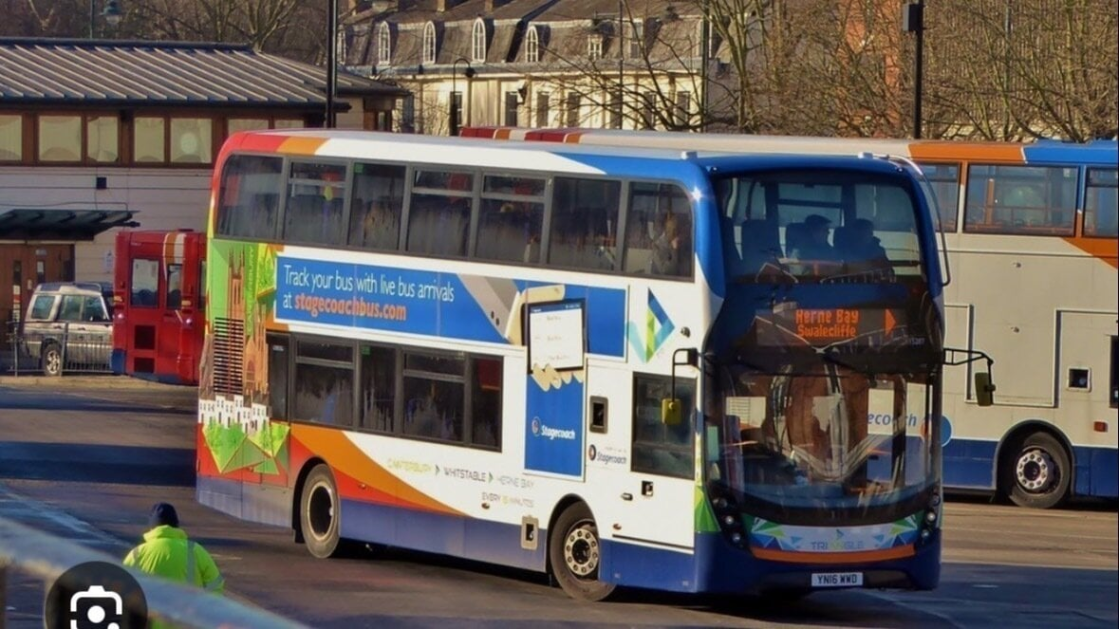
Take that journey where I met my niece. We were on the 401. This is one of two buses that travel between Whitstable and Canterbury. The other is the 400, which was Immediately in front of us. The 400 and the 401 are effectively the same bus. The 400 diverts to Estuary View (except on Sundays, and after 6.00pm) while the 401 goes via the University, otherwise they follow the same route.
There are four buses an hour, two of each number. They are supposed to run at 15 minute intervals, but this is rarely the case. Two buses running concurrently, or within a few minutes of each other, is a regular occurrence.
This effectively reduces the service to two an hour. You can be waiting for up to half an hour between buses: even more when a bus is cancelled. This too happens frequently. Buses are cancelled or delayed, without notification, several times a day. You daren’t depend on the bus to keep an appointment. You have to catch an earlier bus to ensure you get anywhere on time.
For those of you who aren’t familiar with the service: it started in 2024. Prior to that the route was called The Triangle. In those days there were four buses an hour running in opposite directions: from Canterbury, via Whitstable in one direction, and via Herne Bay in the other, doing the full circuit. The service linked the three towns, hence the name. Buses did occasionally catch up with each other, but that was rare. Mostly the buses ran at approximately 15 minute intervals.
The service was changed in 2024. The Triangle was cancelled and replaced with four new buses. These are: the 600 and the 601, via Herne Bay to Greenhill, the 401 via Whitstable to Tankerton and the 400 via Whitstable to Greenhill. The 600 turns into the 400 at Greenhill, and continues to Whitstable, while the 400 turns into the 600, and continues to Herne Bay. Meanwhile the 401 turns around at Tankerton, and the 601 turns around at Greenhill. Both then head back to Canterbury.
Astute readers will notice something immediately. Buses between Whitstable, Swalecliffe and Herne Bay now only run twice an hour, whereas there used to be four.
You’ll also notice how much more complicated it is. Instead of just one bus, running in two directions, you now have four buses doing four slightly different things, while covering much the same ground. Bus drivers will tell you that they are different buses, but they’re not. They still travel the same route as The Triangle used to do, but in a more disconnected way.
And not only have buses been reduced to two an hour between Whitstable and Herne Bay, they now go via Greenhill, which they hardly did before, lengthening the journey by between 10-20 minutes, and further helping to break the connection between the towns. A journey from Blean (where I live) to Herne Bay now takes the better part of an hour.
The bus does a sort of magical mystery tour around Greenhill, from one empty stop to the next. People do get on at Greenhill, of course, but fairly infrequently. This is not to say that Greenhill should not be served but, whatever the calculations of the people running the system, they have clearly decided to prioritise Greenhill at the expense of Swalecliffe and the connection between Whitstable and Herne Bay.
The point about buses is that if there was an effective, cheap and reliable service, many more people would use them, which would help to reduce traffic on our roads and pollution in our atmosphere.
The APP.
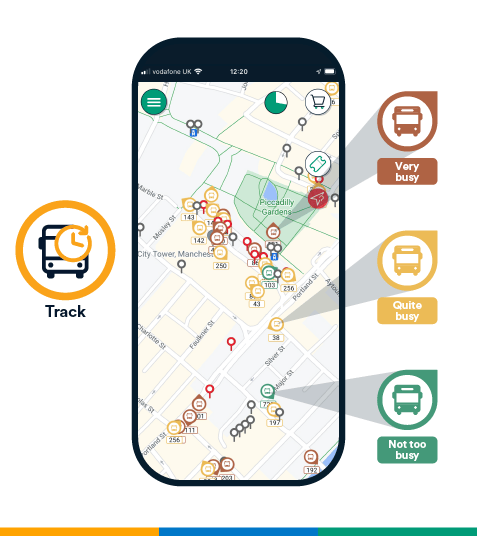
There is an app, which I recommend. You can read about it here or download it from the play-store on your phone.
Just look up “Stagecoach App”.
The joy of the app is that you can see where you bus is, in real time. Click on “Track your bus” on the home screen and there it is: a little map, with a blue flashing dot representing where you are, and an orange, brown or green circle with the number on it, representing your bus. There’s a little arrow to tell you which direction it’s travelling in. You can scroll along the route to find out exactly where your bus is. There’s also a timetable at the bottom which tells you when your bus is due to arrive.
There are a couple of things wrong with it, however. Occasionally you get what I’ve come to refer to as “ghosts” on the screen: an icon that indicates that there’s a bus on its way, but which then never moves. This can be frustrating. Also, sometimes the bus driver doesn’t turn their on geolocation device – either that or it’s not working – so you can miss buses that are actually on their way. Also, quite frequently, the timetable tells you that the bus is on time, but then it never arrives. It’s obviously been cancelled for some reason, but the app doesn’t let you know.
More rarely, buses can be diverted and pass by you altogether, which the app also doesn’t tell you about. This has happened to me a few times. I’ll be standing at the bus stop, tracking my bus, and then it will disappear. It’s gone somewhere else. For example, the buses occasionally get diverted along the A2 via Rough Common, leaving Blean residents stranded.
All that said, I’m still happy that I gave up my car when I retired. For all its frustration, bus travel is still so much better than driving. Watching people swishing passed me looking stressed behind the wheel, gives me the same feeling I get when I see people smoking (which I also used to do): “Thank god I don’t have to do that any more.”
I only wish that the bus companies were publicly owned and run on behalf of passengers and employees rather than shareholders.
buses are better in public hands
(Care of the We Own It site)

Since privatisation fares have gone up and thousands of bus routes have been cut, leaving passengers with a much worse service.
Buses are still the most-used form of public transport in England. They continue to provide a vital link for communities, and groups whose access to public services has been cut.
Women, young people, and low-income families are the main users.
Half of all bus operator revenue now comes from public subsidy, worth £1.8bn in 2023-24. In other words, our bus services are privately owned but publicly funded. We pay for them through our taxes, but the bus companies are skimming off the profits.
According to some estimates, public ownership would save us £506 million a year. This is money that could be invested in developing better bus networks and lower fares, as well as in new electric vehicles
Bus fares have risen over 500% since 1987. This is compared to 397% for rail and 246% for motoring. We are prioritising private travel over public transport, with bus travel being the worst effected.
Only 1% of bus services face competition. This was the main argument for privatisation in the first place. A 2011 Competition Commission report showed that this has led to lower quality services and higher fares. Bus services are natural monopolies that should be run as an integrated network, not a competitive market.
Bus trips outside of London have halved since privatisation. We were promised reduced fares and more journeys. In fact we got the opposite.
In the ten years to 2019, over 3,000 bus routes have been cut. At the same time, we lost £1.49 billion to shareholders.
57% of motorists said they would use their car less if bus fares were lower, and services more reliable.
Who owns The buses?
There are over a thousand bus companies in the UK, but the market is dominated by just five private companies that carry 70% of passengers. Who owns the ‘Big 5’?
- Arriva is owned by ‘I Squared,’ a private equity firm registered in the Cayman Islands.
- First is floated on the stock market but is dominated by three big asset management firms: Coastal Capital Management, Saint James Place PLC, and Schroders PLC.
- Go-Ahead is mostly owned by a consortium of Kinetic Holding, an Australian bus company, and Globalvia Inversiones, a Spanish Transport Infrastructure Company.
- National Express is floated on the stock market but is dominated by banks, like JP Morgan Chase and Bank of New York Mellon Corp, the Lion Trust asset management firm, and Jorge Cosmen, a high net worth individual.
- Stagecoach is owned by DWS Infrastructure, itself mostly owned by Deutsche Bank.
For more information please go to: https://weownit.org.uk/public-ownership/buses
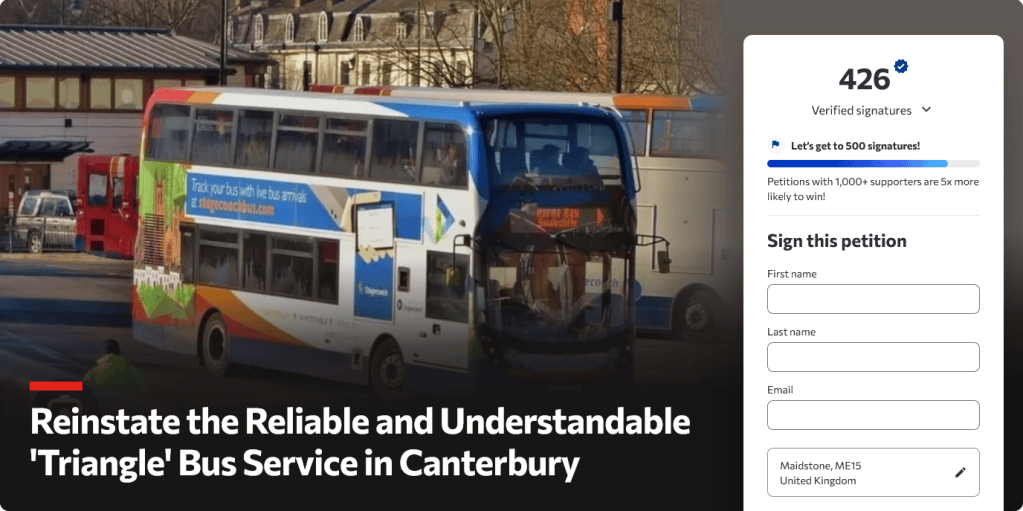
Petition: Reinstate the Reliable and Understandable ‘Triangle’ Bus Service in Canterbury
The Issue
I am a resident of Canterbury, UK, deeply affected by the recent changes in our local bus service. The shift from the ‘Triangle’ bus service to a more complex system has made public transportation less accessible for many individuals, including those with disabilities or autism. This change has not only disrupted daily routines but also imposed an unnecessary struggle on those who rely heavily on this service.
The ‘Triangle’ bus service was known for its simplicity and reliability – two attributes that are now sorely missed. It provided a clear route that was easy to understand, making it an essential part of our community’s mobility. Its discontinuation has left many users feeling lost and frustrated.
Statistics show that approximately 1 in every 100 people in the UK is on the autism spectrum (source: National Autistic Society). Many of these individuals have difficulty understanding complex systems and thrive best with routine and predictability – something that our previous ‘Triangle’ bus service offered.
Furthermore, according to Transport For All (a UK-based organisation advocating for accessible transport), reliable public transportation is crucial for people with disabilities to live independently. By reinstating the ‘Triangle’ bus service, we can help ensure their freedom to travel without undue stress or confusion.
We urge local authorities and transport providers to consider these impacts seriously. Let’s bring back our beloved ‘Triangle’ bus service – making travel easier, more reliable, and inclusive once again! Please sign this petition if you support this cause.
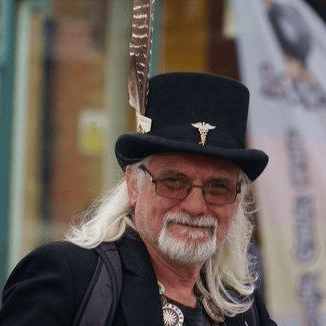
CJ Stone is an author, columnist and feature writer. He has written seven books, and columns and articles for many newspapers and magazines.
Read more of CJ Stone’s work here, here and here.
Whitstable Views
How to use it!
- Make sure you share and like our articles on Facebook and Twitter/X, and whatever other social-media platforms you use. Join us on Facebook here: @whitstableviews
- You can read and contribute articles for free but in order not to miss any, please subscribe to get regular free updates.
- To do so, press the “Subscribe” icon on the bottom right hand corner of the screen. This will take you to the option to sign up. (It disappears as you move the text down then reappears at you move it back again!)
- Please engage by leaving comments on the website, rather than on social media. Let’s get a debate going. All our contributors welcome the chance to engage with YOU.
- To all writers out there, we want to hear YOUR views too, so do submit your own articles. Read our submissions page on how to do this: https://whitstableviews/submissions/
- Finally, to keep Whitstable Views alive and independent please donate if you feel able to do so. As little as £1 would help. Details are on the donations page here: https://whitstableviews.com/donate


Yes, buses are great. We are also campaigning for them to be free, to help tackle climate change and social injustice. https://www.farefreelondon.org/
LikeLike
Hi Chris,
Totally agree with everything you say about the buses.
You may know there has been a mini-campaign to push Stagecoach into reinstating a bus service through Broad Oak. Things were looking hopeful; even a re-route of some 601 or 602 buses was suggested, linking us to Herne Bay and Canterbury once again! However…
Last week Stagecoach snuck out a timetable for a new number 26 bus from Broad Oak to Canterbury, to start tomorrow. Only two buses a day, leaving Broad Oak at 10am and midday; returning 11.40 and 13.40. That’s it. What’s worse is that there has been no publicity as far as we have seen, there are no bus stops marked in the village and no timetable available (unless you are app-savvy and know about it anyway). I repeat, the service starts tomorrow.
Apparently the service is ‘under review’ and the timetable is “valid until further notice”. Methinks Stagecoach has set this service up to fail, but then I’m getting extremely cynical in my old age…
Petetion duly signed!
Best wishes
Ali
LikeLike